
Summary:
You noticed your water bill jumped — not by a few dollars, but by enough to make you look twice. Or maybe there’s a patch of your lawn that’s been soggy for weeks despite no rain. Something’s off, and you’re starting to wonder if there’s a leak somewhere underground.
That instinct is probably right. And before you call your insurance company assuming they’ll handle it, there’s something important you should know first. Most standard homeowners policies have a significant gap when it comes to underground water lines — and finding that out after the fact is a frustrating and expensive surprise. Here’s what’s actually going on, and what you can do about it.
How Underground Water Leak Detection Works
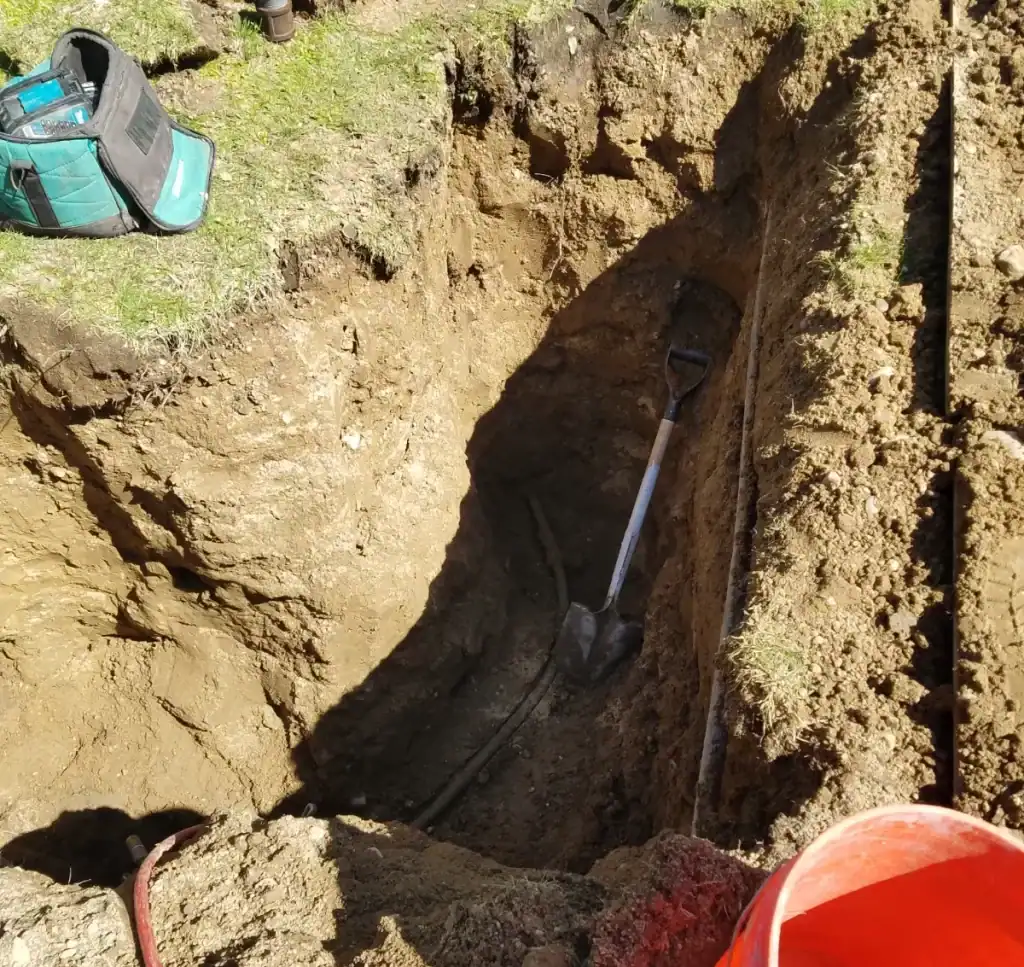
Underground water leak detection is the process of locating a leak in a buried water line without tearing up your property to find it. The key word there is “without.” Modern detection technology has made exploratory excavation largely unnecessary — technicians can pinpoint the source of a leak using acoustic equipment, thermal imaging, ultrasonic sensors, and camera inspection before a single shovel hits the ground.
The process typically takes one to three hours for a residential visit. A technician will use two or three methods to confirm the exact location, because precision matters — you want to know exactly where to make a small access point, not guess and dig up half a driveway.
What Are the Signs You Have an Underground Water Leak?
Most underground leaks don’t announce themselves dramatically. There’s no burst pipe spraying water across your basement. Instead, the signs tend to be subtle and easy to explain away — which is exactly why so many leaks go undetected for months.
A sudden, unexplained spike in your water bill is one of the most reliable early indicators. If your usage jumped but your habits didn’t change, the water is going somewhere. A soggy or unusually green patch of lawn that persists even during dry stretches is another common sign — the escaping water is feeding that section of grass from below. Low water pressure throughout the house, the sound of running water when everything is shut off, and cracks appearing in your driveway or sidewalk are all worth taking seriously.
On Long Island, there’s an additional layer to this. A significant portion of Nassau and Suffolk County’s housing stock was built during the post-World War II boom — the late 1940s through the 1970s. Levittown, parts of Hempstead, Massapequa, Bay Shore, Babylon, and dozens of other communities were developed during that era. The water service lines installed in those homes are now 50 to 80 years old. The average pipe reaches its failure point around 53 years. The math isn’t encouraging.
Long Island’s winters make it worse. The freeze-thaw cycle — ground freezing in winter, thawing in spring — causes the soil to expand and contract around buried pipes every single year. That repeated stress cracks joints and weakens pipe walls over time. Add in the mature tree canopy that blankets neighborhoods from Smithtown to Rockville Centre, and root intrusion becomes another constant pressure on aging lines. These aren’t abstract risks. They’re the actual conditions your pipes are dealing with right now.
How Do Plumbers Actually Find a Leak Underground?
The short answer is: with equipment, not guesswork. A qualified technician doesn’t just start digging and hope to find something. They use a combination of diagnostic tools to narrow down the location before any ground is disturbed.
Acoustic detection is one of the most common methods. It works by listening for the specific sound frequency that pressurized water makes as it escapes through a crack or joint. Technicians use sensitive ground microphones and listening rods to trace that sound back to its source. It’s surprisingly precise when done by someone who knows what they’re doing.
Thermal imaging uses temperature differences to identify where cold water is escaping into warmer soil. Ultrasonic detection can locate leaks in pipes embedded in concrete — including garage floors and basement slabs — and can even determine the direction water is flowing inside the pipe. For situations where the line’s condition needs a closer look, a camera inspection provides a live view of the pipe’s interior, showing cracks, root intrusion, joint separation, or corrosion in real time.
None of these methods require excavation. The goal is to confirm the exact leak location so that when work does begin, it’s targeted and minimal. On a property with a concrete driveway, established landscaping, or a finished garage floor — which describes most homes in Nassau and Suffolk County — that matters enormously. Tearing up a driveway that cost thousands of dollars to install is not an acceptable default when better options exist.
Detection visits for most residential situations run between $200 and $900. Complex situations involving deep lines or concrete slabs can run higher. That’s a fraction of what an undetected leak costs when it eventually causes soil erosion, foundation issues, or interior water damage.
Water Line Protection Insurance: What Long Island Homeowners Are Often Missing
Here’s the part most homeowners don’t find out until they’re already dealing with a broken line: standard homeowners insurance almost never covers underground service line damage. Allstate, Progressive, Nationwide, Farmers, GEICO, Liberty Mutual — virtually every major carrier explicitly excludes breaks in the underground line that runs from the street to your house.
The reason comes down to how policies are written. Standard coverage handles sudden, accidental damage inside the home. The underground service lateral — the pipe that connects the municipal main at the curb to your house — is considered your property, and its failure is typically categorized as a maintenance issue or gradual deterioration, both of which are excluded.
That line is your responsibility the moment it leaves the municipal main. Most homeowners don’t know that until they get the bill.
Exterior Water and Sewer Line Insurance: Is It Worth Adding?
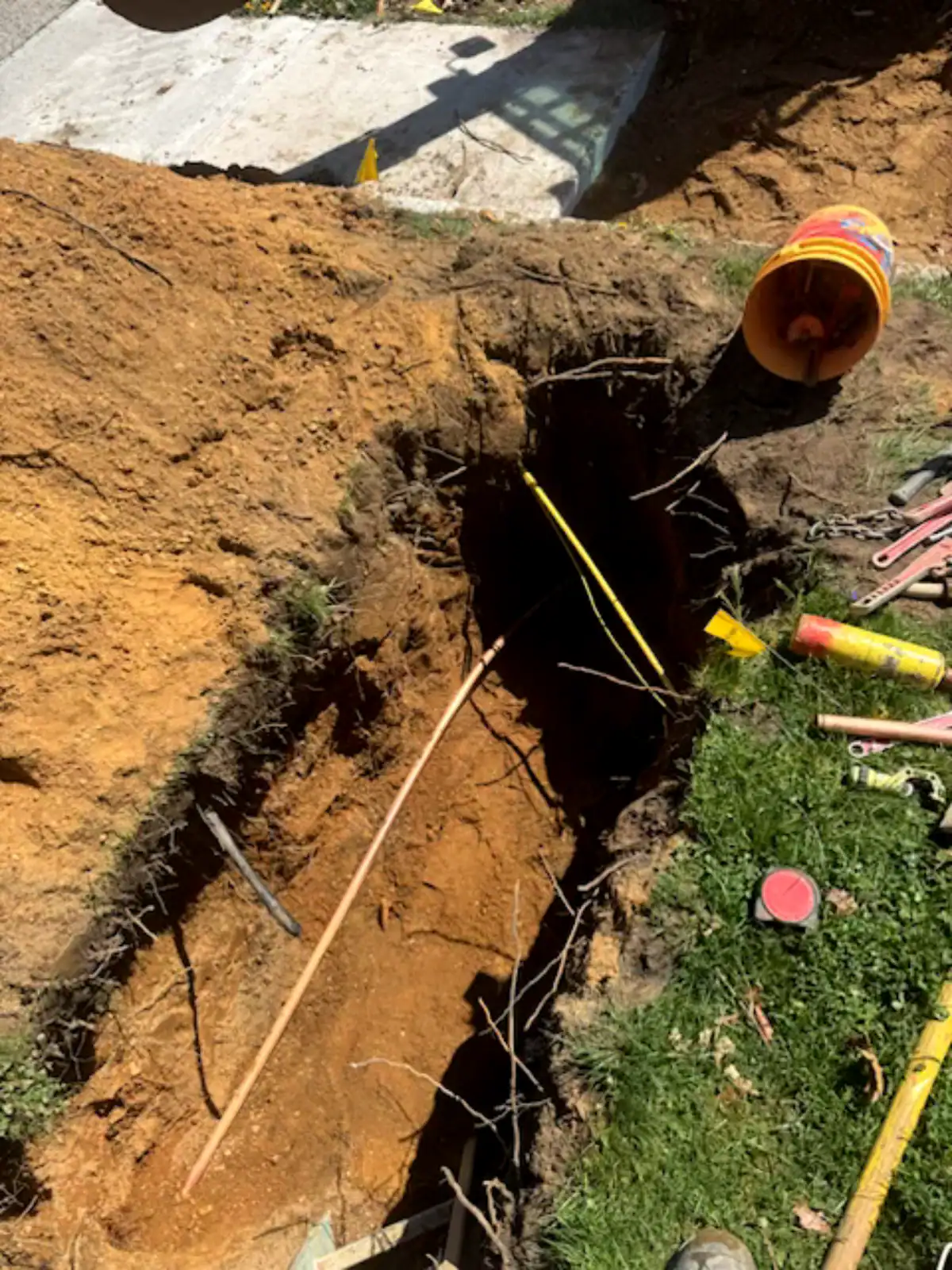
It can be, and it’s more affordable than most people expect. Exterior water and sewer line insurance — sometimes called a service line endorsement — is an add-on to your existing homeowners policy that specifically covers the underground lines between the street and your home. Some insurers offer this protection for under $5 per month, with coverage up to $10,000 per occurrence.
That matters because the average cost to replace a water main line runs around $3,750, and total water damage repair costs — when a leak goes undetected and causes secondary damage — frequently exceed $10,000. The endorsement exists precisely to fill the gap that standard policies leave open.
It’s worth distinguishing this from the service line warranty programs that utility companies sometimes market to homeowners. You may have received a mailer from a third party claiming to be affiliated with your water authority or PSEG Long Island, offering a monthly plan for line protection. These are typically home warranty contracts, not true insurance. They’re offered by third-party companies, not the utility itself, and the utility often receives a referral fee. The terms, coverage limits, and claims processes are different from a true insurance endorsement. Neither is inherently bad, but they’re not the same product — and knowing the difference helps you make a better decision.
If you’re unsure whether your current homeowners policy includes exterior service line coverage, the fastest way to find out is to call your agent and ask directly: “Does my policy cover the underground water line from the street to my house?” The answer is almost always no — but now you know to ask, and you know the endorsement exists.
What Utility Line Insurance Actually Covers — and What It Doesn't
Utility line insurance — whether it’s a true endorsement on your homeowners policy or a third-party warranty plan — generally covers the cost of repairing or replacing the underground service line when it fails due to a covered cause. That typically includes breaks, cracks, joint separation, and root intrusion affecting the line itself.
What it usually does not cover is the water damage caused by the leak after the fact. If a slow underground leak has been saturating the soil near your foundation for months and you eventually end up with a wet basement or structural issue, that consequential damage is typically a separate claim under a different part of your policy — if it’s covered at all. Gradual damage exclusions are common, and insurers frequently deny claims where the damage developed over time rather than occurring suddenly.
This is one of the most important reasons to act quickly when you suspect a leak. Early detection limits the damage to the pipe itself. A leak that’s caught at the detection stage costs a few hundred dollars to locate and a few thousand to repair. A leak that’s been running for six months and has undermined a section of your driveway, eroded soil near your foundation, or caused water to infiltrate your crawl space is a different situation entirely — and insurance coverage for that outcome is far from guaranteed.
For homeowners in communities like Huntington, Commack, West Islip, or Patchogue, where many homes sit on older lots with mature landscaping and aging infrastructure, the stakes are real. We’ve worked with Long Island homeowners who waited — assuming insurance would sort it out — and ended up facing repair costs that a timely detection visit could have dramatically reduced. In some cases, we’ve been able to help homeowners document their situation to support an insurance claim. That’s something we offer, and it’s something worth asking about when you call.
What to Do If You Suspect an Underground Water Leak on Long Island
If something feels off — an unexplained water bill, a soft spot in the yard, low pressure, or a sound you can’t place — don’t wait for it to get worse. Underground leaks don’t resolve on their own. They get worse slowly, then expensively.
Check your coverage now, before you need it. Call your insurance agent and ask specifically about exterior service line protection. If it’s not included, ask what it costs to add it. Then, regardless of what your policy says, get the line inspected. Detection is far less expensive than the damage a slow leak causes over time.
We’ve been doing this work across Nassau and Suffolk County for nearly 40 years. We use ultrasonic and camera-based detection to find leaks without unnecessary excavation, and in most cases, we can repair the line using trenchless methods that leave your driveway, yard, and landscaping intact. If you have questions about what you’re dealing with, we’re available around the clock — including weekends and holidays. Give us a call and we’ll help you figure out exactly where things stand.
—
**Utility Line Insurance Coverage: Common Questions**
**Does homeowners insurance cover underground water line breaks?** In almost every case, no. Standard homeowners insurance policies exclude damage to the underground service lateral — the pipe that runs from the municipal main at the street to your home. That line is your property and your responsibility, and most policies treat its failure as a maintenance issue rather than a covered loss. A service line endorsement can fill that gap, and it typically costs less than $5 per month through many carriers.
**Who is responsible for the water line from the street to my house on Long Island?** The water authority — whether that’s the Suffolk County Water Authority, a Nassau County water district, or a village system — owns and maintains the main line running under the street. Their responsibility ends at the curb. From that point to your home, the service lateral is yours. This boundary is a consistent source of confusion for Long Island homeowners, especially in older communities across Nassau and Suffolk County where the lines were installed decades ago and no one has thought about them since. If you’re in Huntington, Port Jefferson, or any of the older neighborhoods on the North Shore, this distinction is particularly important because many of those lines are approaching or past their expected lifespan.
**How much does underground water leak detection cost?** For most residential visits on Long Island, detection runs between $200 and $900 depending on the depth of the line, the type of surface it runs under, and how many methods are needed to confirm the location. Situations involving pipes embedded in concrete slabs can run higher. That cost needs to be weighed against what an undetected leak eventually costs — which, once secondary damage is factored in, frequently exceeds $10,000.
**How long does underground water leak detection take?** Most residential detection visits take between one and three hours. Technicians typically use two or three methods — acoustic listening, thermal imaging, ultrasonic detection, or camera inspection — to confirm the exact location before any repair work is planned. The goal is precision, not speed, because getting the location right the first time saves significant time and cost on the repair side.
**What is the difference between a service line warranty and service line insurance?** A service line warranty is typically a monthly contract sold by a third-party company, sometimes marketed in partnership with a utility. It covers repair or replacement of your underground lines but operates like a home warranty — with its own terms, limits, and claims process. A service line endorsement is an add-on to your actual homeowners insurance policy and is regulated accordingly. Both can provide useful protection, but they’re different products. If you’ve received a mailer about a “protection plan” from what appeared to be your water authority, read the fine print carefully before assuming it functions like insurance. On Long Island, where many homeowners receive these solicitations regularly, it’s especially important to verify whether you’re dealing with actual insurance coverage or a third-party warranty contract.