
Summary:
You haven’t changed anything about how you use water. Same household, same habits. But your bill jumped — or there’s a patch of grass in the backyard that’s been soggy for two weeks straight, even though it hasn’t rained. Something doesn’t add up, and you’re starting to wonder if it’s coming from underground.
That instinct is worth following. Underground water leaks are more common than most homeowners realize, and they rarely announce themselves clearly. By the time you can see the damage, the leak has usually been running for a while. Here’s what to look for, how these leaks get found, and what your options are when it turns out the problem is real.
Finding Water Leaks in Underground Pipes: What to Look For
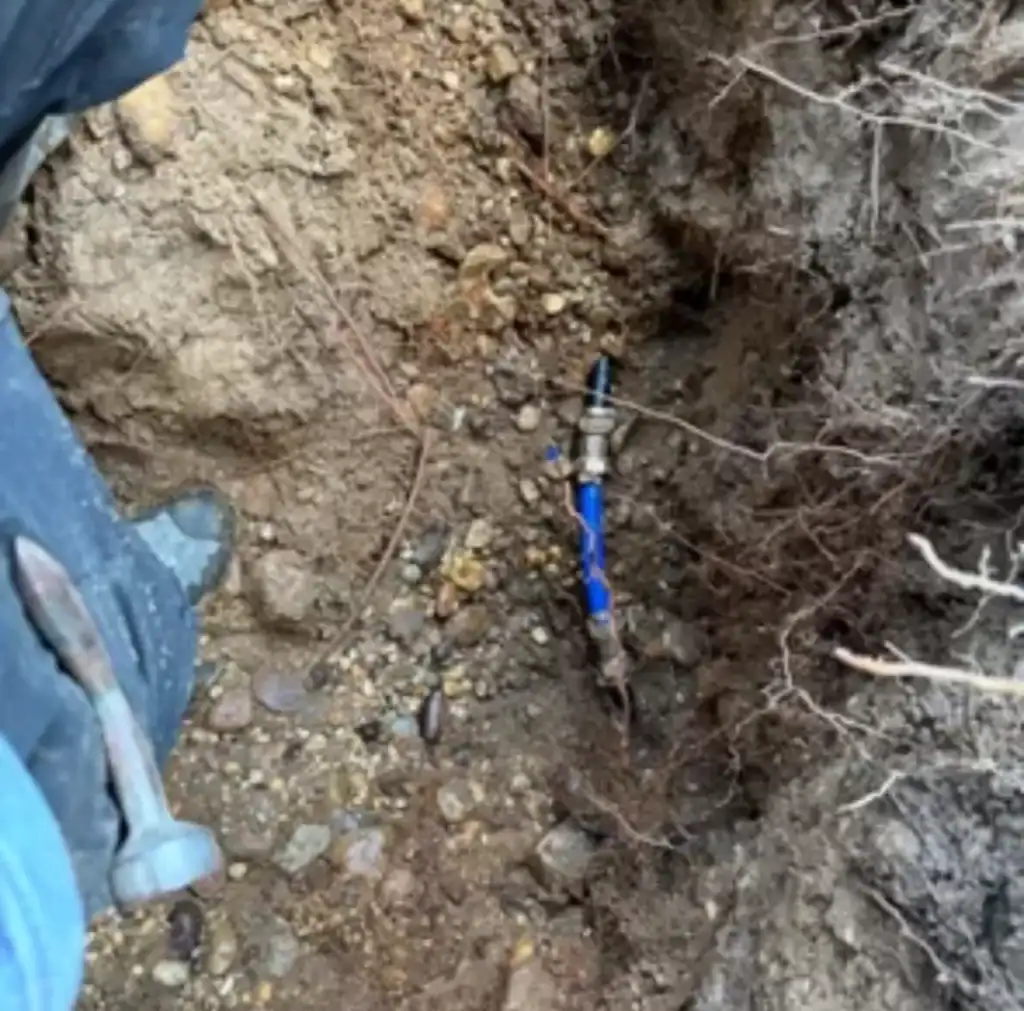
The most common signs aren’t dramatic. You’re not looking for a geyser — you’re looking for things that are slightly off. A patch of grass that’s noticeably greener or lusher than the rest of the yard. A soft, spongy spot that stays wet between rainfalls. A subtle drop in water pressure throughout the house. A water bill that spiked without explanation.
Any one of these on its own might have another cause. But two or three together? That’s usually enough to take seriously. The longer an underground leak runs undetected, the more soil it erodes, and the more pressure it puts on the surrounding pipe — which tends to make the failure worse, not better.
How to Find a Water Pipe Underground Using Your Meter
Before calling anyone, there’s a simple test you can do yourself. It won’t tell you exactly where the leak is, but it will tell you whether water is escaping from your system when it shouldn’t be.
Start by turning off every water source in your home — faucets, appliances, the ice maker, everything. Then go out to your water meter, which is typically near the street or sidewalk in a small covered box. Once everything inside is off, watch the meter dial. If it’s moving — even slowly — water is flowing somewhere it shouldn’t be. That’s a leak.
If your meter has a small triangular leak indicator (many do), that dial will spin even when the main dial isn’t visibly moving. It’s designed specifically to catch slow leaks that a standard reading would miss.
This test is most reliable when done early in the morning or late at night, when no one in the house is likely to run water accidentally. If you have an irrigation system, make sure that’s off too — a running zone will throw the whole reading off.
Now, here’s the part that matters for Long Island homeowners specifically. The water service line — the pipe that runs from the meter to your house — is your responsibility, not the water utility’s. Liberty Water (now operating under SUEZ/Veolia) owns and maintains the main line in the street. But the line from the meter to your foundation? That’s yours. If the meter test shows a leak, and it’s on your side of the meter, the repair falls to you.
This surprises a lot of homeowners in Massapequa, Wantagh, Bellmore, and other Nassau County communities where the service lines were installed during the post-war suburban boom of the 1950s. Those pipes are now 65 to 75 years old — well past the design life for the galvanized steel that was standard at the time. They corrode from the inside out, and they don’t give much warning before they start to fail.
Locating Leaks in Underground Water Pipes: Professional Methods
Once you’ve confirmed there’s a leak, the next question is where. And this is where the process gets more involved than most homeowners expect.
Digging a trench across your yard and hoping to find the problem is not the right approach — and any contractor who suggests starting there without a proper diagnosis isn’t doing you any favors. Professional leak detection uses a combination of methods to pinpoint the failure before a single shovel goes in the ground.
The most common method is acoustic detection. Pressurized water escaping through a crack or joint creates a distinct sound — a hiss, a rush, a low-frequency vibration that travels through the pipe and into the surrounding soil. Leak detection equipment amplifies that sound and lets a technician walk the pipe’s path above ground, narrowing the location down to within a foot or two. It’s not guesswork. It’s physics.
Here’s something worth knowing about Long Island specifically: the clay soil that dominates much of Nassau County and western Suffolk County actually dampens sound transmission. That’s different from sandy or loamy soil, where acoustic signals travel more easily. It means that leak detection in this area requires calibrated equipment and someone who knows how to interpret what they’re hearing — not just someone who owns a pair of listening devices.
In cases where acoustic detection alone isn’t definitive, we can use tracer gas. A safe, non-toxic mixture of helium and hydrogen is injected into the pipe. Because the gas molecules are small enough to escape through even a hairline crack, a probe at the surface can detect exactly where the gas is rising — which is exactly where the water is escaping. It’s particularly useful when the leak is small, deep, or in an area where soil conditions make acoustic detection harder.
Once the leak is located, the pipe’s path also needs to be mapped before any repair work begins. Electronic pipe locating equipment sends a signal through the line and traces it above ground, so we know the exact route from the meter to the house. This matters more than most people realize, especially if trenchless replacement is on the table — pipe bursting and directional drilling both require knowing precisely where the old pipe runs so the new one can follow the same corridor without disturbing the surrounding area.
Main Water Line Replacement: When to Repair vs. Replace
Once the leak is located, you’re facing a decision: patch it or replace it. The right answer depends on what the camera inspection shows. A single crack in an otherwise sound pipe might be a reasonable candidate for spot repair. But a pipe that’s corroded throughout, has multiple failure points, or is made of galvanized steel or lead — which describes a significant portion of Long Island homes built before 1980 — usually warrants full replacement.
The camera doesn’t lie. When a technician shows you live footage of what’s happening inside your pipe, you can see for yourself whether this is a one-time fix or a pipe that’s going to fail again in three years. That matters, because the cost difference between a repair and a replacement isn’t as large as most people assume — especially when you factor in the disruption of doing it twice.
What Is Trenchless Water Line Replacement and Is It Right for You?
The biggest fear most homeowners have when they hear “water line replacement” is the image of a backhoe tearing up their driveway, their landscaping, their garage floor. It’s a legitimate concern — and for years, it was the only option. It isn’t anymore.
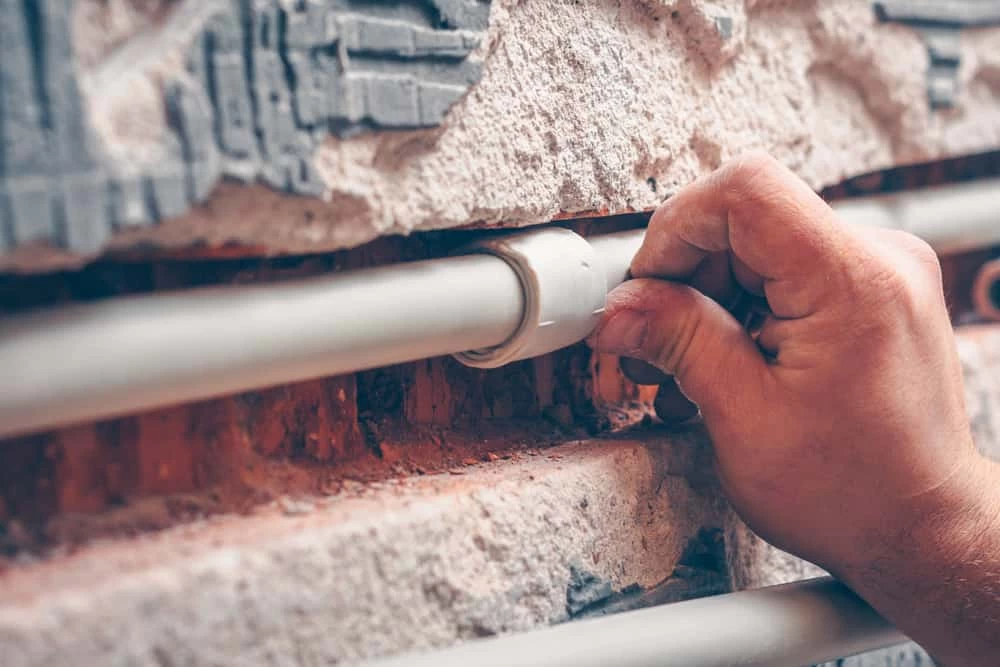
Trenchless replacement methods — primarily pipe bursting and pipe lining — allow a new pipe to be installed with minimal excavation. In a pipe bursting job, a bursting head is pulled through the old pipe, fracturing it outward while simultaneously pulling the new pipe in behind it. The result is a full replacement of the line with only one or two small access points dug at each end. Your driveway stays intact. Your landscaping stays intact. The work that took days with traditional excavation often wraps up in a matter of hours.
Pipe lining, sometimes called CIPP (cured-in-place pipe), works differently. A flexible liner coated in resin is inserted into the existing pipe and inflated. Once it cures, it forms a seamless new pipe inside the old one — no joints, no seams, no future root intrusion points. CIPP liners are rated to last 50 years or more, which means this isn’t a temporary fix. It’s a long-term solution.
We’re one of the only contractors offering both of these methods across Nassau and Suffolk County, which matters because not every situation calls for the same approach. The right method depends on the pipe’s condition, its depth, the soil around it, and what’s above it. A contractor who only has one tool in the toolbox will use it regardless of whether it’s the best fit.
For homeowners in communities like Bethpage, Levittown, or Seaford — where post-war homes often sit on narrow lots with mature landscaping and finished driveways — trenchless replacement isn’t just a convenience. It’s often the only practical option that doesn’t turn a plumbing repair into a full exterior renovation.
Long Island Homeowners Ask: Who Pays for a Water Main Leak?
This is one of the most common questions we hear, and the confusion is understandable. The short answer: if the leak is on your side of the meter, it’s your responsibility. If it’s in the main line in the street, it’s the utility’s problem.
The longer answer is a little more nuanced. The service line — the pipe running from the meter box near the street all the way to where it enters your foundation — belongs to you, even if part of that line runs through the public right-of-way. The water utility (Liberty Water/SUEZ in many Nassau County communities, or the relevant Suffolk County water district) owns and maintains the main in the street itself. The boundary is the meter.
We’ve had jobs where the camera inspection revealed that the leak was actually on the utility’s side of the supply connection — not the homeowner’s line at all. In those cases, we coordinate directly with the water company to get their crew out and handle their portion of the repair. One of our customers in a Bellmore-area home avoided an unnecessary sidewalk excavation entirely because we identified that the leak originated at the utility’s connection, not his service line. That kind of coordination is part of the job.
As for insurance: standard homeowner’s policies typically cover sudden and accidental water damage — a pipe that bursts without warning. What they generally don’t cover is a slow leak that’s been developing over time, especially if there were signs the homeowner ignored. If you’ve noticed something unusual and you’re waiting to see if it resolves itself, that waiting period could affect a future claim. Documenting the problem early — with a professional inspection and written findings — is always the smarter move.
One more thing worth knowing: any excavation in New York requires a call to 811 (Dig Safe) before a shovel goes in the ground. This gets utility lines marked so nobody hits a gas or electric line during the repair. We handle this automatically as part of our process. If someone shows up to start digging without mentioning it, that’s a red flag worth paying attention to.
What to Do If You Think You Have a Water Line Leak on Long Island
The worst thing you can do is wait. Underground leaks don’t seal themselves. They erode soil, they undermine foundations, and they run up your water bill every day they go unaddressed. The difference between catching a leak early and catching it late can easily be the difference between a straightforward repair and a full main water line replacement — along with everything that comes with it.
If something in your yard looks off — a soggy patch, a greener-than-usual strip of grass, a bill that doesn’t make sense — run the meter test. If the dial moves with everything off, call someone who can actually find the leak before recommending a fix. Camera inspection first, written estimate before any work begins, trenchless options on the table where they apply.
Long Island Water and Sewer Main – Allied All City has been doing exactly this work across Nassau and Suffolk County for over 40 years. If you’re dealing with something that doesn’t add up, we’re the call worth making.