
Summary:
If you’ve been putting off a sewer line repair in Nassau County, you’re probably not just dreading the cost — you’re dreading the paperwork. The permit process here is genuinely confusing. Nassau County doesn’t issue building permits itself. Your town does. But your village might too. And the county has its own sewer permit on top of that. It’s a layered system, and most homeowners don’t know where to start. We’re here to clear that up — so you know exactly what’s required, what happens if something gets missed, and what to look for in a sewer line repair company that actually knows how to handle it.
Nassau County Sewer Permit Requirements: What Homeowners Actually Need to Know
Here’s the part that trips most people up: Nassau County has 64 incorporated villages, three towns, and two cities — and each one has its own building department with its own permit requirements. The county itself handles sewer connection permits through the Nassau County Department of Public Works, but that permit doesn’t replace anything at the town or village level. It’s in addition to it.
So for a typical sewer line repair or replacement in Nassau County, you may be looking at a Nassau County DPW sewer permit, a building permit from your town (Hempstead, North Hempstead, or Oyster Bay), a separate permit from your incorporated village if you live in one, and a road opening permit if the work crosses a public road or sidewalk. That’s potentially four separate applications to four separate agencies before a single shovel hits the ground. For projects involving a new sewer connection or replacement line, sewer line installation may also require careful coordination with these permitting authorities.
One detail worth knowing: Nassau County DPW sewer permits come with a 60-day window. If the connection to the sewer system isn’t made within 60 days of the permit being issued, it becomes void. That’s not a lot of runway, which is why it matters that your contractor moves efficiently once permits are pulled.
Sewer Excavation Contractors in Nassau County: Why Licensing and Permit Knowledge Go Together
Hiring a sewer excavation contractor in Nassau County isn’t the same as hiring one in most other places. The licensing requirements here are specific, and the permit process is complex enough that a contractor who doesn’t know it well can create real problems for you — even if the physical work is done correctly.
At minimum, any contractor doing sewer work on your property needs to hold a New York State plumbing license, a Nassau County Department of Consumer Affairs Home Improvement Contractor license, and carry both general liability insurance and workers’ compensation coverage. That’s the baseline. What separates a genuinely experienced contractor from one who’s just technically licensed is whether they know the permit requirements for your specific municipality — not Nassau County in general, but your town and your village specifically.
The Town of North Hempstead, for example, requires that sewer applications include both a county or sewer authority permit and a highway/road opening permit as separate filings. That’s not something a contractor who primarily works in Suffolk County or the five boroughs is going to know off the top of their head. And if they miss it, you’re the one left holding the liability.
This is where nearly 40 years of working specifically on Long Island makes a real difference. We’ve pulled permits in virtually every Nassau County municipality — from Levittown to Great Neck, from Massapequa to Manhasset. We know which villages require what, which building departments move quickly, and how to time everything so the 60-day DPW window doesn’t expire before the work is done. That institutional knowledge isn’t something you can fake, and it’s not something a franchise operator based outside the area can replicate.
When you’re comparing sewer line repair companies, ask them directly: have you pulled permits in my specific town and village before? The answer will tell you a lot.
Pipe Bursting Contractors in Nassau County: Does Trenchless Work Still Require a Permit?
Yes. This is one of the most common misconceptions we hear from Nassau County homeowners. Because trenchless pipe bursting doesn’t involve a full excavation trench, many people assume it flies under the permit radar. It doesn’t.
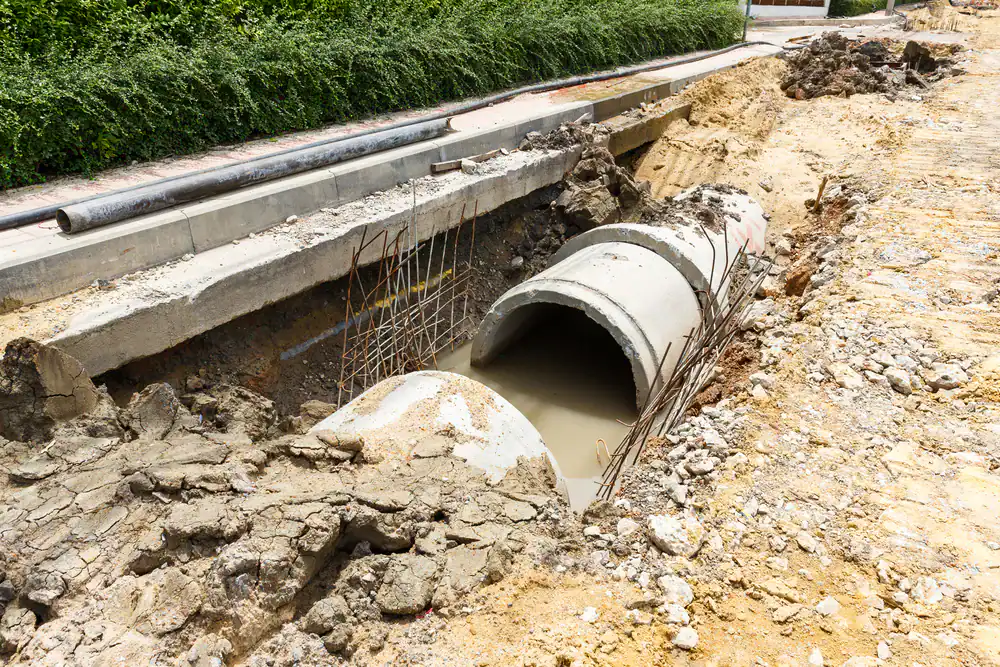
The permit requirement in Nassau County is triggered by the connection to the county sewer system — not by how much digging is involved. Whether we’re using traditional open-cut excavation or replacing your sewer line via pipe bursting, the same permit stack applies. County DPW permit, town building permit, village building permit if applicable, road opening permit if the work crosses a road. The method changes. The paperwork doesn’t.
That said, pipe bursting is still the right choice for most Nassau County homeowners, and here’s why: Nassau County’s housing stock is overwhelmingly post-World War II. Levittown was built in 1947. Most of the homes in Hempstead, Uniondale, Westbury, Rockville Centre, and similar communities went up in the late 1940s and 1950s. That means the sewer laterals under those homes — the pipes connecting the house to the county sewer main — are 60 to 80 years old. Clay tile, Orangeburg, and cast iron pipe from that era are well past their expected service life. Many of them are cracked, root-infiltrated, or partially collapsed.
Pipe bursting replaces the entire lateral without excavating your driveway, lawn, or landscaping in most cases. A hydraulic bursting head is pulled through the existing pipe, fracturing it outward while simultaneously pulling new pipe into place behind it. The result is a brand-new sewer line — same outcome as digging everything up, with a fraction of the disruption. For a homeowner in Garden City with mature trees overhead and a brick driveway they’d rather not repave, that’s not a small thing.
We’ve had customers tell us they put off sewer line replacement for years because they couldn’t face what they imagined the project would look like. Camera inspection and a straightforward conversation about pipe bursting changed the calculus entirely. The job got done. The yard stayed intact.
Drainage Repair Companies in Nassau County: When Drainage Problems and Sewer Issues Overlap
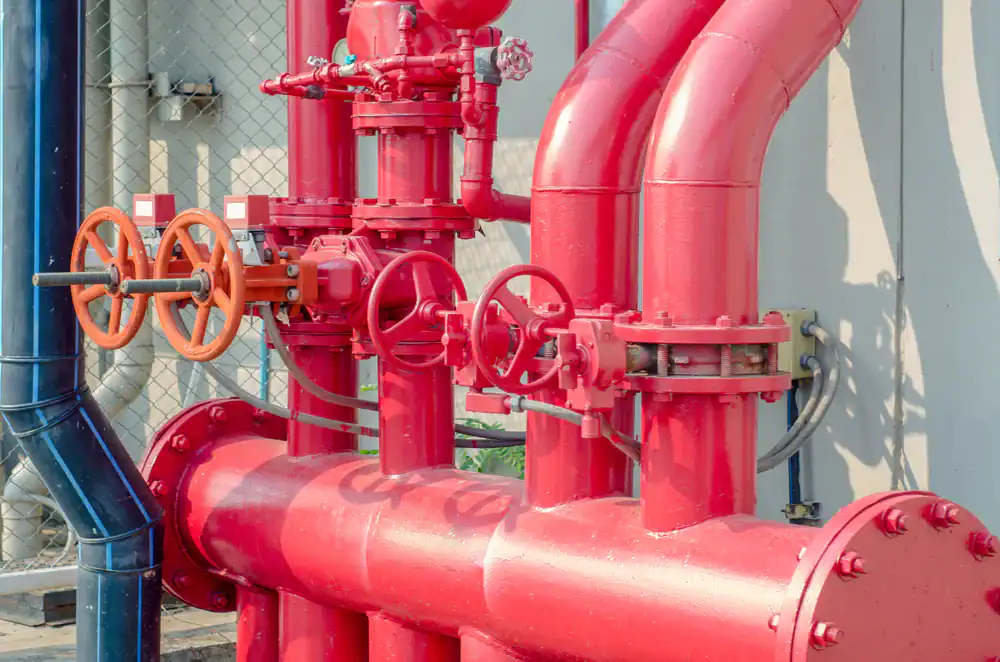
Not every underground water problem is a sewer problem — but they’re often related, and Nassau County’s geography makes this especially relevant. The county’s South Shore communities sit at relatively low elevation with a high water table. Areas like Freeport, Oceanside, Valley Stream, and Long Beach deal with drainage challenges that can stress sewer infrastructure in ways that inland communities don’t.
When drainage fails — water pooling in the yard, water backing up through floor drains, soggy ground near the foundation — it’s worth having someone look at both the drainage system and the sewer lateral before assuming you know which one is the problem. Sometimes they’re separate issues. Sometimes one is causing the other.
How Do I Know If I Have a Drainage Problem or a Sewer Line Problem?
The symptoms can look similar from the surface, which is exactly why camera inspection matters before any repair recommendation is made. A slow drain could mean a partial blockage in the sewer lateral. It could also mean a drainage line is overwhelmed during heavy rain. A wet spot in the yard could be groundwater infiltration, a broken sewer lateral, or a failed catch basin. Without running a camera through the line, you’re guessing.
We provide real-time camera views during every sewer inspection — you see what we see, in the moment. That means no mystery diagnosis, no repair recommendation based on a vague description of what might be happening underground. You see the crack, the root intrusion, the joint separation, or the collapsed section yourself. Then we talk through what it means and what your options are.
This matters especially in Nassau County’s older neighborhoods, where aging sewer infrastructure and mature tree canopies create a predictable combination: clay or cast iron pipe from the 1950s, surrounded by decades of root growth from oaks and maples that have had 70 years to find their way into every available joint. Root intrusion is one of the leading causes of sewer failure in communities like Port Washington, Manhasset, and Roslyn — and it’s the kind of problem that repeated snaking treats without ever fixing. We’ve had customers come to us after years of annual snaking, only to find out their lateral had significant root intrusion that needed a real repair, not another temporary clearing.
If drainage issues are part of what you’re dealing with, we’ll look at the full picture — catch basins, drainage lines, and the sewer lateral — and give you an honest assessment of what’s actually causing the problem.
What Happens If Sewer Work Is Done Without a Permit in Nassau County?
This is worth taking seriously, because the consequences aren’t just theoretical. Unpermitted sewer work in Nassau County can create problems in at least three directions: with your insurance, with the county and municipality, and with any future sale of your home.
On the insurance side, if sewer work was done without the required permits and something goes wrong — a backup, a collapse, water damage to the house — your homeowner’s insurance carrier may deny the claim on the grounds that the work was not properly permitted and inspected. You’d be paying out of pocket for damage that should have been covered.
From a regulatory standpoint, Nassau County’s own permit conditions require that no installation be covered before inspection by the proper county, town, or village authority. If a contractor buries the work before the required inspection happens, the municipality can require it to be uncovered — at the homeowner’s expense. That’s a real scenario, not a worst-case hypothetical.
And at the time of a home sale, unpermitted work becomes a disclosure issue. Buyers’ attorneys and home inspectors look for this. If unpermitted sewer work surfaces during due diligence, it can delay or kill a sale, or require the seller to remediate before closing. In Nassau County’s real estate market, where home values are significant, that’s a risk worth avoiding entirely.
The right contractor handles all of this for you. Not just the physical work — the permit applications, the coordination with the county DPW, the scheduling of required inspections, and the direct communication with your town or village building department. We’ve done this across Nassau County for nearly 40 years. Every crew member on your property is our own — no subcontractors, no accountability gaps. When we pull a permit, we see it through.
Choosing the Right Sewer Line Repair Company in Nassau County
The permit process in Nassau County is genuinely complicated, and the physical work of repairing or replacing a sewer lateral is not something you want to hand to someone who’s figuring it out as they go. The combination of aging infrastructure, a layered permit system, and real financial consequences for getting it wrong means the contractor you choose matters more here than it might in a simpler market.
What you’re looking for is a company that holds the right licenses, knows the specific permit requirements for your town and village, offers trenchless options where they apply, and will show you exactly what’s happening underground before recommending anything. Those aren’t unreasonable standards — they’re the baseline for doing this work correctly in Nassau County.
If you’re dealing with a slow drain, a recurring backup, a wet spot in the yard, or a sewer line you know is overdue for attention, we’re available to take a look. We’re here 24/7, including nights, weekends, and holidays — because sewer problems don’t keep business hours.
Need this done on Long Island? Long Island Sewer and Water Main handles sewer line repair across Nassau and Suffolk County. Call 631-407-2873 in Suffolk or 516-604-2651 in Nassau.