
Summary:
Most Long Island homeowners fall into one of two camps: they either ignore their underground wastewater system entirely until something goes wrong, or they call whoever shows up first on Google and hope for the best. Neither approach ends well. The good news is that understanding what you have — and what it actually needs — isn’t complicated once someone explains it plainly. Whether your home is sitting on a decades-old cesspool in Levittown or a newer septic system in Smithtown, the right service depends on the right diagnosis. That’s where we start.
Septic Tank Service: What It Is and When You Need It
A septic tank is a two-chamber underground system that separates solids from liquid waste before sending the effluent out to a drain field for further treatment. It’s more engineered than a cesspool, which means it has more components — baffles, an effluent filter, a distribution box — and each of those components needs attention on its own schedule.
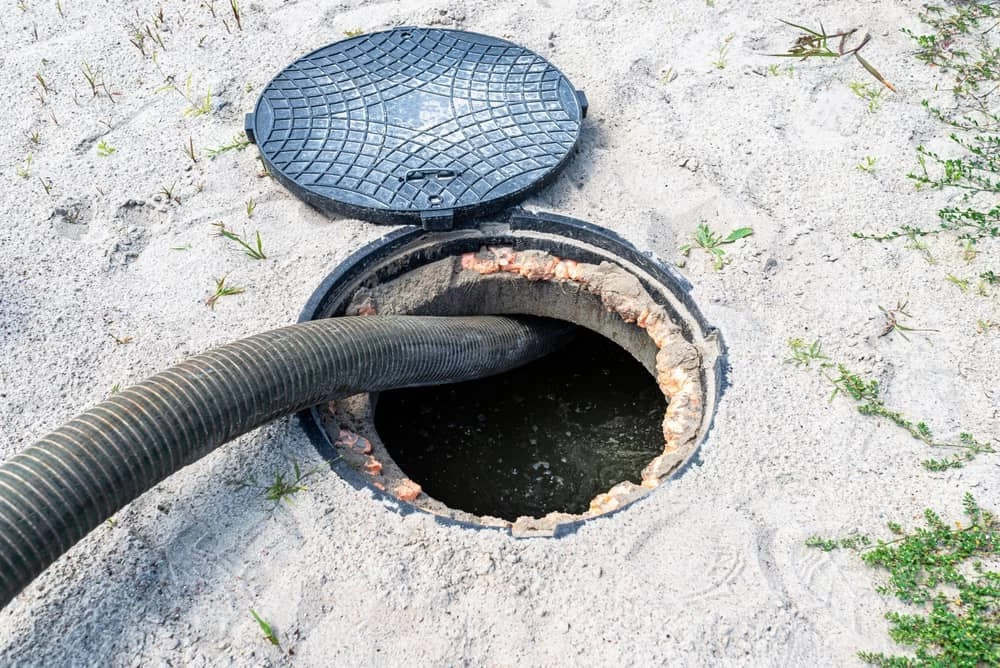
Septic tank service typically involves pumping accumulated solids from the tank, inspecting the baffles and filter, and assessing the condition of the drain field. New York State recommends pumping every two to three years, though a family of four on Long Island may need it closer to every one to two years depending on usage. Skipping that cycle doesn’t save money — it accelerates solids buildup that eventually destroys the drain field, and replacing a drain field runs anywhere from $5,000 to $20,000 or more.
How Do You Know If Your Septic Tank Needs Service Right Now?
The most obvious signs are the ones you’d rather not think about: sewage odor in the yard, slow drains throughout the house, gurgling sounds when you flush, or wet soggy patches of grass over the drain field that don’t dry out even during a stretch of dry weather. Any one of those is worth a call. All of them together means you’re already behind.
But here’s what most homeowners don’t realize — a septic tank can be close to failing without any indoor symptoms at all. The system doesn’t announce itself until it’s too late. That’s why the inspection mandate exists in the first place. Suffolk County requires inspections every three years; Nassau County every five. If you’ve bought a home on Long Island and you’re not sure when the last inspection happened, that uncertainty alone is reason enough to schedule one.
Long Island’s sandy, glacially deposited soil is highly permeable, which sounds like a good thing for drainage — and it is, until the soil becomes saturated from an overloaded or failing system. At that point, effluent moves fast through the ground and straight toward the aquifer. That’s not a hypothetical concern here. Long Island sits entirely on a sole-source aquifer system — the only drinking water source for nearly three million residents. What goes wrong underground in your yard eventually reaches the water supply. That’s the real stakes behind what feels like a routine maintenance call.
If you’ve recently purchased a home and the inspection records are unclear, or if your system is approaching the 25-to-40-year mark that most tanks are designed for, a camera inspection is the most honest way to see exactly what you’re dealing with. Real-time camera views during sewer inspections let you see the condition of your pipes and system firsthand — no guessing, no pressure to take someone’s word for it.
What About I/A OWTS — Do Long Island Homeowners Actually Need One?
If your system fails and needs full replacement, or if you’re doing a major renovation that triggers a permit, the answer in Suffolk County is yes — you’ll be required to install an Innovative/Alternative Onsite Wastewater Treatment System, commonly called an I/A OWTS. This isn’t optional, and it’s been the law since Suffolk County’s cesspool ban took effect on July 1, 2019.
The reason comes down to nitrogen. Conventional cesspools and even standard septic tanks release nitrogen-laden effluent into the ground, and after decades of that across hundreds of thousands of homes, the impact on Long Island’s bays and harbors has been significant. Great South Bay, Peconic Bay, and other local waterways have seen harmful algal blooms tied directly to nitrogen loading from residential wastewater. I/A OWTS systems are designed to remove up to 90% of nitrogen before the effluent reaches the soil — a substantial improvement over what most Long Island homes currently have in the ground.
The practical question most homeowners have is: what does this cost, and is there help? The Suffolk County Septic Improvement Program offers grants up to $10,000 as a base, with additional funding available for qualifying installations — potentially reaching $20,000 for low-to-moderate income applicants who also install a pressurized shallow drain field leaching system. Governor Hochul announced an additional $30 million in state funding to make these upgrades more accessible. If you’re facing a replacement anyway, it’s worth understanding what financial assistance you may qualify for before you commit to any contractor.
Installing and servicing I/A OWTS systems requires specific knowledge of the systems, the county approval process, and the registration requirements that follow. We have that experience. It’s worth asking directly before you hire anyone for a replacement job.
Septic System Service Across Nassau and Suffolk: Why the Details Matter Here
Long Island is not a uniform market for septic service. The regulatory requirements differ between Nassau and Suffolk Counties. The age of the housing stock varies by town. The soil conditions, the proximity to water, and the type of system most commonly found in a given neighborhood all affect what proper service looks like and how urgently it’s needed.
A home in Huntington built in 1962 is almost certainly sitting on a cesspool that’s never been replaced. A newer build in Medford may have a conventional septic tank. A recently renovated property in Southampton may already have an I/A OWTS installed under the county’s upgrade requirements. The service call for each of those is different — and we know that without you having to explain it.

Cesspool Service on Long Island: What's Different About Older Systems
A cesspool is a single underground chamber — no drain field, no secondary treatment. Waste enters, liquids leach out through perforated walls into the surrounding soil, and solids accumulate at the bottom. It’s a simpler design than a septic tank, but it’s also more vulnerable to overload, and it does nothing to reduce nitrogen before it reaches the groundwater.
Suffolk County alone has an estimated 360,000 cesspools still in the ground. Most of them were installed during the post-World War II suburban expansion — the same housing boom that built out Levittown, Massapequa, Bay Shore, and hundreds of other Long Island communities. That means a significant portion of those systems are now 50 to 75 years old, well past the 25-to-40-year design life most underground systems are built for.
Cesspool service involves pumping accumulated solids, inspecting the leaching rings and surrounding soil for signs of saturation or failure, and assessing whether the system is still functioning within acceptable parameters. A cesspool that’s pumped regularly can remain in service for years beyond its expected lifespan. One that’s been neglected — or that’s been subjected to years of grease, non-biodegradable wipes, or chemical cleaners that kill the beneficial bacteria — deteriorates faster and fails harder.
The warning signs of a failing cesspool are worth knowing: standing water or lush green patches over the tank location, sewage odor in the yard, slow drains across multiple fixtures simultaneously, and in serious cases, sewage backing up into the lowest drains in the house. If you’re seeing any of that, the window for a straightforward pump-and-inspect has likely passed. What you need at that point is an honest assessment of whether the system can be rehabilitated or whether replacement is the more realistic path forward.
One thing worth noting: cesspool service on Long Island requires specific licensing. The New York State Department of Environmental Conservation licenses septage waste transporters separately from general plumbing contractors. Nassau County Consumer Affairs licensing is also required for cesspool work in Nassau. These aren’t technicalities — they’re the credentials that separate legitimate operators from contractors who shouldn’t be doing this work at all. Ask to see proof before anyone opens a lid on your property.
When Septic Problems Are Actually a Sewer Line Problem in Disguise
Here’s something that doesn’t come up often enough: a lot of what looks like a cesspool or septic tank problem is actually a problem with the lateral sewer line connecting your house to the system. Tree root intrusion, pipe corrosion, joint separation, and ground settling can all cause blockages or collapses in that connecting line — and the symptoms look identical to a failing tank. Slow drains, backups, gurgling — all of it.
This is where a camera inspection earns its value. Running a high-resolution camera through the line from the house to the tank tells you exactly what you’re dealing with before any repair decisions are made. We’ve had customers come to us after two or three previous contractors gave them conflicting diagnoses and recommended expensive work. A camera inspection resolved the confusion immediately because you can see the condition of the pipe in real time — no interpretation required.
If the camera does reveal a damaged lateral, that doesn’t automatically mean excavation. Trenchless repair methods — specifically pipe lining and pipe bursting — allow us to rehabilitate or replace a damaged sewer line without digging up the yard. Pipe lining installs a new structural liner inside the existing pipe. Pipe bursting replaces the old pipe entirely by pulling a new one through in its place. Both methods work through small access points, which means your landscaping, driveway, and yard stay intact. For Long Island homeowners who’ve invested in their property, that matters.
The connection between sewer line condition and septic system health is something most cesspool-only companies aren’t equipped to address. If the lateral is the problem and the company you called only pumps tanks, you’ll get a pumped tank — and the same backup three weeks later. We handle both the underground utilities and the wastewater system, which gives you a complete picture instead of a partial fix.
We also want to mention something that comes up in our customer reviews more often than you’d expect: insurance claims. Some homeowners don’t realize that a failed water main or sewer line may be partially covered under their homeowner’s policy. We’ve helped customers gather the documentation needed to file those claims successfully. It’s not something every contractor thinks to offer, but when you’re facing a repair bill in the five figures, it’s worth asking about.
Finding the Right Septic Service for Your Long Island Home
The takeaway here isn’t complicated. Long Island homes are not all the same underground, and the service your system needs depends entirely on what you have, how old it is, and what condition it’s in. Getting that right from the start saves money, avoids emergencies, and keeps you on the right side of Nassau and Suffolk County’s inspection and compliance requirements.
Routine maintenance is almost always the cheaper path. A professional pump-and-inspect every few years costs a few hundred dollars. A failed system that needs emergency replacement costs $15,000 to $30,000 or more. The math isn’t subtle.
If you’re not sure what type of system you have, when it was last serviced, or whether you’re approaching a compliance deadline, that’s exactly the kind of question we answer every day. Long Island Water and Sewer Main – Allied All City has been doing this work across Nassau and Suffolk Counties for nearly 40 years. Give us a call and we’ll help you figure out where things stand.