
Summary:
You noticed something — a soggy patch in the yard that won’t dry out, a water bill that jumped for no obvious reason, pressure that’s been slowly dropping for months. You’ve confirmed there’s a water main problem. Now the harder question: do you repair it or replace the whole line?
This is exactly where most homeowners get stuck. You don’t want to overpay for a full replacement if a targeted repair would do the job. But you also don’t want to patch something that’s going to fail again in two years. We’ve put together this guide to give you the honest framework to figure out which path makes sense — before anyone shows up at your door with a recommendation.
Main Water Line Repair: When It's the Right Call
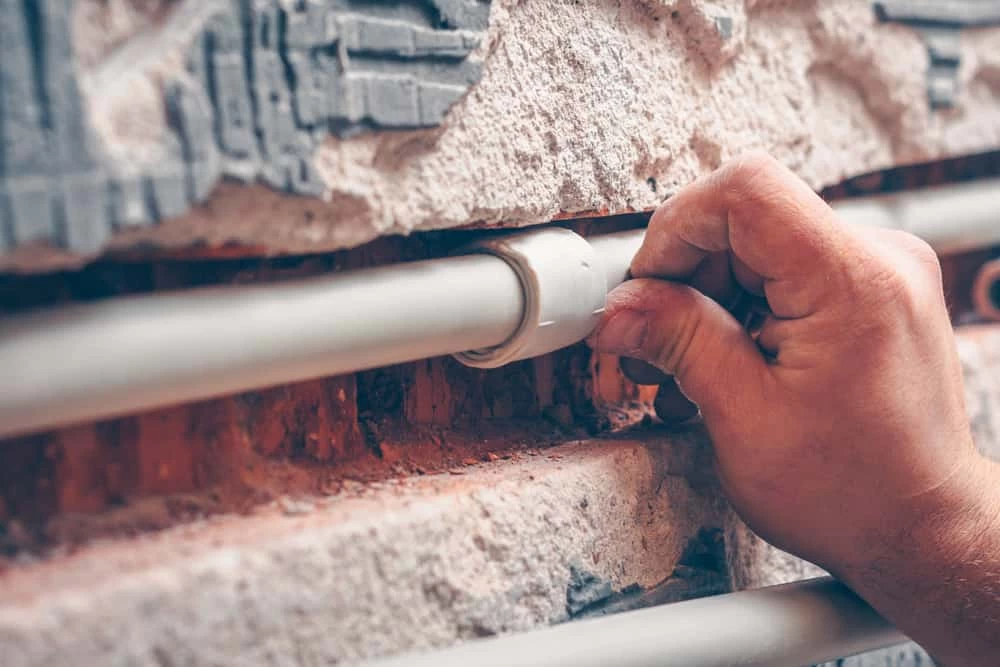
Repair is the right move when the damage is isolated. A single leak at a joint, a small crack in an otherwise sound pipe, a fitting that’s failed — these are fixable without replacing the entire line. If your pipe is copper and was installed in the last 30 to 40 years, and this is the first time you’ve had a problem, repair is almost always the better starting point.
The math is straightforward. Water main repair typically runs $500 to $2,000 depending on access and scope. If your pipe has years of useful life left and the repair cost is well below half of what full replacement would run, fixing the problem makes financial sense. The complication comes when the pipe is older, made of the wrong material, or has needed repairs before.
Water Main Leak Repair: What the Process Actually Looks Like
Before any repair happens, the leak needs to be located accurately. Underground leaks aren’t always where they seem — water travels along the path of least resistance, so a wet spot in your yard might be 10 feet from the actual break. A proper diagnostic starts with a camera inspection and, in some cases, acoustic leak detection equipment. Skipping this step is how contractors end up digging in the wrong place.
Once the leak is pinpointed, the repair approach depends on the pipe’s condition and location. For accessible sections with isolated damage, a direct repair — cutting out the compromised section and replacing it — is often all that’s needed. For pipes that run under a driveway, a foundation, or established landscaping, trenchless methods like pipe lining can seal the damaged area from the inside without major excavation. A resin-coated liner is inserted into the existing pipe and hardened in place, forming a new pipe within the old one. No trench. No torn-up yard.
This is where Long Island homeowners often get a better outcome than they expected. A lot of people call us bracing for a week of digging and a destroyed lawn. In many cases, the repair is done with minimal disruption to the property. One customer specifically noted we “replaced our water main and didn’t have to dig very much.” That’s not an accident. It’s the result of using the right method for the specific situation rather than defaulting to whatever’s easiest for the crew.
The honest answer is that not every leak requires the same solution. A thorough diagnosis — multiple site visits if the situation warrants it, camera inspection, direct coordination with your village’s building department — is what separates a well-executed repair from one that leaves you calling again in 18 months.
Signs Your Water Main Needs Repair Before It Gets Worse
Some water main problems announce themselves loudly — no water pressure, standing water in the yard, a wet basement floor that wasn’t wet before. Others are quieter. A water bill that’s crept up 20 to 30 percent over a few months without a change in usage is one of the most reliable early indicators. You’re paying for water that’s going into the ground instead of your house.
Discolored water — rust-brown or yellowish — is another signal worth taking seriously, especially in older homes. It usually means the interior of a galvanized pipe is corroding. The pipe is shedding rust into your water supply. That’s not a cosmetic problem; it’s a structural one. Galvanized pipes have a rough, deteriorating interior surface that catches debris and accelerates failure. Once you’re seeing discoloration, the pipe is telling you it’s near the end.
On Long Island, the freeze-thaw cycles in January and February are responsible for a significant share of sudden water main failures. Pipes that have been slowly weakening — from corrosion, age, or previous repairs — often fail completely during or just after a hard freeze. If you had a repair done in the last few years and you’re starting to see symptoms again, that’s the pattern worth paying attention to. It’s not bad luck. It’s the pipe telling you that patching isn’t going to hold much longer.
Low water pressure that affects the whole house — not just one fixture — is also a red flag. A single slow faucet is usually a fixture issue. Whole-house pressure loss points to the service line itself. If you’ve ruled out the obvious causes and the pressure keeps dropping, the main line deserves a look.
Main Water Line Leak Repair Cost vs. Full Replacement: The Real Numbers
Cost is usually the deciding factor, but the comparison is less obvious than it looks. Repair costs run $500 to $2,000 for most accessible pipe issues. Full replacement averages $2,000 to $5,000 with a range that can reach $12,000 depending on the length of the line, the method used, and site conditions. On a per-linear-foot basis, traditional trenched replacement runs $50 to $250. Trenchless replacement runs $70 to $250 per foot — slightly higher on paper.
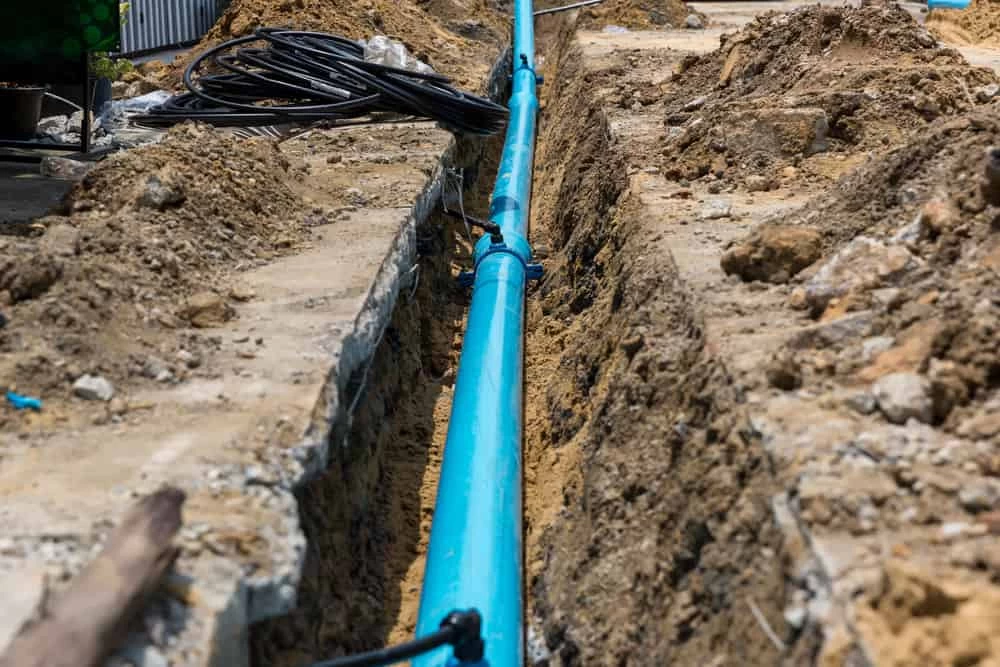
Here’s what that comparison misses. Traditional trenching adds $1,500 to $13,000 in excavation and backfill costs alone — before you factor in restoring your lawn, repairing your driveway, or replacing a section of sidewalk. Trenchless methods eliminate most of those additional costs. The per-foot number looks higher; the total project cost often isn’t.
When Replacement Becomes the Smarter Financial Decision
There’s a practical threshold that most industry sources agree on: when a repair costs more than 50 percent of what full replacement would run, replacement usually wins financially. The logic is simple — you’re spending a significant amount to extend the life of a pipe that’s already failing. You’re not buying yourself 20 more years. You’re buying yourself maybe two or three, and then facing the same decision again with a pipe that’s in even worse shape.
The repair history matters just as much as the current repair cost. If you’ve had the same line repaired twice in the last five years, the pattern is telling you something. Each repair on a deteriorating galvanized pipe is a temporary fix on a system that’s corroding from the inside out. At some point, the math shifts — and that point is usually before homeowners expect it.
Pipe material is the other major factor. Copper pipe installed in the last 40 to 50 years has a long remaining lifespan and is worth repairing. Galvanized steel — common in Long Island homes built before 1980 — has a lifespan of 20 to 50 years, and once it starts showing symptoms, deterioration accelerates. Lead pipe is a different situation entirely. In New York, you cannot legally repair a lead service line. Replacement is required by state law. If your home was built before 1960 and you’ve never had the service line assessed, it’s worth finding out what you have. Older communities in Nassau County — Hempstead, Freeport, Long Beach, Rockville Centre — have higher concentrations of pre-1960 homes where lead lines were still being installed.
The cost of doing nothing is also part of the equation, even if it doesn’t show up on a repair estimate. A failing water main that goes unaddressed can cause basement flooding, foundation damage, and mold — remediation for a finished basement on Long Island runs $8,000 to $22,000. Delaying a $3,500 replacement to avoid the expense can end up costing three to five times that amount if the pipe fails completely.
What Long Island Homeowners Ask Before Making This Decision
One of the most common questions we hear is whether homeowner’s insurance covers water main repair or replacement. The short answer is: sometimes, and it depends on your policy. Standard homeowner’s insurance typically doesn’t cover service line failure, but many policies now offer service line coverage as an endorsement. If you’re not sure what your policy includes, it’s worth a call to your carrier before you commit to any work. We’ve helped customers pull together the documentation needed to support an insurance claim — it’s not something most contractors offer to walk you through, but it’s a real part of the process for some homeowners.
Another question that comes up often: who is actually responsible for the water main? The municipality owns and maintains the main line running under the street. Your responsibility starts at the water meter — or in some cases, the curb stop — and runs to your house. That section is yours. If it fails, the repair or replacement cost falls on you, not the water district. This surprises a lot of homeowners, especially when the problem is close to the street.
People also ask whether trenchless technology is actually as reliable as traditional replacement. It is — when it’s the right method for the specific pipe and conditions. Pipe lining and pipe bursting have been used successfully for decades and are appropriate for most residential service line situations. The key is an accurate diagnosis first. Not every pipe is a candidate for every trenchless method, and a contractor who recommends trenchless without inspecting the line first is skipping the step that makes the recommendation meaningful.
On Long Island, the permit process adds a layer that homeowners don’t always anticipate. Nassau County has more than 70 incorporated villages, each with its own building department and permit requirements. Suffolk County homeowners deal with the SCWA and their local municipality. Pulling permits, coordinating with utilities before any excavation, and scheduling inspections is part of doing this work correctly — not an optional add-on. We handle all of it, which matters more than it might sound when you’re dealing with a village that has its own timeline and process.
How to Move Forward on a Water Main Decision in Nassau or Suffolk County
The repair-vs.-replacement decision comes down to four things: what the pipe is made of, how old it is, whether it’s failed before, and what the honest cost comparison looks like when you include everything — not just the repair estimate, but the cost of the next repair, and the one after that.
If your pipe is copper and this is a first-time isolated failure, repair is almost certainly the right call. If you’re dealing with galvanized steel in a pre-1980 Nassau County home, or you’ve patched the same line more than once, replacement deserves a serious look. And if there’s any chance you have lead pipe, get it assessed — New York law doesn’t give you the repair option anyway.
Whatever direction you’re leaning, it starts with an accurate diagnosis. We’ve been doing this work across Nassau and Suffolk counties for nearly 40 years. If you want a straight answer about what your pipe actually needs, we’re the call worth making.