
Summary:
You’ve been told you need a sewer camera inspection — maybe by a plumber, a home inspector, or a neighbor who just dealt with the same thing. Now you’re trying to figure out what it’s going to cost and whether it’s actually worth it. That’s a completely reasonable place to be.
The honest answer is that most Long Island homeowners pay somewhere between $200 and $400 for a standard residential inspection, though the number can move depending on a few key factors. This page walks you through what drives the cost, what the process actually looks like, and what to watch out for — so you’re not going in blind.
What Is a Sewer Line Inspection and What Does It Actually Show?
A sewer line inspection — sometimes called a sewer scope, a sewer camera inspection, a TV inspection, or a video pipe inspection — is all the same thing. A technician feeds a high-resolution waterproof camera through your sewer line, from your house out toward the street connection, and watches the footage in real time as the camera travels through the pipe.
What comes back on that screen tells the full story. Root intrusion growing through cracked joints. Sections of pipe that have bellied or sagged and are holding water. Orangeburg pipe that’s softening and collapsing from the inside. Offset joints where the ground has shifted and two pipe sections no longer line up. Grease buildup that’s narrowing the flow. These are the things a slow drain or a recurring backup can’t tell you on their own — and they’re the things that determine whether you need a $300 cleaning or a $10,000 repair.
How Does a Sewer Camera Inspection Work?
The camera enters through a cleanout — a capped pipe access point that most homes have somewhere along the sewer lateral, often near the foundation or out in the yard. If your home doesn’t have one, the technician can remove a toilet to gain access. No digging, no demolition, nothing invasive about the inspection itself.
As the camera moves through the line, the technician watches the live feed and notes anything worth flagging. The camera head also contains an electronic transmitter, which is one of the details that separates a professional inspection from a DIY attempt. That transmitter allows a surface locating device to pinpoint the exact location and depth of any problem — down to within inches. If something needs to be repaired, the crew knows precisely where to go. No guesswork, no tearing up the yard looking for the right spot.
The whole process typically takes 30 to 60 minutes for a standard residential sewer line. Most Long Island homes have laterals running 50 to 100 feet from the house to the street connection, and professional cameras reach up to 330 to 350 feet — more than enough to cover the full run. Consumer-grade snake cameras from a hardware store cap out around 20 feet, which is why DIY inspection isn’t really a viable alternative for anything beyond the first few feet of pipe.
At the end of the inspection, you receive a recording of the footage. That video is yours. You can use it to get a second opinion on a recommended repair, negotiate a home purchase price, support an insurance claim, or simply keep it on file for future reference. We provide it without hesitation on every job.
Do You Need to Clean the Line Before a Sewer Camera Inspection?
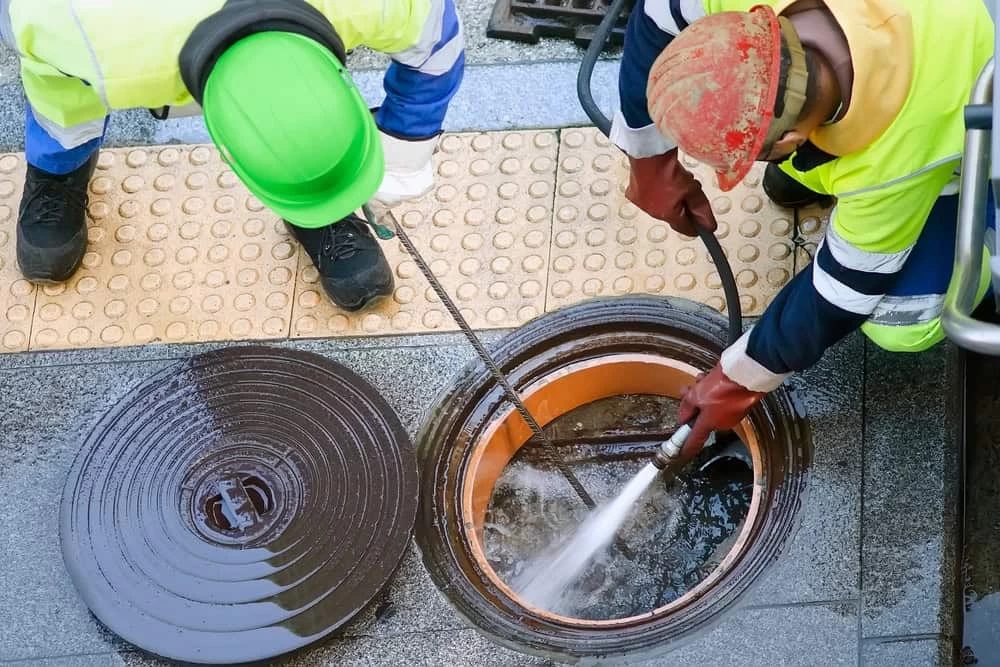
Sometimes, yes — and it’s worth understanding this before you get a quote, because it affects the total cost. If a sewer line has significant grease buildup, heavy sediment, or an active blockage, the camera may not be able to pass through cleanly enough to give a useful picture. In those cases, we recommend hydro-jetting first, which uses high-pressure water to clear the line before the camera goes in.
Hydro-jetting typically adds $150 to $800 to the baseline inspection cost, depending on the length of the line and the severity of the buildup. We often bundle camera inspection with sewer cleaning and offer both together at a combined rate — worth asking about when you call.
That said, if your line is slow but still draining, and there’s no active backup, a camera can usually pass through without pre-cleaning. We assess this on arrival. What you want to avoid is a company that reflexively recommends cleaning before inspection as an automatic upsell — we look at the situation first and make a call based on what we actually see.
For Long Island homes with older clay or cast iron pipe, some buildup on the pipe walls is completely normal and doesn’t necessarily mean the pipe is failing. Calcium deposits, light root tendrils at a joint, minor grease coating — these are findings, not emergencies. We know the difference between normal aging and a pipe that genuinely needs attention.
Sewer Scope Cost on Long Island: What You'll Actually Pay in 2026
The national average for a sewer camera inspection runs around $996, according to recent Angi and HomeAdvisor data. The New York metro area comes in a bit lower, averaging around $872. For most Long Island residential jobs, the realistic range is $200 to $400 — assuming a standard single-family home with a lateral of typical length and a cleanout that’s accessible.
Where the number moves is based on a handful of specific factors: how long the line is, whether cleaning is needed first, whether it’s an emergency call, and whether the property has easy access or requires extra setup. An after-hours or emergency inspection can add $150 to $800 on top of the base rate.

Why Long Island Homes Have Higher Sewer Inspection Risk Than Most
This is the part that national cost guides don’t cover — and it matters if you own a home in Nassau County or Suffolk County.
Nassau County’s sewer infrastructure was largely built between the 1920s and 1960s, with the biggest wave of construction happening during the post-war suburban expansion of the late 1940s and 1950s. That means the sewer laterals running under homes in Levittown, Bethpage, Massapequa, Baldwin, Bellmore, Merrick, Freeport, and dozens of similar communities are now 65 to 75 years old. Vitrified clay pipe — the dominant material of that era — has a design life of 40 to 50 years. A significant portion of Nassau County’s residential sewer laterals are already 15 to 35 years past their expected lifespan.
Then there’s Orangeburg pipe. If your home was built anywhere between the late 1940s and early 1970s, there’s a real chance your lateral is made from it. Orangeburg is a compressed wood fiber and pitch material that was used as a cheap alternative to clay during the post-war building boom. It was never meant to last forever, and it’s now softening, deforming, and collapsing under homes across Nassau County. A camera inspection is the only way to know if you have it and how far along the deterioration has gone.
Long Island’s mature tree canopy adds another layer of risk. The oaks, maples, and willows that were planted as part of the post-war suburban vision are now fully grown — and their root systems are aggressively seeking moisture through any available crack in an aging pipe joint. Root intrusion is the single most common finding in camera inspections across Nassau County’s older neighborhoods. For homes with mature trees near the lateral, it’s closer to an expected finding than a worst-case scenario.
On the south shore — communities like Long Beach, Oceanside, Bay Shore, and Freeport — coastal proximity and a relatively high water table accelerate pipe joint corrosion and create sandy, shifting soil conditions that cause pipe offsets over time. After major rain events, sewer surcharging in these areas can push problems that were marginal into active failures.
When a Sewer Camera Inspection Is Worth Every Dollar — And When to Skip It
There are situations where a plumbing camera inspection is essentially non-negotiable, and situations where it’s genuinely optional. Knowing the difference saves you money and frustration.
If you’re buying a home on Long Island — especially any home built before 1980 — a sewer scope should be on your due diligence list alongside the standard home inspection. Standard home inspections don’t include the underground sewer lateral. The inspector checks visible plumbing fixtures and accessible pipes, not the 75-foot clay line running under the front yard. In a market where Nassau County median home prices are north of $600,000, a $300 inspection before closing is a trivially small cost relative to the asset you’re protecting. If the camera finds a failing Orangeburg lateral or a root-choked clay pipe, you have real negotiating leverage — or a reason to walk away.
If you’ve had recurring slow drains or backups and a plumber has already snaked the line more than once without a lasting fix, that’s a strong signal that snaking is treating the symptom and not the cause. Camera inspection is the next logical step. Similarly, if you’ve had any sewage odor in the basement or yard, or if you’ve noticed unusually lush patches of grass over where the lateral runs, those are signs worth investigating before they become an emergency.
On the other hand, if you’ve had a single slow drain that cleared after snaking and hasn’t returned, and your home is newer construction with PVC pipe, a camera inspection is probably not urgent. The goal isn’t to talk anyone into an inspection they don’t need — it’s to make sure the people who do need one don’t skip it because they weren’t sure if it was worth it.
We don’t recommend repairs without running a camera first. If a contractor quotes you a major sewer repair based on symptoms alone — without camera evidence of what’s actually happening in the pipe — that should give you pause. You deserve to see what you’re paying to fix.
Getting a Sewer Camera Inspection on Long Island: What to Do Next
A sewer camera inspection is one of the few things in home ownership where spending a few hundred dollars now can genuinely prevent a five-figure problem later. For Long Island homeowners — especially in Nassau County’s older communities — the case for getting one is stronger than it is almost anywhere else in the country.
What you’re looking for in a provider is straightforward: someone who will show you the footage in real time, give you a copy, and tell you honestly what they found before recommending anything. Licensing matters too — any legitimate contractor doing sewer work in Nassau or Suffolk County should be properly licensed in both.
We’ve been doing this work on Long Island since 1980. Same family, same crew, same commitment to showing homeowners exactly what’s happening in their pipes before we ever suggest a repair. If you’ve got questions about what a sewer camera inspection involves for your specific property — whether you’re in Massapequa, Huntington, Bay Shore, or anywhere across Nassau or Suffolk County — we’re ready to help.