

Summary:
If you’re searching for septic tank pumping on Long Island, there’s a good chance you’re either overdue for service, noticing something off with your drains, or about to sell your home and realizing you have no maintenance records to show. Any of those situations is more common than you’d think.
What’s also common — and worth knowing before you call us — is that most Long Island homes don’t actually have a septic tank. They have a cesspool. The difference matters for pricing, frequency, and what the county expects from you. We’ll cover all of it here, so you’re not caught off guard when a truck shows up.
Cesspool vs. Septic Tank: What Long Island Homeowners Actually Have
The terms get used interchangeably, but they describe two different systems. A septic tank is a two-chamber unit that separates solids from liquid before sending the treated effluent out to a drain field or leach field. A cesspool is a simpler pit — it holds waste and lets liquid seep out through perforated walls directly into the surrounding soil, with no real separation happening first.
On Long Island, the majority of homes built before the early 1970s have cesspools. Suffolk County actually banned new cesspool installations back in 1973 for new construction, and both Nassau and Suffolk Counties banned them entirely as of July 1, 2019. If your home was built before that era and you’ve never had it inspected, you almost certainly have a cesspool — not a septic tank.
Why the Distinction Between Cesspool vs. Septic Changes Your Service Schedule
Here’s where the distinction becomes practical. Cesspools need to be pumped more frequently than septic tanks — typically every one to two years for an average household. On Long Island specifically, even septic tanks should be pumped every two to three years. The reason comes down to geology.
Long Island sits on a glacial outwash plain. The soil — especially on the South Shore — is predominantly sandy. That sandy composition allows wastewater to move through the ground quickly, which sounds like a good thing until you realize it also means less filtration time before that water reaches the aquifer below. Combined with a relatively high water table in many communities, particularly in low-lying areas near bays and harbors, your system is working harder than it would in most other parts of the country.
Suffolk County’s Department of Health recommends pumping septic tanks every three years at minimum. We typically recommend every two to two and a half years for a family of four with a standard 1,000-gallon tank. If you have a cesspool, that schedule tightens further.
There’s also the sole-source aquifer to consider. Long Island gets one hundred percent of its drinking water from underground aquifers — no rivers, no reservoirs, nothing piped in from elsewhere. Every drop of water that comes out of a Nassau or Suffolk County tap started underground. Suffolk County’s nitrate levels are already higher than ninety-five percent of the country, driven in large part by aging cesspools and undertreated wastewater. Regular septic service isn’t just about protecting your property — it’s directly connected to the water quality of the entire region.
Cesspool vs. Leach Field: Understanding How Your System Handles Wastewater
A leach field — sometimes called a drain field — is the component of a true septic system that disperses treated liquid into the soil after it exits the septic tank. The tank does the separation work first; the leach field handles the final dispersal. When a leach field fails, it’s usually because solids have been escaping the tank for too long and have clogged the field’s absorption capacity. Replacing a drain field runs anywhere from ten thousand to thirty thousand dollars on Long Island, which is exactly why routine pumping exists — to prevent that from happening.
A cesspool doesn’t have a separate leach field. The pit itself handles both holding and dispersal, which is why it’s considered a less advanced system and why both counties now require Innovative/Alternative Onsite Wastewater Treatment Systems — known as I/A OWTS — for any new installation or failed-system replacement. These advanced systems remove up to ninety percent of nitrogen from wastewater before it reaches the ground, a significant improvement over a standard cesspool that removes almost none.
If you’re in a situation where your cesspool has failed and needs full replacement, you’re looking at a mandatory upgrade to an I/A OWTS system. Those systems run between fifteen thousand and twenty-five thousand dollars installed on Long Island. Suffolk County’s Septic Improvement Program does offer grants covering fifty percent of the cost, up to ten thousand dollars from New York State, for qualifying homeowners — so it’s worth asking about before assuming you’re absorbing the full cost yourself.
The practical takeaway: know what system you have, understand how it works, and don’t wait for a failure to find out. A routine pump-out is the cheapest form of insurance your system has.
Septic Tank Pumping Cost on Long Island: What to Budget For
Cost is usually the first question, and it’s a fair one. Routine cesspool pumping on Long Island runs approximately four hundred to six hundred dollars for a standard service. True septic tank pump-outs fall in a similar range, though the final number depends on tank size, access, and whether any additional inspection or cleaning is needed.
What changes the math significantly is timing. Emergency septic pumping service — when you’re calling because sewage is backing up through your drains — typically costs three to four times more than a scheduled visit. That’s before accounting for any property damage, remediation, or repairs that may follow a backup event.
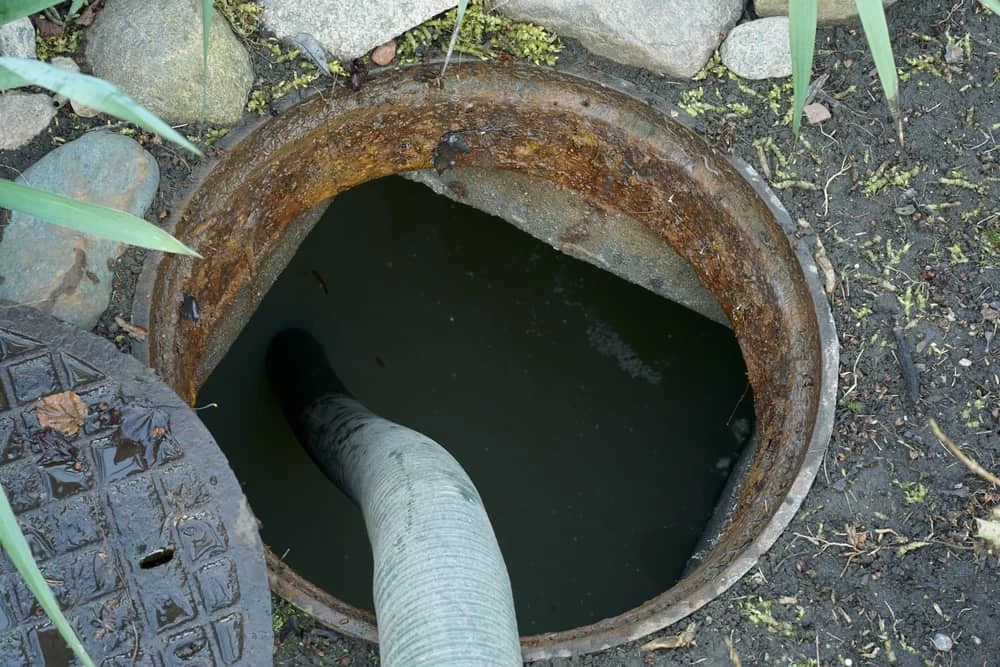
Cost to Get Your Septic Pumped on Long Island: Routine vs. Emergency Pricing
For routine service, the four hundred to six hundred dollar range reflects what most Long Island homeowners pay for a standard cesspool pumping service with a licensed company. A septic tank pump-out in the same market lands in a comparable window, though larger tanks — anything above a thousand gallons — may push the cost higher.
Emergency septic pumping is a different category entirely. When a system backs up — raw sewage surfacing in your yard, coming up through floor drains, or overflowing into a finished basement — the cost of the service call is the least of your concerns. The property damage, the cleanup, and the potential health hazard are what make emergency situations genuinely expensive. Most companies that offer 24 hour cesspool service charge a premium for after-hours dispatch, which is reasonable, but the real cost of an emergency is almost always what the emergency reveals: a system that needed attention years ago.
The most straightforward way to manage septic service costs is to stay on schedule. A five-hundred-dollar pump-out every two to three years is a predictable, manageable expense. A failed drain field or a collapsed cesspool that requires full replacement is a fifteen-thousand to forty-thousand-dollar problem. Those aren’t hypothetical numbers — they’re what Long Island homeowners face when a system that was ignored long enough finally gives out.
One thing worth noting: very low prices from companies advertising cheap cesspool pumping are often a signal, not a deal. Unlicensed operators sometimes only pump the surface layer of a tank, leaving sludge behind, skip the inspection, and provide no documentation. In Nassau and Suffolk Counties, cesspool pumping requires specific licensing — including LILWA certification in Suffolk County under Article VII — and a New York State DEC waste transporter permit for legal septage disposal. Hiring someone without those credentials isn’t just a quality risk. It’s a compliance risk that can surface when you try to sell your home.
Average Price for Septic Pumping in Nassau and Suffolk County: What Affects the Final Number
Several factors move the needle on what you’ll actually pay. Tank size is the most obvious — a larger tank takes more time and more truck capacity to empty. Access matters too: if your tank lid is buried under a foot of soil and hasn’t been located in years, there’s additional work involved before the truck can even start. The number of tanks or chambers also plays a role, since some older Long Island systems have multiple cesspools connected in series.
Seasonal timing affects both availability and, in some cases, pricing. Spring and summer are the busiest periods for local septic pumping services on Long Island. Scheduling competition is highest during those months, particularly in communities with a large number of seasonal rental properties — the Hamptons, Fire Island, and other East End communities see a distinct spike in service demand tied to property openings. Fall is generally considered the best time to schedule routine service: the summer’s heavy usage has accumulated, ground conditions are still workable, and scheduling is typically easier than peak season.
Winter pumping is possible but more complicated. Frozen ground makes access harder and any associated repairs significantly more expensive. If your system shows warning signs in December — slow drains in multiple fixtures simultaneously, gurgling sounds from toilets, odors near the tank or yard — don’t wait until spring. Those symptoms mean the system is approaching capacity or already in distress, and a winter emergency is more disruptive and more expensive than a winter service call.
For homeowners getting ready to sell, there’s an additional layer to consider. Both Nassau and Suffolk Counties require documentation of septic system maintenance as part of property transfer. If you have no records of when your system was last pumped or inspected, that gap can create delays at closing or trigger a mandatory inspection that reveals deferred problems. Scheduling a pump-out and getting written documentation before you list is straightforward and inexpensive relative to what a flagged inspection can cost you in negotiating leverage.
Finding a Licensed Septic Pumping Service on Long Island Worth Calling
When you’re looking for septic pumping near your location or searching for local septic pumping companies in Nassau or Suffolk County, the basics matter: licensed, insured, using their own crews, and able to give you a straight answer on price before the truck rolls. Ask whether they hold LILWA certification. Ask whether they’ll provide written documentation of the service. Those two questions will tell you a lot.
If the pumping visit reveals something beyond a full tank — a cracked line, a failing distribution box, a sewer connection that needs attention — you want a company that can handle the next step without handing you off to someone else. That’s where having a full-service contractor matters.
We’ve been doing this work across Nassau and Suffolk Counties for nearly forty years. If you’re overdue for service, dealing with an active problem, or just trying to understand what you actually have under your yard, we’re straightforward to reach and we’ll tell you what we find.