

Summary:
Something’s off. Your water bill jumped $80 last month and nothing changed in your house. Or there’s a soft, wet patch on your lawn that’s been there for two weeks despite no rain. You haven’t touched the sprinklers. The toilets aren’t running. But the water meter keeps moving.
That’s the thing about underground leaks — they don’t announce themselves. They just cost you money, quietly, while the damage builds up beneath your feet. The good news is that finding a ground water leak on Long Island no longer means tearing apart your yard to figure out what’s going on. Here’s what you should know.
What Is Ground Water Leak Detection?
Ground water leak detection is the process of locating a leak in a buried water line without having to dig it up first. The goal is precision — knowing exactly where the problem is before anyone touches a shovel. This matters because guessing wrong is expensive. An unnecessary excavation can cost hundreds of dollars and leave your driveway or landscaping in pieces, only to reveal the leak is three feet to the left.
We use acoustic and ultrasonic equipment to listen for the sound a pressurized leak makes as water escapes through a pipe wall and travels through surrounding soil. Our trained technicians move sensors along the ground above the pipe, following the sound to its strongest point. That’s where the leak is. No digging required to find it — and in many cases, no digging required to fix it either.
How Does Underground Pipe Detection Actually Work?
The process starts before any listening equipment comes out. First, the pipe itself needs to be located. Underground pipe detection typically uses electromagnetic tracing or ground-penetrating radar to map where the buried line runs. You can’t interpret leak sounds accurately if you don’t know exactly where the pipe is — so this step comes first, and it’s often where less experienced contractors skip ahead too quickly.
Once the pipe path is confirmed, we place acoustic sensors on the ground surface or on accessible contact points like valves, curb stops, and meter boxes. These sensors pick up the vibration signature of a pressurized leak — a distinct sound that differs from normal pipe flow or ambient noise. High-quality equipment can detect leaks up to eight to ten feet underground, and even through concrete slabs or paved surfaces. The signal is strongest directly above the leak point, and that’s where we mark the ground.
What makes this approach so valuable is that it’s non-invasive. The detection itself causes zero disturbance to your yard, driveway, or landscaping. If a repair is needed, the excavation — if any — is targeted to a precise location rather than a general area. On Long Island, where mature landscaping, paved driveways, and concrete sidewalks are the norm in communities from Bellmore to Babylon, that specificity makes an enormous practical difference.
Some situations call for additional methods alongside acoustic detection. Thermal imaging can reveal temperature differences caused by water escaping into soil. Tracer gas detection — where a safe, inert gas is introduced into the pipe — can identify leak points in cases where acoustic signals are difficult to isolate. We combine these methods rather than relying on a single tool, because soil conditions, pipe depth, and surrounding material all affect what works best in a given situation.
Signs You May Have an Underground Plumbing Leak
Most homeowners don’t call about a suspected underground leak because they saw the pipe fail. They call because something doesn’t add up. The most common trigger is a water bill that’s suddenly and inexplicably higher — sometimes $50 more, sometimes $200 more — with no change in household usage. That kind of spike, sustained over two or three billing cycles, is one of the clearest indicators that water is going somewhere it shouldn’t be.
A simple check you can do yourself: turn off every fixture, appliance, and faucet in the house, then look at your water meter. If the dial or digital display is still moving, water is flowing somewhere in the system — and if nothing is running inside, it’s likely escaping underground. This won’t tell you where the leak is or how serious it is, but it confirms that the problem is real and worth investigating.
Other signs include unexplained wet or soft patches in your yard, areas of grass that are noticeably greener or growing faster than the surrounding lawn, a persistent drop in water pressure throughout the house, or the sound of running water near the meter or foundation when everything is turned off. In some cases, a slow leak under a concrete slab or driveway can go undetected for months — the only clue being a rising bill and, eventually, cracking or settling in the surface above it.
On Long Island, there’s an added layer of context worth understanding. A significant portion of homes in Nassau and Suffolk counties were built between the late 1940s and the early 1970s — the post-war suburban expansion that created communities like Levittown, Massapequa, Merrick, and Lindenhurst. The original water service lines in many of these homes are now 50 to 80 years old. Galvanized steel and cast iron pipes from that era weren’t built to last forever, and Long Island’s coastal soil — with its elevated salt content — accelerates corrosion faster than inland environments. If your home is from that era and you’ve never had the water line inspected, the odds that everything is still in perfect condition are not in your favor.
Underground Leak Locator Services on Long Island
Knowing what the technology can do is one thing. Knowing who to trust with it on Long Island is another. Not every plumber has specialized leak detection equipment, and not every company that detects leaks can also repair them — which means some homeowners end up coordinating between two separate contractors to get the job done.
What makes the most practical difference for a Long Island homeowner is finding a provider who can locate the leak and fix it, ideally without excavation. That combination — precise detection followed by trenchless repair — is what keeps your yard intact and your project on a single timeline. We handle both the detection and the repair, so you’re working with one team from start to finish.
Can Underground Water Leaks Be Fixed Without Digging?
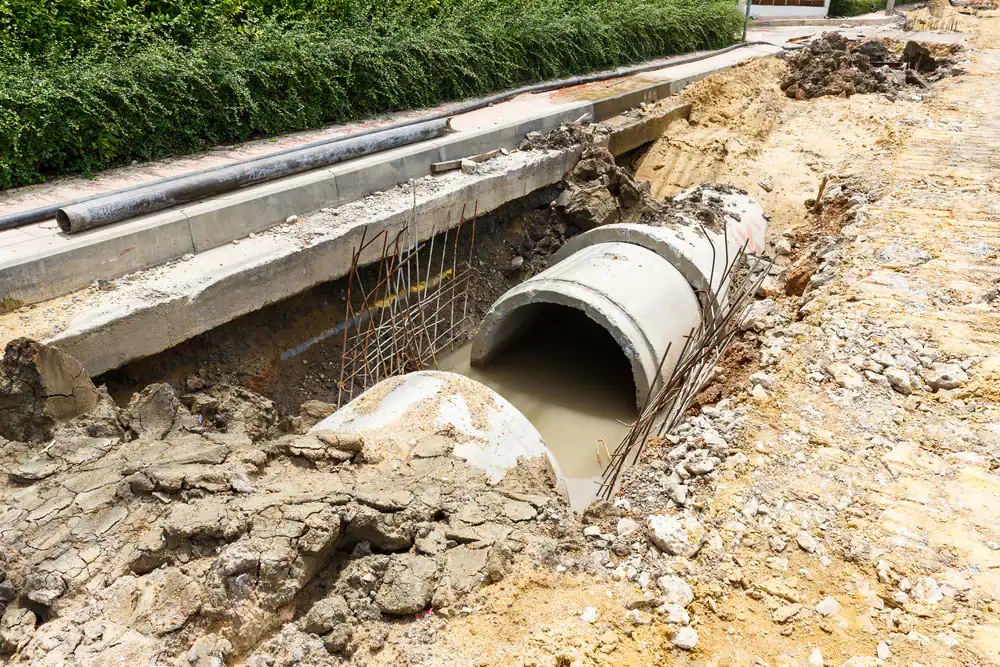
In most cases, yes — and this is the part that surprises a lot of homeowners who’ve been putting off the call because they’re dreading the disruption. The fear is understandable. The image of an excavator tearing through a driveway, a front lawn left in pieces, and a week of construction noise is enough to make anyone delay. But that’s not what underground pipe repair looks like anymore, at least not when trenchless methods are available.
Pipe bursting replaces an old, damaged line by pulling a new pipe through the existing one, fracturing the old material outward as it goes. Pipe lining inserts a resin-coated liner into the existing pipe, which cures in place to form a new pipe within the old one. Directional drilling installs a new line along a different underground path entirely, with entry and exit points that require only small, targeted excavations. All three methods leave the surface above largely undisturbed.
The practical outcome is that a repair that once required a full trench across your property — with all the landscape restoration costs that come with it — can now be completed with minimal surface disturbance. For homeowners in places like Huntington, Patchogue, or Garden City, where mature trees, established gardens, and paved surfaces are common, this isn’t a minor convenience. It’s the difference between a repair and a renovation.
One thing worth knowing: when a leak is detected and documented by a professional, that documentation can also support a homeowner insurance claim. If the leak is covered under your policy, having a written report showing the exact location, cause, and extent of the damage is far more useful than a contractor’s verbal account. It’s a practical benefit most homeowners don’t think about until they need it.
Who Is Responsible for a Leaking Water Line — You or the Utility?
This is one of the most common questions homeowners ask, and the confusion is legitimate. In general, the water utility — on Long Island, that’s often Liberty Utilities — owns and maintains the main line running under the street. But the service line that connects that main to your house, including the section running under your property, is typically your responsibility as the homeowner. That means if the leak is anywhere between the street connection and your foundation, the repair cost falls to you.
The reason this matters in the context of leak detection is straightforward: you need to know exactly where the leak is before you can know who’s responsible for fixing it. A professional detection service will tell you precisely — is the leak in the street main, at the curb stop, or in the service line running under your lawn? That answer determines everything about how the repair gets handled and who pays for it.
In some cases, a leak turns out to be in the utility’s portion of the line, not the homeowner’s. When that happens, we help coordinate the next steps — contacting Liberty, flagging the location, and ensuring the utility handles their section of the repair. That kind of local knowledge, built over nearly 40 years of working across Nassau and Suffolk counties, is what separates a provider who knows the Long Island market from one who’s just passing through.
It’s also worth noting that Suffolk County homeowners face a slightly different landscape than those in Nassau. Many Suffolk properties rely on private cesspool or septic systems rather than municipal sewer connections, which adds another layer of underground infrastructure to be aware of. And because Long Island’s drinking water comes entirely from underground aquifers — there are no surface reservoirs — a leaking service line isn’t just a property issue. It has implications for the broader water supply that the whole region depends on.
Ground Water Leak Detection in Nassau and Suffolk County: What to Do Next
If something about your water usage feels off — the bill, the pressure, the sounds, the soggy corner of the yard — the right move is to get it looked at before it gets worse. Underground leaks don’t resolve on their own. They get bigger, they erode soil, they undermine foundations, and they keep adding to your water bill every single day they go unaddressed.
The good news is that finding and fixing the problem doesn’t have to mean tearing your property apart. Modern acoustic and ultrasonic detection locates leaks precisely, and trenchless repair methods handle the fix with minimal disruption to your yard, driveway, or landscaping.
Long Island Water and Sewer Main – Allied All City has been doing this work across Nassau and Suffolk counties for nearly 40 years. If you’re dealing with a suspected leak — or just want to know what’s actually going on underground — reach out. We’ll give you a straight answer.
Need this done on Long Island? Long Island Sewer and Water Main handles water line repair across Nassau and Suffolk County. Call 631-407-2873 in Suffolk or 516-604-2651 in Nassau.