
Summary:
If you’re running a restaurant or commercial kitchen on Long Island, grease trap maintenance isn’t optional — and neither is understanding what it costs. Nassau and Suffolk County health departments enforce grease trap compliance actively, and the paperwork requirements alone can catch operators off guard.
This guide gives you real price ranges for 2026, explains what the service actually involves, and covers the local rules that apply specifically to Long Island food service operations. By the end, you’ll know what to budget, what to ask for, and what separates a compliant service from one that leaves you exposed.
What Does Grease Trap Pumping Cost on Long Island in 2026?
The honest answer is: it depends on your trap size, how often you service it, and whether you’re calling ahead or calling in a panic. Nationally, grease trap pumping runs anywhere from $175 to $2,500 per service. On Long Island — where labor costs run higher and licensed haulers are required by county law — you should expect pricing toward the upper end of that range.
Small indoor under-sink traps (30 to 200 gallons) typically run $125 to $180 on a scheduled service plan, and closer to $190 to $240 for a one-off emergency call. Mid-size outdoor interceptors in the 1,000 to 1,500 gallon range — which cover the majority of Long Island restaurants — fall between $225 and $315 on a regular program. Large commercial systems above 3,000 gallons can exceed $2,500 per service. For businesses dealing with persistent drainage issues alongside grease buildup, professional sewer line repair may also be necessary.
Annual maintenance costs, including occasional inspections, minor repairs, and enzyme treatments, typically add another $200 to $600 on top of pumping fees. The most expensive grease trap problem is the one you ignored — a backup, a health citation, or a sewer line clogged with hardened FOG will cost far more than a scheduled cleaning ever would.
What Affects the Price of Grease Trap Service on Long Island?
Size is the biggest driver, but it’s not the only one. A few other factors move the number significantly.
Frequency matters a lot. Providers who offer 30-, 60-, or 90-day scheduled service plans typically charge less per visit than operators who call only when something goes wrong. If your kitchen is running at high volume — think a busy dinner-service restaurant in Hempstead or a catering operation in Smithtown — you’re likely pumping every one to three months regardless. Locking in a service plan usually saves money over the course of a year.
Service quality also affects price, and this is where the cheap option often costs more in the long run. A thorough grease trap cleaning means removing all waste, scraping hardened grease from the trap walls, and inspecting the baffles and inlet/outlet tees. Some providers skim the liquid layer and call it done. That leaves hardened FOG on the walls, which accelerates refill time and leaves your trap functionally compromised between visits. You end up calling more often — and paying more — than if you’d gone with a provider who did the job completely the first time.
Location and access play a role too. Outdoor interceptors buried in a parking lot or behind a kitchen are more involved to service than an under-sink trap. If your system hasn’t been serviced recently and has significant hardened buildup, expect the job to take longer and cost more than a routine pump-out. For more complex drainage issues, professional sewer services can help address problems beyond routine grease trap maintenance.
Finally, licensing requirements in Suffolk County add a layer that not every provider meets. Under Article VII of the Suffolk County Sanitary Code, any company performing grease trap cleaning must hold a grease trap and grease interceptor cleaning and maintenance endorsement — which requires certification through the Long Island Liquid Waste Association (LILWA) or an equivalent approved program. Hiring an unlicensed provider doesn’t just create quality risk — it creates a compliance problem, because that service won’t be recognized as valid by a health inspector.
How Often Does a Long Island Restaurant Need Grease Trap Pumping?
The general rule is every one to three months for high-volume establishments, every three to six months for mid-volume operations, and every six to twelve months for lower-volume kitchens. But on Long Island, the regulatory floor is more specific than that.
The Town of Brookhaven — the largest town in Suffolk County by area — mandates that grease traps be cleaned before the accumulated FOG reaches 25% of the trap’s total capacity, or at minimum every three months for external interceptors, whichever comes first. Written service logs must be filed with the district every 90 days. That’s not a suggestion — it’s a code requirement with a paper trail attached.
Both Nassau and Suffolk County health departments require a signed service manifest for every cleaning. That document records the date of service, the volume removed, and where the waste was disposed. During a health inspection, the inspector may ask to see your service records. If you can’t produce them, you can be cited even if the trap is currently clean. The documentation is not a formality — it’s the proof.
This matters especially on the East End. Seasonal restaurants in Southampton, East Hampton, and Greenport that close for the winter and reopen in spring often find their traps need immediate service before the summer rush begins. Then, from Memorial Day through Labor Day, kitchen output spikes dramatically — the same grease trap that needed quarterly pumping in the off-season may need monthly attention during peak season. If you’re running a high-volume spot in the Hamptons during July and August, your grease trap is working harder than it does anywhere else on Long Island.
Restaurant Grease Trap Service: What the Process Actually Looks Like
A proper grease trap service is not complicated, but there’s a meaningful difference between a thorough job and a surface-level one. Understanding what should happen during a service call makes it easier to evaluate whether a provider is doing it right.
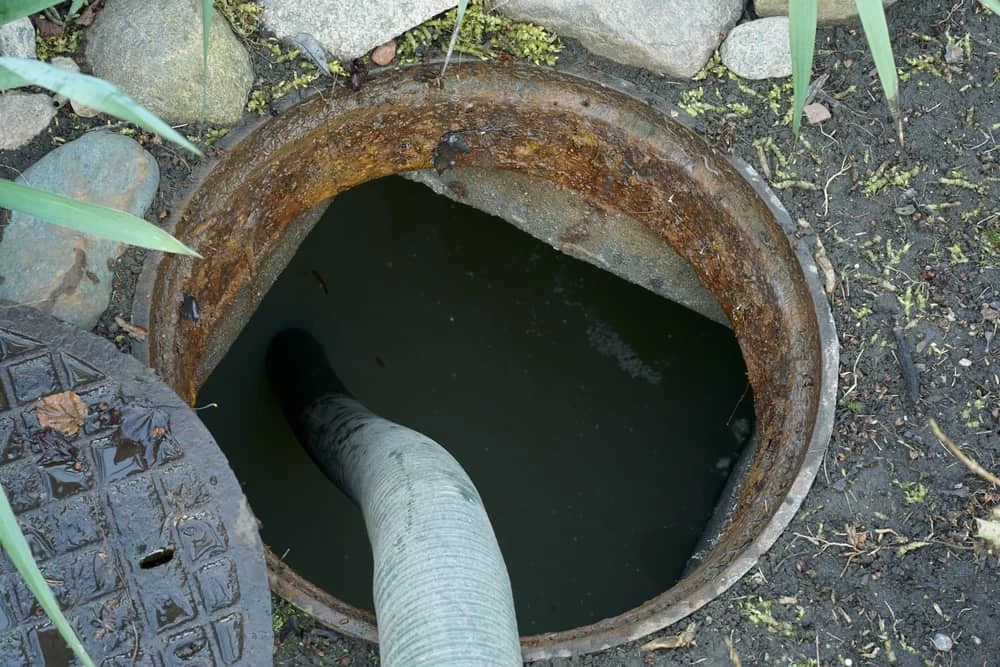
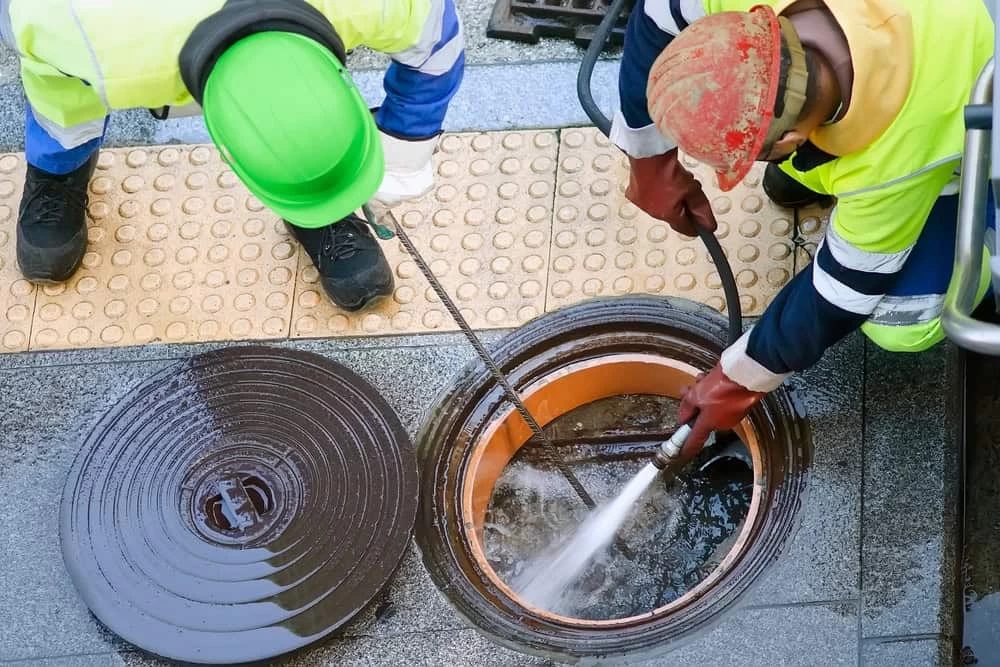
The technician pumps out all contents — liquid waste, solid FOG, and any accumulated sludge. Then they scrape the trap walls to remove hardened grease deposits that the pump won’t pull out on its own. The baffles, inlet tees, and outlet tees get inspected for damage or blockage. After service, you receive a signed manifest documenting what was removed and where it went.
That last step is the one that protects you in an inspection. Keep it on file.
Commercial Grease Trap Service: Indoor Traps vs. Outdoor Interceptors
The terms “grease trap” and “grease interceptor” are often used interchangeably, and for practical purposes they refer to the same function — separating fats, oils, and grease from wastewater before it enters the sewer or cesspool system. The difference is mostly size and placement.
Indoor under-sink traps are smaller units, typically 30 to 200 gallons, installed directly in the kitchen plumbing. They’re common in smaller restaurants, cafes, and food service operations with lower kitchen output. Because they’re smaller, they fill up faster — a high-volume kitchen can push a small trap to capacity in as little as 30 days. These units are easier to access but require more frequent service.
Outdoor interceptors are larger, buried units — usually 1,000 to 1,500 gallons, though commercial operations with heavy grease loads may run 3,000 gallons or more. These are more common in full-service restaurants, institutional kitchens, schools, and hotels. They handle more volume and generally require less frequent pumping, but the service is more involved and the cost per visit is higher.
One thing worth knowing: there are two main pumping methods. A dry pump removes everything from the trap — all solid and liquid waste — leaving it empty. This works, but an empty trap can emit strong odors until it refills with water. The preferred method for many operators is pump-and-return, where the FOG is removed but the gray water is returned to the trap after cleaning. Not every provider has the equipment to do this, so it’s worth asking.
For Long Island restaurants on cesspools rather than municipal sewers — which is common throughout much of Suffolk County — the stakes are higher. FOG that enters a cesspool system causes damage that’s significantly more expensive to remediate than a sewer line blockage. If you’re on a cesspool system in Babylon, Islip, or further east, a neglected grease trap isn’t just a health code issue — it’s a direct threat to your wastewater infrastructure.
Grease Interceptor Cleaning and What to Ask Before You Hire Anyone
Before you book a grease trap service on Long Island, a few questions are worth asking — not to be difficult, but because the answers tell you quickly whether you’re dealing with a legitimate provider or someone who’s going to leave you exposed.
First: are they licensed for grease trap work in New York? In Suffolk County, this means holding the Article VII endorsement. Ask directly. A provider who hesitates or deflects on this question is telling you something.
Second: will they provide a signed service manifest after the job? This should be standard. If a provider doesn’t mention documentation unprompted, ask for it explicitly. You need that paperwork for your health inspection records.
Third: what does the service include? There’s a real difference between a provider who vacuums the liquid layer and one who scrapes hardened deposits from the trap walls. Ask what they do when they encounter hardened buildup. The answer tells you whether they’re doing a complete job or a quick one.
Fourth: what’s their response time for emergencies? Grease trap backups don’t schedule themselves around your business hours. If your trap fails on a Friday night before a Saturday dinner service, you need a provider who actually answers the phone and can dispatch quickly. Same-day and next-day response isn’t a luxury in this business — it’s a basic operational requirement.
We’ve been serving Nassau and Suffolk County restaurants, commercial kitchens, and food service operations for nearly 40 years. We hold the licensing required for grease trap work in New York, we provide signed service manifests after every job, and we’re available 24 hours a day including holidays — because that’s when problems tend to happen. We don’t use subcontractors, so the technician who shows up is our employee, trained on our standards, accountable to us.
We also understand the full picture of what’s downstream. If a grease trap issue has already pushed FOG into your sewer line, we can scope it with a real-time camera and handle the repair — including trenchless options that don’t require tearing up your parking lot or kitchen floor. That’s a capability most grease trap service providers simply don’t have.
What Long Island Restaurant Owners Should Know Before Calling a Grease Trap Service
Grease trap pumping on Long Island in 2026 runs roughly $125 to $180 for small under-sink units on a scheduled plan, and $225 to $315 for mid-size restaurant interceptors. The real cost of skipping service — a health citation, a sewer backup, or fines that can reach $10,000 — makes the math straightforward.
Know your county’s requirements. Know what documentation you need. And make sure whoever you hire is actually licensed to do the work in New York.
If you’re in Nassau County, Suffolk County, or anywhere on Long Island and need grease trap pumping from a provider with the credentials and the track record to back it up, Long Island Water and Sewer Main – Allied All City is ready to help. Call us, tell us what you’re working with, and we’ll give you a straight answer.