
Summary:
Something feels off. The shower’s draining slower than it used to. There’s a faint smell near the basement floor drain. Or worse — water is backing up somewhere it definitely shouldn’t be. You’re not sure if it’s a minor clog or the start of something expensive, and you’re not ready to call a plumber until you have a better sense of what you’re dealing with.
That’s a reasonable place to be. This page is for you. We’ll break down what drain services actually include, what’s behind the most common problems on Long Island specifically, and what to look for when you do decide to call us.
What Drain Services Actually Include
“Drain services” is a broad term that covers a lot of ground. At the basic end, it means clearing a clog — hair, grease, soap buildup, whatever’s blocking the line. But for many Long Island homeowners, especially those in homes built in the 1950s and 1960s, what looks like a simple drain problem turns out to be something structural happening inside the pipe itself.
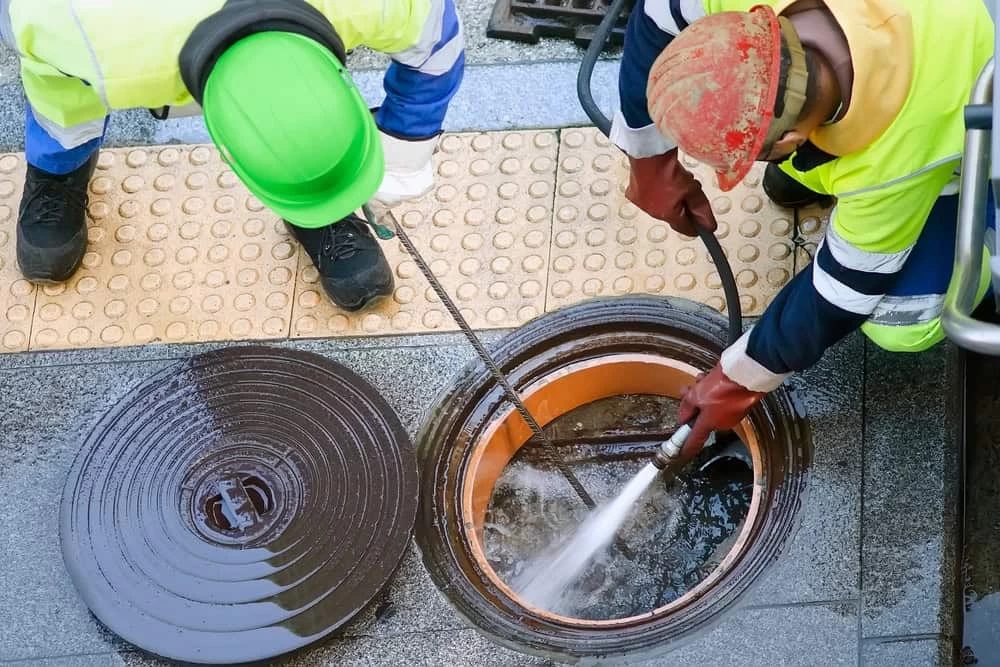
We start with diagnosis. That means a camera inspection to see what’s actually going on before we recommend any repairs. From there, depending on what the camera finds, the work could range from a thorough cleaning to pipe lining, pipe bursting, or in some cases a full sewer lateral replacement. For properties that require grease management, grease trap installations can also help prevent grease from entering and obstructing drainage systems.
Why Long Island Drains Fail More Often Than You'd Expect
If you live in Nassau County — Levittown, Massapequa, Wantagh, Seaford, Bellmore, Hicksville, or any of the communities that grew up during the post-war suburban boom — your home’s sewer pipes are likely made of clay or cast iron and are somewhere between 65 and 75 years old. Those materials have a design life of roughly 40 to 50 years. The math isn’t encouraging.
Clay pipe was the standard choice during mid-century construction because it was durable and affordable at the time. But clay pipe relies on fitted joints to stay sealed, and those joints are exactly where problems develop. Long Island’s glacial outwash soils — the sandy, loose composition left behind by retreating glaciers — shift and settle over time in ways that open those joints up. Once a joint separates even slightly, tree roots find it.
And Long Island has no shortage of mature trees. The oaks and maples planted alongside those mid-century homes in the 1950s now have root systems large enough to work their way into cracked or separated pipe joints, sometimes filling an entire section of line. This is the most common reason homeowners in Nassau County deal with recurring drain backups — not grease, not buildup, but roots that grow back every season because the underlying pipe was never properly addressed.
Spring is the worst time of year for this. As trees come out of dormancy and root growth accelerates, the calls spike. If you’ve had your drain snaked two or three times in recent years and the problem keeps returning, root intrusion is almost certainly the reason. Snaking clears the blockage temporarily but doesn’t remove the roots or seal the pipe. It’s the same problem, just delayed.
Suffolk County Drain Problems Are a Different Story
In Suffolk County, the situation is different — but no less complicated. Roughly 70 percent of Suffolk County properties aren’t connected to a municipal sewer system at all. They rely on cesspools or septic systems instead. That changes the entire picture when drain problems show up.
When a Suffolk County homeowner notices slow drains or backups, the issue isn’t always in the drain line itself. It might be a cesspool that needs pumping, a leach field that’s saturated, or a problem at the point where the house drain meets the cesspool. A company that only handles drain cleaning and doesn’t work on cesspools can diagnose half the problem at best.
We handle both sides of it. We do drain cleaning and sewer line work, and we do cesspool pumping and septic service. If you’re in Bay Shore, Brentwood, Huntington, Smithtown, or anywhere else in Suffolk where you’re on a private system, we’re not going to send you to a second contractor to finish what we started.
There’s also an environmental dimension worth mentioning. Long Island’s drinking water comes entirely from underground aquifers — the Magothy and Upper Glacial aquifers supply every home and business on the island. When a cesspool fails or a cracked sewer lateral leaches waste into the soil, it doesn’t just stay there. It moves through Long Island’s sandy soil directly toward that groundwater supply. Proper drain and sewer maintenance here isn’t just about your property. It’s about the water everyone on Long Island drinks.
Drainage Solutions That Don't Destroy Your Property
One of the biggest reasons Long Island homeowners put off calling about a drain or sewer problem is fear — specifically, the fear of watching a crew tear up a finished driveway, cut through a garage floor, or excavate a front yard that took years to establish. It’s a legitimate concern. Traditional sewer excavation is disruptive, expensive when you factor in restoration costs, and takes time.
What most homeowners don’t know is that in the majority of cases today, that level of disruption isn’t necessary. Trenchless technology has changed what drain and sewer repair looks like on Long Island, and it’s worth understanding before you assume the worst.

How Trenchless Drain Repair Works on Long Island
Trenchless repair is exactly what it sounds like — fixing or replacing a damaged pipe without digging a trench the length of the line. There are a few different methods depending on the condition of the pipe and the nature of the problem.
Pipe lining, also called CIPP or cured-in-place pipe lining, involves inserting a flexible liner coated in resin into the existing damaged pipe. The liner is inflated against the pipe walls and then cured in place, creating a new pipe inside the old one. It seals cracks, closes off root entry points, and restores flow — without removing the original pipe or excavating the ground above it.
Pipe bursting is used when a pipe is too deteriorated to be lined. A bursting head is pulled through the old pipe, fracturing it outward while simultaneously pulling a new pipe into place behind it. The old pipe is destroyed and replaced in a single pass, with access points at each end rather than a trench running the entire length.
We’ve used pipe bursting on jobs in Bethpage where homeowners had been dreading the call for years — fully expecting their garage floor and driveway to be cut open. In most cases, the work required only a small excavation near the sidewalk. The driveway stayed intact. The garage floor stayed intact. The yard looked the same when we left as it did when we arrived.
These methods aren’t appropriate for every situation. Sometimes the pipe layout, depth, or condition requires traditional excavation, and we’ll tell you that honestly. But trenchless is viable far more often than most homeowners realize, and it should be the first option explored — not the last.
What to Ask Before Any Drain Expert Starts Work
Not every drain service company operates the same way, and the differences matter. Before you agree to any work, there are a few things worth knowing about the company you’re hiring.
First, find out whether we’ll do a camera inspection before recommending repairs. Any drain expert worth calling should be able to show you what’s inside your pipe before telling you what needs to be done. If someone is recommending a repair without looking first, that’s a problem. We give clients a real-time view during camera inspections — you watch the feed as we go, so you’re not taking anyone’s word for anything.
Second, ask whether they use their own staff or subcontractors. This matters more than most people realize. When a company subcontracts the work, you lose direct accountability. The person showing up may not be trained by the company you called, may not carry the same insurance, and may not be held to the same standards. We don’t use subcontractors — every technician who comes to your property is our employee.
Third, ask about licensing. New York doesn’t issue a single statewide plumbing license — it’s handled at the county and municipal level. A company working across Nassau County, Suffolk County, and New York City needs to be licensed in each jurisdiction separately. We are, and we’ve maintained that compliance for over 40 years.
Finally, ask about the warranty. Industry standard for most contractors is either no written warranty or a vague one-year promise. We back new alteration work with a five-year guarantee and new plumbing work with a two-year guarantee. Those aren’t marketing lines — they’re written commitments. If something isn’t right, we stand behind it.
When to Call for Drain Services on Long Island
Slow drains, recurring backups, gurgling sounds, or unexplained odors near floor drains — none of these fix themselves. The longer a partial blockage or cracked pipe goes unaddressed, the more expensive the eventual repair tends to be. What starts as a root working its way into a joint becomes a collapsed section. What starts as a slow kitchen drain becomes a full backup into the basement.
If you’re in a mid-century Nassau County home or on a private cesspool system in Suffolk, the odds are good that your drain infrastructure is overdue for at least an inspection. A camera inspection is low-commitment — it tells you exactly what’s there, and then you decide what to do with that information.
Long Island Water and Sewer Main – Allied All City has been handling drain services, sewer line repair, and cesspool work across Nassau and Suffolk County since 1980. If you want a straight answer about what’s going on with your drains before anyone starts digging, give us a call.
Need this done on Long Island? Long Island Sewer and Water Main handles drain cleaning across Nassau and Suffolk County. Call 631-407-2873 in Suffolk or 516-604-2651 in Nassau.