
Summary:
If you’re buying a home on Long Island — or you’ve been dealing with slow drains and strange gurgling sounds in a house you’ve owned for years — a sewer scope inspection is probably the one thing nobody has mentioned yet. Your home inspector won’t check the underground pipe. Your real estate agent isn’t thinking about it. And the problem, if there is one, won’t announce itself until it’s already expensive.
This page explains what a sewer scope inspection actually involves, what the camera is looking for, and why Long Island’s specific housing stock makes this inspection more important here than almost anywhere else.
What Is a Sewer Line Inspection and How Does It Work?
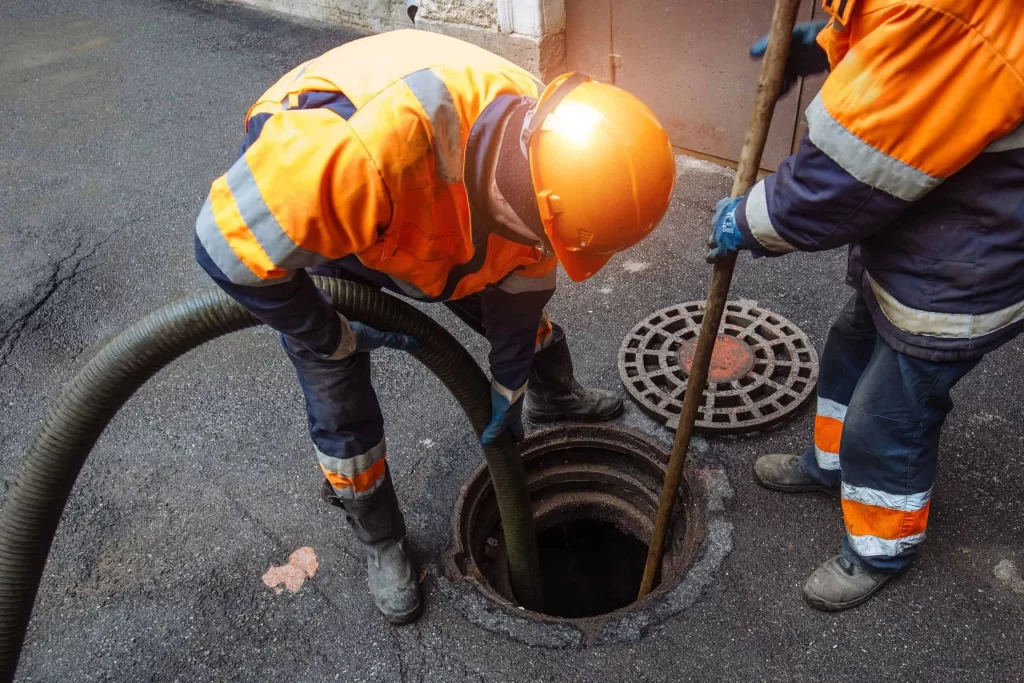
A sewer line inspection — also called a sewer scope or sewer camera inspection — is exactly what it sounds like. A technician feeds a flexible cable with a high-resolution camera through your sewer lateral, the pipe that runs from your home’s foundation out to the municipal main or septic system. The camera transmits live footage the entire time, so you can see exactly what’s happening underground without anyone digging a single hole. If the inspection reveals damage, sewer line repair may be necessary to restore proper flow and prevent more serious problems.
The process typically starts at a cleanout access point, usually in the basement or just outside the house. From there, the camera travels the full length of the lateral, capturing footage of the pipe’s interior condition. The whole thing usually takes under an hour. What it reveals can save you tens of thousands of dollars — or give you genuine peace of mind that the pipes are in good shape.
What Does a Sewer Camera Actually Look For?
This is the part most people don’t know going in. A sewer scope inspection isn’t just checking whether water flows. The camera is looking for a specific set of defects, each with its own implications for how urgently something needs to be addressed.
Root intrusion is the most common finding we see on Long Island, and it makes sense when you look at the neighborhoods. Communities like Massapequa, Wantagh, Bellmore, and Merrick have mature, dense tree canopies — the same trees that make those streets beautiful are quietly sending roots into the joints of aging clay pipe. Roots follow moisture, and sewer laterals are full of it. Over time, a small root tendril becomes a mass that restricts flow and eventually blocks it entirely.
Beyond roots, the camera looks for cracks and fractures in the pipe wall, joint offsets where sections of pipe have shifted out of alignment, and pipe belly — a low spot where the line has sagged, usually from soil settlement, causing waste to pool rather than flow. It also checks for grease and debris buildup, corrosion in older cast iron lines, and signs of pipe collapse in sections where the material has simply given out.
One detail that matters specifically for Long Island homes is pipe material identification. Many houses built during the 1950s and 1960s still have their original sewer laterals — vitrified clay tile, cast iron, or in some cases Orangeburg pipe, a fiber-and-tar composite that was used widely in post-war construction and was never built to last more than 50 years. The camera can confirm what you’re working with, which tells you a lot about how much life the pipe has left even if it’s currently functioning.
We show customers the camera feed in real time during the inspection. You’re not handed a report afterward and asked to take our word for it — you see exactly what the camera sees, as it happens. That transparency matters, especially when you’re making a major financial decision.
Does a Standard Home Inspection Cover the Sewer Line?
No — and this is the part that catches most buyers off guard. The International Association of Certified Home Inspectors and the American Society of Home Inspectors both confirm that checking the underground sewer line is outside the scope of a standard home inspection. Your inspector will verify that toilets flush and drains flow, but they won’t put a camera through your lateral. That pipe, from your foundation to the street, is completely invisible to a standard inspection.
This matters a lot on Long Island specifically. The bulk of Nassau County’s residential housing was built between 1947 and the mid-1960s — the Levittown era and the developments that followed it across Hempstead, North Merrick, Seaford, and dozens of other communities. The sewer laterals installed in those homes are now 60 to 75 years old. Vitrified clay pipe, which was the standard material at the time, has a design life of roughly 40 to 50 years. Do the math, and you’ll see why a camera inspection in these neighborhoods isn’t just a good idea — it’s a genuinely important one.
Suffolk County adds another layer. In central and eastern Suffolk, many homes are still on cesspools rather than municipal sewer systems. Suffolk County has banned the installation of new cesspools, and mortgage lenders increasingly require cesspool certification as part of the closing process. If you’re buying or selling in Smithtown, Hauppauge, Commack, or anywhere east of the Nassau border, the inspection requirements may be different from what you’d expect, and a qualified contractor who knows both county systems is worth having in your corner.
The bottom line is that a sewer scope inspection is the only way to actually know what’s underground. A house can have a cracked lateral, significant root intrusion, or a failing pipe belly with zero visible symptoms inside the home — until it backs up, at which point you’re dealing with an emergency instead of a planned repair.
What Happens If a Sewer Camera Inspection Finds a Problem?
Finding a problem during a sewer scope inspection is actually the best-case scenario — better than finding it after you’ve closed on the house, or after a backup forces your hand on a Sunday night. What you do with the information depends on your situation, but the options are broader than most people realize.
If you’re a homebuyer in contract, a documented inspection finding gives you real negotiating leverage. You can ask the seller to make repairs before closing, request a price reduction that reflects the cost of the work, or in serious cases, walk away from the deal entirely. On Long Island, where sewer line replacement can run $10,000 to $25,000 or more depending on the scope, that negotiating position is worth real money.
What Are the Repair Options After a Sewer Scope Inspection?
The repair path depends on what the camera found and how severe it is. Not every finding requires immediate action — a technician who’s been doing this for decades can tell you whether you’re looking at something that needs to be addressed now, something worth monitoring, or something that’s genuinely fine.
For root intrusion that hasn’t caused structural damage, hydro-jetting can clear the blockage and restore flow. But if roots have been growing into the same joints for years, they’ll come back — and the longer-term fix is sealing or replacing the pipe section they’re entering through.
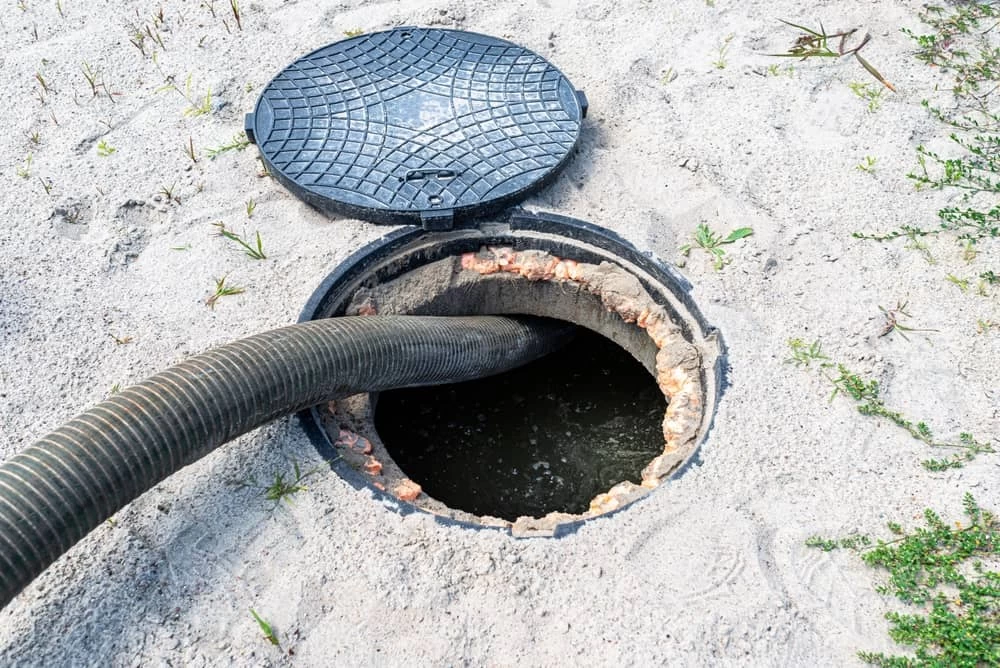
When the pipe itself is compromised — cracked, corroded, offset, or collapsed — the repair options have changed significantly over the last decade. Trenchless methods like pipe lining (CIPP) and pipe bursting can rehabilitate or replace a failing lateral without excavating the entire run. Pipe lining installs a resin-coated sleeve inside the existing pipe, hardening in place to create a new pipe within the old one. Pipe bursting pulls a new pipe through the existing line while simultaneously fracturing the old one outward. In both cases, the disruption to your yard, driveway, and landscaping is dramatically less than traditional open-cut excavation.
We’re one of the only contractors offering trenchless sewer repair across both Nassau and Suffolk County, and we’ve seen firsthand how much that matters to homeowners who’ve been putting off sewer work for years because they didn’t want to lose their driveway or tear up a landscaped yard. The camera inspection is what makes it possible to determine whether trenchless is viable — without it, you’re guessing.
When Should Long Island Homeowners Schedule a Sewer Scope Inspection?
The most common trigger is a home purchase — and that’s the right instinct. But it’s far from the only reason to schedule one.
If your home was built before 1980 and you’ve never had a camera inspection, that’s reason enough. The sewer lateral in a 1960s Nassau County ranch or cape may have been functioning without issue for decades, but “functioning” and “in good condition” aren’t the same thing. Root intrusion, pipe belly, and corrosion all develop slowly and quietly. By the time you notice symptoms — slow drains, gurgling sounds after flushing, occasional backups — the pipe is often already significantly compromised.
Spring is a high-demand season for sewer inspections on Long Island, and for good reason. Winter ground movement and freeze-thaw cycles can shift pipe sections that were marginal going into the cold months. Spring rains put added hydraulic load on systems that are already stressed. Scheduling an inspection in March or April — before problems compound — is a lot less disruptive than dealing with a backup in May.
The same logic applies after any significant landscaping work, large tree removal, or construction near your property line. Root systems extend well beyond the drip line of a tree, and disturbing the soil around a lateral can shift joints that were previously stable.
For commercial properties — restaurants, multi-family buildings, retail spaces — the calculus is different but the urgency is the same. Grease accumulation, high-volume use, and the complexity of commercial drain layouts make periodic camera inspection a practical maintenance tool, not just a diagnostic one. We work with commercial clients across Nassau and Suffolk County and understand that downtime is not an option.
If you’ve been using the same contractor for routine drain cleaning without ever having a camera run through the line, it’s worth asking whether the cleaning is actually solving the underlying problem or just managing the symptoms.
Getting a Sewer Scope Inspection on Long Island: What to Know Before You Call
A sewer scope inspection is a straightforward service with a clear purpose: find out what’s actually happening in the pipe underground before it becomes an emergency. On Long Island, where the housing stock is old, the tree canopy is dense, and a sewer line replacement can cost more than most people’s annual salary, that information is genuinely valuable.
The inspection itself is non-invasive — no digging, no disruption, typically done in under an hour. What you get back is a clear picture of your pipe’s condition, documentation you can use in a real estate negotiation or an insurance claim, and a straight answer about whether anything needs to be done and how urgently.
We’ve been doing this work on Long Island for over 40 years. If you have questions about what a sewer scope inspection involves, what we’d be looking for in your specific neighborhood, or what your options are if something turns up, give us a call. We’re available 24/7 — including weekends — and we’ll give you a straight answer.
Need this done on Long Island? Long Island Sewer and Water Main handles sewer line repair across Nassau and Suffolk County. Call 631-407-2873 in Suffolk or 516-604-2651 in Nassau.