Trenchless sewer repair on Long Island

Pipe bursting and pipe lining, with no trench across your yard

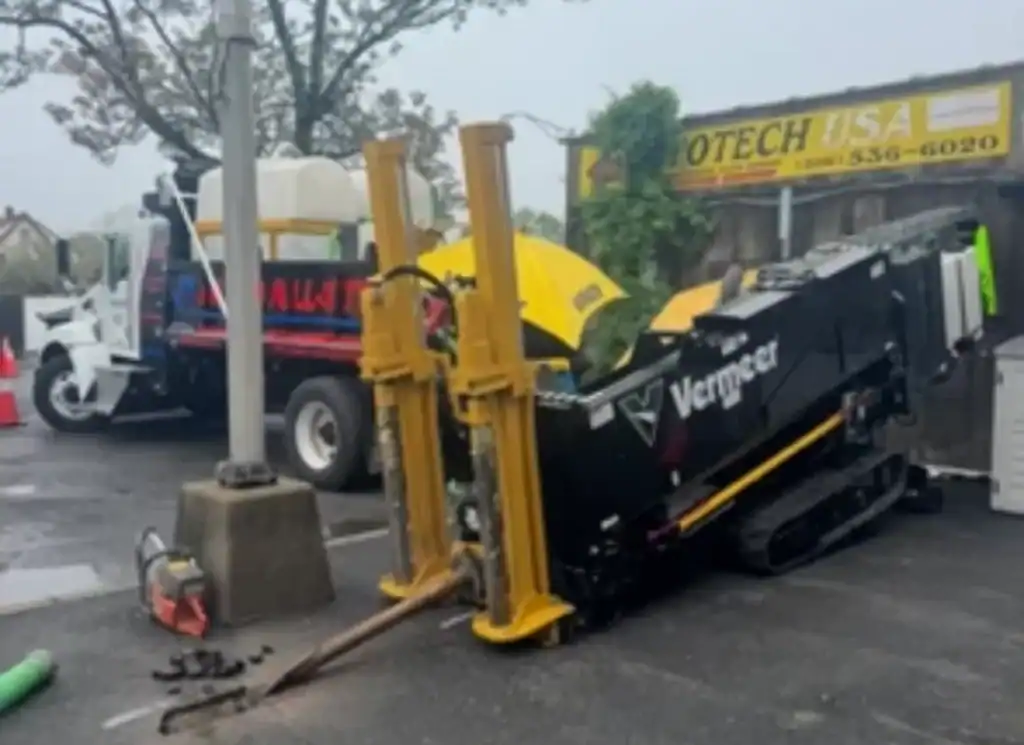
Close-up of trenchless plumbing machinery and a plumber inspecting pipes for a Long Island, NY commercial repair project.
Years of Experience
0 +

Trenchless sewer repair in Nassau and Suffolk County

Trenchless means the sewer line is replaced or relined through small access points instead of a trench down the length of your property. The lawn, the driveway, the patio and the mature trees stay where they are.

Long Island Sewer and Water Main has worked Long Island sewer lines since 1983, family owned, out of Sayville, across Nassau County, Suffolk County and the five boroughs. On call 24 hours a day. Suffolk 631-407-2873, Nassau 516-604-2651.

Pipe bursting and pipe lining

There are two trenchless methods and they solve different problems. Pipe bursting pulls a new pipe through the old one, splitting the old pipe outward as it goes. It replaces the line completely, and it is the method when the existing pipe is collapsed, badly offset, or too far gone to line. It can also upsize the line.

Pipe lining, also called CIPP, pulls a resin sleeve through the existing pipe and cures it in place, leaving a new pipe formed inside the old one. It is the method when the host pipe is cracked, rooted or corroded but still structurally continuous. It is usually faster and needs less access.

Which one your line needs is decided by what the camera shows, not by preference. A line that is still round and continuous can usually be lined. A line that has lost its shape has to be replaced.
Does trenchless really mean no digging

Almost, and it is worth being straight about the gap. Trenchless removes the trench, not every shovel. Both methods need access at each end of the run, which usually means two small pits, one near the house and one at the connection or at an existing cleanout. On many jobs one of those is a cleanout that already exists, so only one pit gets dug.

What you avoid is the open cut: a trench the full length of the line, through the lawn, under the driveway or walkway, and often through root systems that do not survive it. That is where the real cost and the real disruption sit on a dig-and-replace job, and it is why trenchless is usually the cheaper option once restoration is counted.

Trenchless sewer line replacement

A full trenchless replacement runs a new line along the path of the old one and ties it back in at both ends. On a typical residential lateral it is a one day job, and the line is back in service the same day.

We camera the line first. That inspection decides the method, finds the depth and the connection point, and tells us whether there is anything in the run, a belly, a bad offset, a foreign utility crossing, that changes the approach. For a new run on a different path, that is directional drilling rather than bursting. For the water side rather than the sewer, see trenchless water line replacement.

When trenchless is not the right call

Not every line is a trenchless candidate, and you should hear that before the work is booked rather than after. A line that has completely collapsed in a section may leave no path to pull through. A severe offset at a joint can stop the head. Very shallow lines, some pipe materials, and runs with tight back-to-back bends can all rule it out.

When the camera says open cut is the honest answer, that is what we tell you. Quoting a trenchless job on a line that cannot take one just moves the bad news to the day of the work, with your yard already open. Call Suffolk 631-407-2873 or Nassau 516-604-2651.

Trenchless sewer contractors on Long Island

Camera first, method second

The line is inspected before anything is quoted, because the pipe's condition decides whether it gets lined or burst, not a preference.

Pipe bursting and pipe lining

Both methods in house, so the recommendation is not steered by the only equipment on the truck. Replacement when the pipe is gone, lining when it is not.

Your yard stays put

Two small access pits instead of a trench the length of the run. No open cut through the lawn, the driveway or the root systems.

Family owned since 1983

Forty years of Long Island sewer lines, worked out of Sayville, across Nassau County, Suffolk County and the five boroughs.

Trenchless sewer repair near you on Long Island

Tell us what the line is doing and we will tell you whether it is a trenchless job. We work across Suffolk County and Nassau County. If the line is blocked rather than broken, that is drain cleaning instead, and if it needs an open cut repair, that is sewer line repair.

Call 631-407-2873 in Suffolk or 516-604-2651 in Nassau.

Blurry image of trenchless plumbing equipment used for sewer and water main services in Long Island, NY. The equipment is typically used for non-invasive pipe replacement and repair, ensuring minimal disruption to the property.

Trenchless Sewer Repair FAQS

It is replacing or relining a sewer line through small access points instead of digging a trench along its whole length. There are two methods: pipe bursting, which pulls a new pipe through the old one and splits the old pipe outward, and pipe lining (CIPP), which cures a resin sleeve inside the existing pipe to form a new pipe within it.

The result is a new sewer line without an open cut across the yard, the driveway or the walkway.

The camera decides, not preference. As a rule:

  • Lining when the host pipe is cracked, rooted or corroded but still round and continuous
  • Bursting when the pipe is collapsed, badly offset, or too deteriorated to line, or when the line needs to be upsized

We run both, so the recommendation comes from the pipe rather than from the only machine available.

Not along the line, but yes at the ends. Both methods need access at each end of the run, usually two small pits. Where there is already a usable cleanout, that often becomes one of them and only one pit is dug.

What you avoid is the trench: the full length cut through lawn, driveway, walkway and tree roots. That is where most of the disruption and most of the restoration cost sits on a conventional job.

On a typical residential lateral it is a one day job and the line is back in service the same day. The sequence is roughly:

  • Camera inspection and locating, which may happen on an earlier visit
  • Access pits opened
  • The burst or the liner pulled and cured
  • Reconnection, a final camera pass, and backfill

Commercial runs, long laterals and jobs needing a permit or a road opening take longer, and you will be told which yours is before the work is booked.

The trenchless work itself usually prices higher per foot, and the finished job usually costs less. The difference is restoration. A conventional open cut has to put back everything the trench went through, which can mean lawn, driveway, walkway, patio and planting, and that is frequently the larger half of the bill.

We do not publish a flat rate because the depth, the length of the run, the access and the method all move it. Call and describe the problem and ask for the figure.

Sometimes, and sometimes not. Pipe bursting can get through a line that is cracked, separated or badly deteriorated, because it replaces the pipe outright. What can stop it is a section that has collapsed so fully there is no path left to pull through, a severe offset at a joint, or a run with tight bends.

The camera answers it. If open cut is the honest answer for your line, you will hear that before anything is booked.