

Summary:
Most people don’t think about their cesspool until it’s impossible to ignore. A drain that’s been slow for months. A smell in the backyard that wasn’t there last summer. A patch of grass that’s suspiciously green for no obvious reason. These things have a way of getting rationalized — until they can’t be anymore.
Here’s the thing: your cesspool almost always gives you warning before it fails. The signs show up early, and if you catch them early, a routine cesspool service appointment is usually all it takes. Miss them, and you’re looking at a very different conversation. This page is about helping you know the difference.
Cesspool Pumping Service: What It Is and Why Timing Matters
Cesspool pumping is exactly what it sounds like — we remove the accumulated solid and liquid waste from your underground tank using a vacuum truck so the system can function properly again. For most actively used Long Island homes, that needs to happen every one to three years. Lighter-use households can sometimes stretch it to five, but that’s the outer limit.
The reason timing matters so much here is that cesspools don’t fail all at once. They degrade gradually, giving off signals along the way. A system that’s been overdue for service for a year or two will still function — just worse and worse over time. The warning signs below are your system telling you it’s reached its limit.
How Do You Know When a Cesspool Is Full or Failing?
The five signs below are the ones we see most consistently across Nassau and Suffolk County homes — from Bellmore to Bay Shore, from Commack to Copiague. They don’t always appear together, and they don’t always mean the same thing. But any one of them is worth taking seriously.
The first sign is slow drains throughout the house. Not one slow drain — that’s usually a localized clog. When multiple fixtures are draining slowly at the same time, that’s a system-wide signal. It means the cesspool is full enough that wastewater has nowhere to go quickly. Homeowners often spend money on drain cleaning in this situation, which treats the symptom without touching the cause.
The second sign is gurgling sounds from your pipes or toilet. That gurgling is air being displaced by water that can’t move freely through the system. It’s easy to ignore, but it’s one of the earliest indicators that your cesspool is under stress.
The third sign is sewage odor — in the yard, near drains, or occasionally inside the house. The smell of raw sewage is unmistakable once you know what it is. If you’re catching it outside near where your cesspool is located, the tank is likely full or the surrounding soil has become saturated. Inside the house, it can mean gases are backing up through your drain lines.
The fourth sign is wet, soggy, or unusually lush grass directly above the cesspool area. When a tank is full or leaking, liquid waste pushes up into the surrounding soil. That extra moisture and nitrogen creates a noticeably green, spongy patch of grass. It might look like your lawn is thriving. It’s not — it’s a red flag.
The fifth sign is sewage backup into the house. This is the end-stage warning — the one nobody wants to deal with. By the time waste is backing up into a floor drain or toilet, the cesspool has been struggling for a while. It’s also the most expensive point to intervene, which is why the earlier signs matter so much.
Why Long Island Homeowners Face Higher Stakes Than Most
Long Island is one of the few places in the country where the entire population — all 2.8 million people across Nassau and Suffolk — drinks from underground aquifers. There’s no reservoir, no river, no backup source. Every drop of drinking water comes from the ground beneath your feet. That’s what makes a failing cesspool here something more than a plumbing problem.
When a cesspool overflows or leaks, the nitrogen and waste it releases doesn’t stay in your yard. It moves through Long Island’s sandy, glacially deposited soil and eventually reaches the aquifer. It also reaches the bays. The Great South Bay, Peconic Bay, and the harbors that define life out here are directly affected by groundwater contamination from aging cesspools. Shellfish bed closures, algae blooms, fish kills — these aren’t abstract environmental statistics. They’re the direct result of systems that weren’t maintained.
There’s also a regulatory reality that changed significantly in 2019, and a lot of homeowners still don’t fully understand it. Suffolk County banned all new cesspool-only installations effective July 1, 2019. What that means practically: if your cesspool fails and needs replacement, you can’t just replace it with another cesspool. You’re looking at a modern septic system or an I/A OWTS — an advanced nitrogen-reducing system that costs between $19,000 and $25,000. Grant programs from New York State and Suffolk County can cover up to 75% of that cost, but the process still starts with a failing system that could have been maintained.
A routine pump-out runs $300 to $500 for most Long Island homes. That number is worth keeping in mind every time you’re tempted to put off the call.
Choosing a Cesspool Service Company on Long Island: What to Expect
Knowing the warning signs is one thing. Knowing how to choose a cesspool service company — and what a legitimate service appointment actually looks like — is a different question, and it’s one that trips up a lot of homeowners.
Long Island has no shortage of cesspool companies. Some are excellent. Some are not. And the gap between them isn’t always obvious from a website or a phone call. Here’s what matters when you’re evaluating who to call.
What Does a Professional Cesspool Pumping Appointment Actually Include?
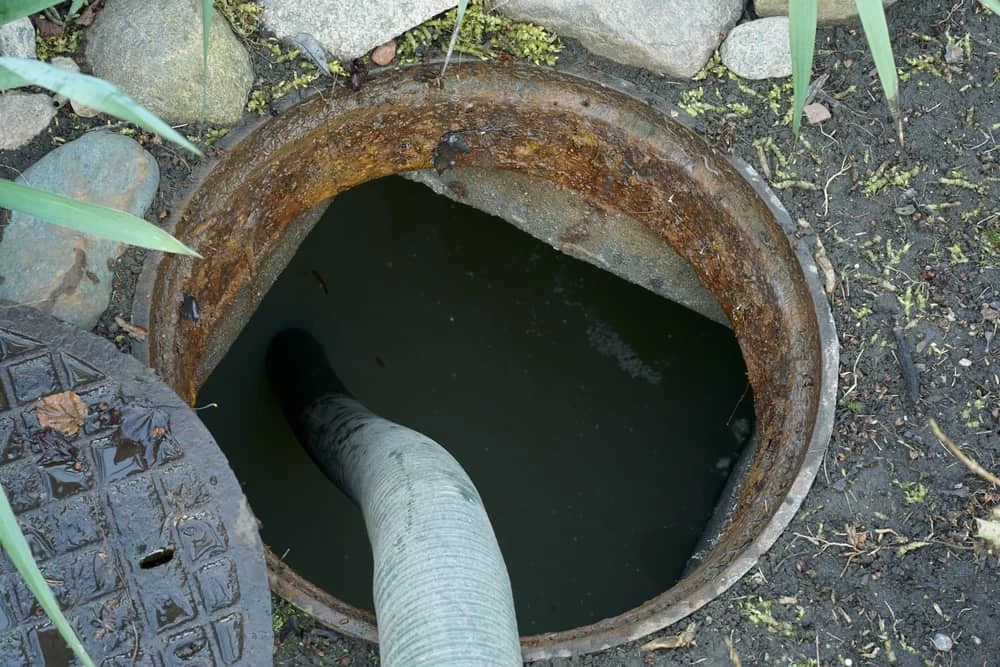
A legitimate cesspool pumping service starts before the truck even opens its hatch. A qualified technician should inspect the system before and after pumping — checking the condition of the tank, the baffles, and the surrounding soil for signs of stress or structural issues. The appointment itself typically takes 45 minutes to an hour and a half for a standard residential system, depending on tank size and access.
After pumping, you should receive written documentation of the service. This matters more than most homeowners realize. Nassau and Suffolk County health departments track cesspool maintenance records, and if you ever sell your home, buyers and their inspectors will ask about service history. A company that doesn’t provide written documentation isn’t doing you any favors.
Pricing should be clear before the truck pulls in. The scenario you want to avoid is a low quote over the phone followed by a significantly higher number once the crew is already on-site. That’s a pattern worth asking about directly: get the estimate in writing, and ask explicitly what would trigger any additional charges. A company that can’t answer that question clearly is worth reconsidering.
One thing that causes real anxiety for Long Island homeowners — and we hear this regularly — is the fear of who actually shows up. The cesspool industry, like a lot of contractor trades, has a subcontractor problem. You call one company, and a crew from a completely different outfit arrives at your door. When something goes wrong, accountability gets blurry fast. Every crew member who comes to your property works directly for us — no subcontractors, no exceptions. That’s not a small thing when you’re letting someone access your property and your underground infrastructure.
What If the Cesspool Problem Turns Out to Be Something Bigger?
This is the question homeowners are most afraid to ask, and it’s worth answering honestly. Sometimes what looks like a cesspool issue turns out to involve the sewer line connecting your home to the tank, or a structural problem with the tank itself. In those cases, pumping alone won’t fix it.
That’s not necessarily catastrophic news — but it does matter who you’re working with when you find out. A company that only does cesspool pumping will diagnose the broader problem and then hand you off to someone else. That means coordinating multiple contractors, multiple schedules, and multiple estimates. It’s a frustrating process that adds time and cost to an already stressful situation.
We use real-time camera inspection to evaluate sewer lines during the service process. You see exactly what the camera sees — in real time — before we recommend any additional work. There’s no guesswork, no “trust us,” just footage of what’s actually happening underground. If a sewer line needs attention, we can handle it with the same crew, often using trenchless methods like pipe bursting or pipe lining that don’t require tearing up your yard or driveway. We’ve done exactly that for homeowners in Bethpage who were convinced they’d need full excavation — and walked away with a repaired sewer line and an intact driveway.
For homes in coastal communities across Nassau and Suffolk where the water table sits close to the surface, these issues can compound quickly. A cesspool that’s borderline in a drier area can fail fast in a low-lying neighborhood after a wet spring. Knowing your system’s actual condition — not just assuming it’s fine — is the only way to stay ahead of it. If you’re in Bay Shore, Patchogue, Sayville, or anywhere near the south shore bays, that’s especially true.
When to Call for Cesspool Service on Long Island
If you recognized even one of the five warning signs above, that’s your signal. Slow drains, yard odors, soggy grass, gurgling pipes, or a backup that’s already happened — none of these get better on their own, and all of them get more expensive the longer they sit.
The math is simple: a routine pump-out costs a few hundred dollars. A system that’s been ignored past the point of no return costs tens of thousands. On Long Island, where a failing cesspool can’t legally be replaced with another cesspool, that gap matters more than it does almost anywhere else in the country.
Long Island Water and Sewer Main – Allied All City has been handling cesspool service across Nassau and Suffolk Counties for nearly 40 years. If you’re not sure what your system needs, or if something just doesn’t seem right, give us a call. We’ll tell you what we find — and what it actually means.
Need this done on Long Island? Long Island Sewer and Water Main handles cesspool services across Nassau and Suffolk County. Call 631-407-2873 in Suffolk or 516-604-2651 in Nassau.