
Summary:
You got a quote. Maybe two. And the numbers were nothing like what you expected. Now you’re trying to figure out whether you’re being overcharged, whether you actually need all this work done, and what the difference is between a cesspool and a septic system — because honestly, nobody’s explained that clearly yet.
That confusion is completely normal, and it’s exactly why the cost range on Long Island is so wide. What you have underground, what condition it’s in, and what your county requires all drive the number in very different directions. Here’s what you actually need to know before you make any decisions.
Cesspool vs. Septic System: Why the Difference Determines the Cost
These two terms get used interchangeably all the time, but they describe very different systems — and that distinction is the single biggest factor in what you’ll pay.
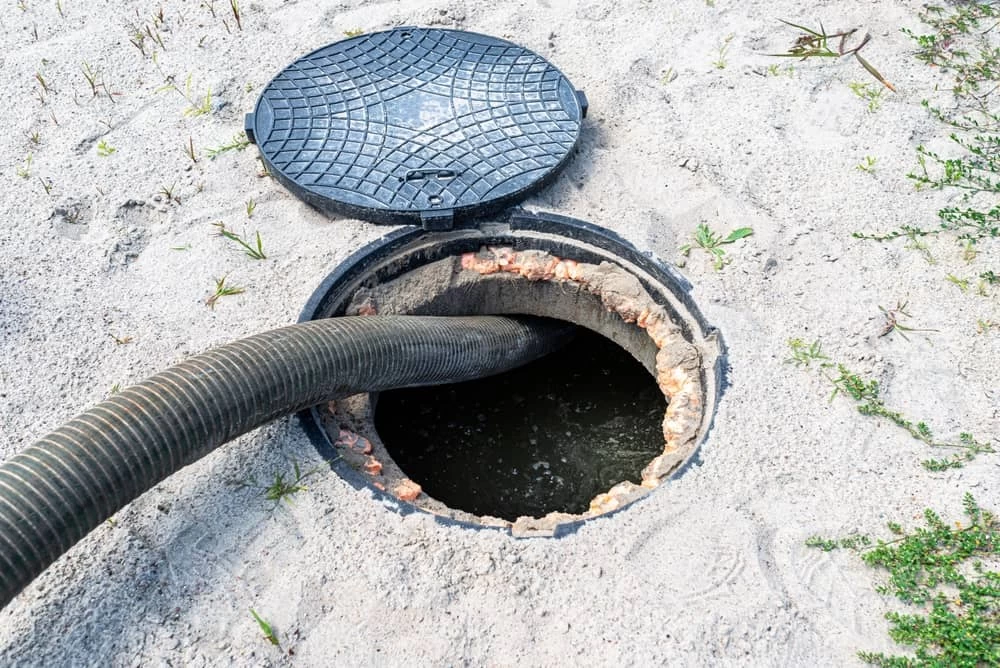
A cesspool is a buried pit, usually made of concrete rings, that collects everything: solid waste and liquid waste together. It has no treatment process. The liquid slowly seeps out through the surrounding soil, and solids accumulate at the bottom until the system is pumped. Most Long Island homes built before the 1970s have one. Many homeowners have no idea.
A septic system is more sophisticated. It includes a tank that separates solids from liquids, and a drain field — also called a leach field — where the treated liquid filters through the soil before reaching groundwater. It’s a two-stage process, and it’s what both Nassau and Suffolk Counties now require when any system is replaced.
Cesspool Pumping Prices on Long Island: What a Routine Pump-Out Actually Costs
If your system just needs to be pumped — meaning it’s functioning but overdue for maintenance — you’re looking at a very different cost than a full replacement. Cesspool pumping prices on Long Island for a standard residential system typically run between $300 and $600. Larger tanks, difficult access, or after-hours calls push that number higher, but for a routine pump-out on a typical single-family home, that’s the realistic range.
The confusion happens when a homeowner calls for a pump-out and gets told the system needs to be replaced. Sometimes it’s the honest diagnosis. A cesspool that’s been neglected for years, has cracked or collapsed rings, or sits in saturated soil near the water table may be past the point where pumping buys meaningful time. The only way to know for certain is a camera inspection, which lets you see what’s actually happening underground rather than guessing.
Pumping does have real value as preventive maintenance. For a system that’s structurally sound, regular pump-outs every one to three years extend its functional life and prevent the kind of emergency failure that costs far more to deal with. A planned pump-out on a Tuesday afternoon is a very different situation than a sewage backup on a Sunday morning.
If you’re in a home built in the 1950s or 1960s in communities like Massapequa, Bay Shore, or Levittown, there’s a reasonable chance your cesspool is approaching or past the end of its useful life regardless of how well it’s been maintained. Concrete rings installed 60 or 70 years ago weren’t designed to last forever, and the soil conditions in many South Shore communities — with water tables sitting just a few feet below the surface — accelerate the wear.
Septic Removal Cost: What Happens to the Old System Before the New One Goes In
This is the cost that catches people off guard most often. When you replace a cesspool or septic system, the old one doesn’t just disappear. It has to be properly abandoned — pumped out, crushed or filled with concrete or clean fill, and inspected by the county. That process adds real cost to the project, and it’s frequently left out of low-ball quotes.
Septic removal cost on Long Island typically runs $1,000 to $3,000 or more depending on the size of the system, how deep it’s buried, and how many rings or tanks need to be dealt with. If a contractor gives you a replacement quote that seems surprisingly low, ask specifically whether system abandonment and disposal are included. If they’re not, that’s where the “surprise charges” show up once the project is already underway.
Beyond the removal itself, full septic system replacement also includes excavation, permit fees, engineering, and county registration — all of which vary by municipality. Permit costs alone can range from $200 to $2,000 depending on the scope of work and which county health department you’re dealing with. Nassau and Suffolk each have their own filing requirements, and any replacement system must be registered with the relevant Department of Health Services before the work is considered compliant.
This is where the difference between a contractor who knows Long Island’s regulatory environment and one who doesn’t becomes very apparent. Filing the wrong paperwork, missing a registration step, or skipping the permit entirely can result in fines, required removal of the new system, and serious complications when you try to sell the property. We’ve been navigating Nassau and Suffolk County permit offices since 1980. We know what’s required, and we handle it — so you don’t have to figure it out yourself.
Septic Pump Installation Cost on Long Island: The Full Picture
Here’s where the numbers start to make more sense once you understand what you’re actually buying. The septic pump itself — the effluent pump or sewage ejector pump that moves wastewater through the system — is a component, not the whole system. Replacing just the pump typically costs $800 to $1,400. That’s a very different project from replacing the entire system.
When people search for septic pump installation cost, they’re often trying to figure out whether their situation is a pump problem or a system problem. The answer depends entirely on what’s actually failing. A functioning tank with a dead pump is a repair. A collapsed cesspool with saturated soil around it is a replacement. The diagnostic step — usually a camera inspection — is what tells you which situation you’re in.

What Does Full Septic System Replacement Actually Cost on Long Island?
For a full system replacement on Long Island, the realistic range is $10,000 to $25,000 or more. That’s a wide spread, and it’s wide for a reason. The type of system required, your soil conditions, your proximity to wetlands or the water table, and whether you’re in Nassau or Suffolk County all affect the final number.
A conventional septic system with a standard drain field in favorable sandy soil — the kind you find in parts of central Suffolk like Hauppauge or Smithtown — sits at the lower end of that range. A more complex system required in a coastal community, a property near a designated waterbody, or a lot with high groundwater or clay-heavy soil pushes the cost higher. Mound systems and aerobic systems, which are common in high-water-table areas, can run $10,000 to $20,000 on their own before factoring in removal of the old system, permits, and engineering.
What’s changed significantly in recent years is the regulatory requirement for Innovative and Alternative Onsite Wastewater Treatment Systems — I/A OWTS for short. These are nitrogen-reducing systems that remove 70 to 90 percent more nitrogen from wastewater than a conventional cesspool. Both Nassau and Suffolk Counties now require them for any system replacement, not just new construction. If you’re replacing a failed cesspool, you’re not just swapping in a new cesspool — you’re upgrading to a compliant system. That’s the primary reason the cost is higher than many homeowners expect.
The good news — and this is something a lot of homeowners don’t know — is that significant grant funding exists specifically to offset this cost on Long Island. The Suffolk County Septic Improvement Program offers up to $10,000 as a base grant, with additional funding available for pressurized drain fields and income-qualified applicants. Following the Suffolk Water Quality Restoration Act signed in 2024, eligible homeowners can now be reimbursed for up to 75 percent of project cost, or $25,000, whichever is less. Nassau County’s S.E.P.T.I.C. program provides up to $20,000 in combined federal and state grant funds — and those funds are not considered taxable income. For many Long Island homeowners, the actual out-of-pocket cost after grants is dramatically lower than the sticker price.
Long Island Homeowners Ask: Do I Really Need to Replace the Whole System?
This is the question we hear most often, and it deserves a straight answer. Whether you need a full replacement depends on what’s actually failing — and that’s not something anyone can tell you honestly without looking at the system first.
If your drains are slow, you’re noticing a sewage smell in the yard, or there’s a soft wet patch of grass over where your cesspool is, those are symptoms. They don’t automatically mean you need a $20,000 project. They mean you need a diagnosis. A camera inspection lets us see the condition of the tank or cesspool rings, whether the leach field is saturated, and whether there’s structural damage that pumping won’t fix. In some cases, a pump-out and a minor repair is all that’s needed. In others, the inspection confirms what the symptoms suggested — the system is at end of life and needs to be replaced.
We don’t recommend replacement without confirming it’s necessary. When we run a camera inspection, you see what we see — real-time footage of what’s happening underground. No guesswork, no assumptions.
One thing worth understanding specific to Long Island: the NY DEC has formally designated conventional cesspools and septic systems on Long Island as “failing” systems — not because they’ve necessarily stopped working in the immediate sense, but because they’re not designed to remove nitrogen from wastewater, and nitrogen from aging cesspools is the primary threat to the Nassau-Suffolk aquifer. That aquifer is the only source of drinking water for 2.8 million Long Island residents. It’s not an abstract environmental concern. It’s the water coming out of your tap. That’s why the county grant programs exist, and why the regulatory pressure to upgrade these systems is only going to increase over time.
If you’ve received a compliance notice from Suffolk or Nassau County, or if a buyer’s inspection flagged your system during a home sale, the timeline for addressing it is real. Understanding your options — including what grants are available and what a compliant replacement actually involves — puts you in a much better position to make a decision you feel confident about.
What to Do Next If You're Facing Septic Replacement on Long Island
The cost range for septic work on Long Island is wide because the variables are real — not because contractors are making things up. What you have underground, what your county requires, and what grant funding you qualify for all shape the final number in meaningful ways. The worst position to be in is making a $15,000 decision based on incomplete information.
Start with a camera inspection before agreeing to anything. Understand whether you have a cesspool or a septic system. Ask whether grant programs apply to your property. And make sure any quote you receive includes permits, engineering, system abandonment, and county registration — not just the equipment.
If you’re in Nassau or Suffolk County and want a straight answer about what your situation actually involves, we’ve been doing this work since 1980. Give us a call and we’ll tell you what we see — not what’s easiest to sell.