

Summary:
Most Long Island homeowners have no idea which system is buried in their backyard — and that’s not a criticism. It’s just the reality. You bought the house, you moved in, and nobody handed you a manual. The words “cesspool” and “septic tank” get used like they mean the same thing, but they don’t. And on Long Island, where over 252,000 cesspool-only systems are still in the ground across Suffolk County alone, that confusion can quietly turn into a very expensive problem. Here’s what you actually need to know — starting with what each system is and how they work differently.
Cesspool vs. Septic Tank: What's Actually the Difference?
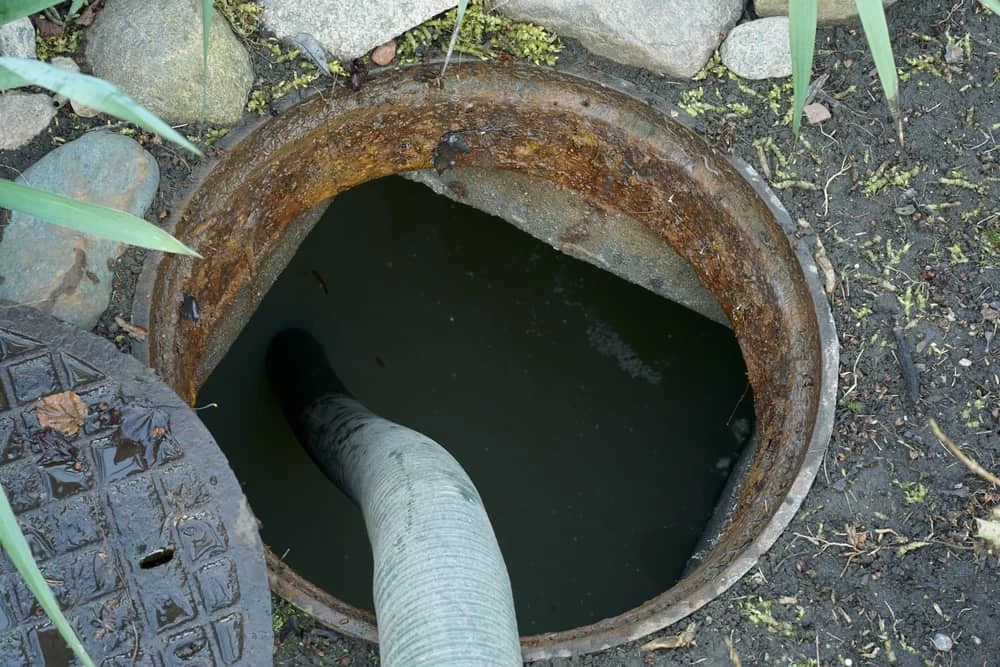
A cesspool is essentially a concrete pit buried in your yard. Waste flows in, liquid seeps out through perforations in the walls, and solids accumulate at the bottom. There’s no treatment happening — it’s a holding and dispersal system, not a processing one. Over time, the surrounding soil becomes saturated and stops absorbing, the concrete rings crack, and the whole thing starts failing.
A septic tank is a different animal. It’s a two-chamber system that separates solids from liquids, uses anaerobic bacteria to break down waste, and then releases treated effluent into a leach field where it filters through the soil before reaching groundwater. It’s slower, more deliberate, and far more effective at protecting the ground beneath your yard.
That distinction matters enormously on Long Island, where your drinking water comes entirely from underground aquifers. There’s no reservoir, no Catskill connection — just the water sitting beneath the same soil your cesspool is draining into.
How Do I Know If I Have a Cesspool or a Septic System?
This is the question most Long Island homeowners are actually asking when they search “cesspool vs septic” — and it’s a fair one. Here’s a useful starting point: if your home in Suffolk County was built before 1973, it almost certainly has a cesspool. That’s the year Suffolk County first required septic systems for new construction. Anything built before that was grandfathered in with a cesspool, and many of those systems are still in the ground today, some pushing 60 or 70 years old.
If your home was built after 1973 in Suffolk County, or if you’re in Nassau County where municipal sewer access is more common, the picture gets murkier. The only way to know for certain is to have someone inspect it — either by locating the access lid and looking at the system’s structure, or by running a camera through your sewer line to see what you’re working with.
What you shouldn’t do is assume. Homeowners who assume they have a septic tank sometimes skip maintenance for years because they think the system is handling things on its own. Homeowners who assume they have a cesspool sometimes panic unnecessarily when they hear about Suffolk County’s 2019 ban. Either way, the assumption costs you.
One thing worth knowing: if you’ve been pumping your system every year or two and it still backs up, that’s a cesspool behavior pattern. Septic tanks typically only need pumping every three to five years for an average household. Frequent pump-outs that don’t seem to solve the problem are a sign that the surrounding soil is saturated and the system is struggling — and that’s a conversation worth having with a licensed provider before it becomes an emergency.
If you’re buying or selling a home on Long Island, this question isn’t optional. Mortgage lenders require inspection of any property with a private wastewater system, and a failed or non-compliant system can kill a deal. Knowing what you have — and what condition it’s in — before you get to the closing table is always the smarter move.
What Suffolk County's 2019 Cesspool Ban Actually Means for You
In July 2019, Suffolk County banned new cesspool installations entirely. That includes replacements. If your cesspool fails today, you cannot simply dig it out and put a new one in. Under current regulations, you have to upgrade — at minimum to a conventional septic system, and in many cases to what’s called an Innovative/Alternative Onsite Wastewater Treatment System, or I/A OWTS. These are nitrogen-reducing systems designed to address the environmental damage that decades of cesspool use have done to Long Island’s groundwater.
The nitrogen problem is real. Conventional cesspools release an average of 40 pounds of nitrogen per household per year into the soil and groundwater. Long Island’s aquifer already has nitrate levels higher than 95% of the country, and that contamination has been climbing. The algal blooms that close South Shore beaches and choke out the bays aren’t a coincidence. They’re a downstream consequence of what’s sitting under a quarter-million Long Island yards.
Here’s the part most homeowners don’t realize until they’re already in a crisis: emergency cesspool repair — when a ring collapses, the system backs up into the house, or the ground above it starts sinking — can cost $15,000 or more. That’s before you factor in professional sewage remediation if any backup reached the interior of your home, which typically runs another $3,000 to $7,000. Proactive planning is almost always cheaper.
The good news is that there’s significant financial help available. Nassau County offers grants of up to $20,000 for qualifying homeowners upgrading to compliant systems. Suffolk County, through a combination of county, state, and Long Island Sound restoration programs, offers up to $30,000 for eligible residents. A conventional septic system installation on Long Island typically runs $10,000 to $25,000. An I/A OWTS system runs $19,000 to $25,000 on average. With the right grant funding, many homeowners end up paying far less out of pocket than they expected — but only if they plan ahead rather than waiting for a failure to force the issue.
Septic Tank Installation on Long Island: What the Process Looks Like
If you’re moving from a cesspool to a septic system — whether by choice or because a failure left you no other option — understanding the installation process helps you set realistic expectations and ask the right questions before signing anything.
The first step is a soil percolation test, commonly called a perc test. This determines how quickly your soil absorbs water, which dictates what type of system can be installed on your property. Long Island’s sandy, glacially-deposited soil is generally permeable, but properties near the water table or in low-lying coastal areas can present complications. After the perc test, you’ll need Health Department approval and a permit — typically $200 to $500, with a processing window of two to four weeks in Nassau and Suffolk Counties.
Installation itself involves excavating for the tank and leach field, placing and connecting the system, backfilling, and final inspection. The timeline varies based on system type and site conditions, but most installations are completed within a few days once permits are in hand.
How Much Does Septic System Installation Cost on Long Island?
Cost is usually the first question, and it’s a reasonable one. A conventional septic system installation on Long Island typically falls in the range of $10,000 to $25,000, depending on the size of the system, site conditions, and whether any existing structures need to be removed or relocated first. I/A OWTS systems — the nitrogen-reducing systems now required for most new installations in Suffolk County — average $19,000 to $25,000.
Those numbers can feel steep, especially when you’re already dealing with the stress of a failing system. But the grant programs available to Long Island homeowners change the math significantly. Nassau County’s grant program offers up to $20,000 for qualifying homeowners. Suffolk County’s combined programs — drawing from county, state, and Long Island Sound restoration funding — can cover up to $30,000. For a homeowner who qualifies for the maximum, the out-of-pocket cost of a full I/A OWTS installation could be close to zero.
The catch is that these programs have eligibility requirements, application processes, and funding limits that change over time. Waiting until your system fails in an emergency eliminates your ability to plan around the grant timeline. It also means you’re making decisions under pressure, which is rarely when anyone makes their best financial choices. The homeowners who come out ahead on this are the ones who start the conversation before the system forces their hand.
One more cost factor worth knowing: I/A OWTS systems require annual service contracts as part of regulatory compliance — typically $300 to $500 per year. That’s not optional; it’s built into the county’s approval conditions. Factor it into your long-term budget alongside the installation cost.
Does Replacing a Septic System Mean Tearing Up Your Entire Yard?
This is one of the most common fears we hear from Long Island homeowners — and it’s understandable. You’ve spent years building out a backyard, a patio, a driveway. The idea of an excavator rolling through it is genuinely painful to think about.
The honest answer is that some excavation is typically required for a full septic system installation, particularly for the tank and leach field. But for the sewer line connecting your home to the system — which is where many failures actually originate — trenchless technology changes the picture significantly. Pipe bursting, pipe lining, and directional drilling allow us to replace or rehabilitate underground pipes from a single access point, without opening up your yard along the entire length of the line.
We’re one of the only providers offering trenchless sewer and water line services across both Nassau and Suffolk Counties, and we’ve been doing it long enough to know when it’s the right tool and when it isn’t. Not every job is a candidate for trenchless repair, and we’ll tell you that honestly. But when it is an option, the difference in disruption — and in restoration costs — is substantial.
For jobs that do require excavation, the scope depends heavily on what’s being replaced and where. A tank swap on a property with easy access is a very different job from a full system installation on a tight lot in a densely built neighborhood in Nassau County. Getting a proper assessment before assuming the worst is always worth the call.
What we can tell you is that after more than 40 years working on Long Island properties — from the older neighborhoods of Nassau County to the more rural stretches of eastern Suffolk — we’ve seen every kind of site condition and worked through most of them. The goal is always to get the job done with as little disruption to your property as possible, and to leave you with a system that works the way it’s supposed to.
Not Sure What System You Have? Here's What to Do Next on Long Island
If you walked away from this page with one thing, make it this: the difference between a cesspool and a septic tank isn’t just technical — it determines what maintenance you need, what regulations apply to you, what it costs when something goes wrong, and what your options are when it does.
On Long Island, where the water under your yard is the same water coming out of your tap, that difference carries real weight. And with Suffolk County’s regulatory requirements tightening and grant programs available right now for homeowners who act proactively, the timing for getting clarity on your system has never been more important.
If you’re not sure what you have, or you know what you have and you’re starting to worry about it, reach out to us at Long Island Water and Sewer Main – Allied All City. We’ve been doing this work across Nassau and Suffolk Counties since 1983, and we’ll give you a straight answer about what’s in your yard and what it needs.