
Summary:
If you’ve gotten a mailer from Suffolk County about the cesspool phase-out, or your real estate agent just flagged your system before a sale, you’re probably wondering what you’re actually looking at financially. The range of numbers floating around online doesn’t help — $300 here, $40,000 there — and most of what you find isn’t written with Suffolk County’s specific rules in mind.
This guide is. We’ve been doing this work across Nassau and Suffolk County for nearly 40 years, and we’ve watched the regulations evolve from the ground up. Here’s what cesspool service actually costs in 2025, what the phase-out means for your home, and how to think through your options clearly.
Cesspool Maintenance Costs in Suffolk County
Routine cesspool maintenance — meaning regular pumping before problems develop — is the cheapest thing you can do for your system. In Suffolk County, most homeowners pay between $225 and $400 to pump a standard 1,000-gallon tank. Larger systems in the 2,000-gallon range typically run $400 to $600. Those numbers are consistent with what we see across the county, from Babylon and Islip to Brookhaven and Riverhead.
What’s different about Long Island compared to most of the country is the water table. Suffolk County sits on a shallow aquifer with a high water table, and that puts more stress on cesspools and leaching pools year-round. The national recommendation is to pump every four to five years. Here, every two to three years is more realistic if you want to avoid the kind of failure that turns a maintenance call into a major repair. If maintenance doesn’t prevent a serious issue, professional sewer line repair can help address damaged or failing sewer infrastructure before the problem becomes more extensive.
What Does Cesspool Pumping Actually Include?
Pumping is the mechanical removal of accumulated solid waste and sludge from your cesspool tank. Over time, solids settle to the bottom and scum floats to the top, and the space in between — where liquid effluent is supposed to flow — gets compressed. When that layer gets too thin, solids start flowing into your leaching pools, and that’s when you have a real problem on your hands.
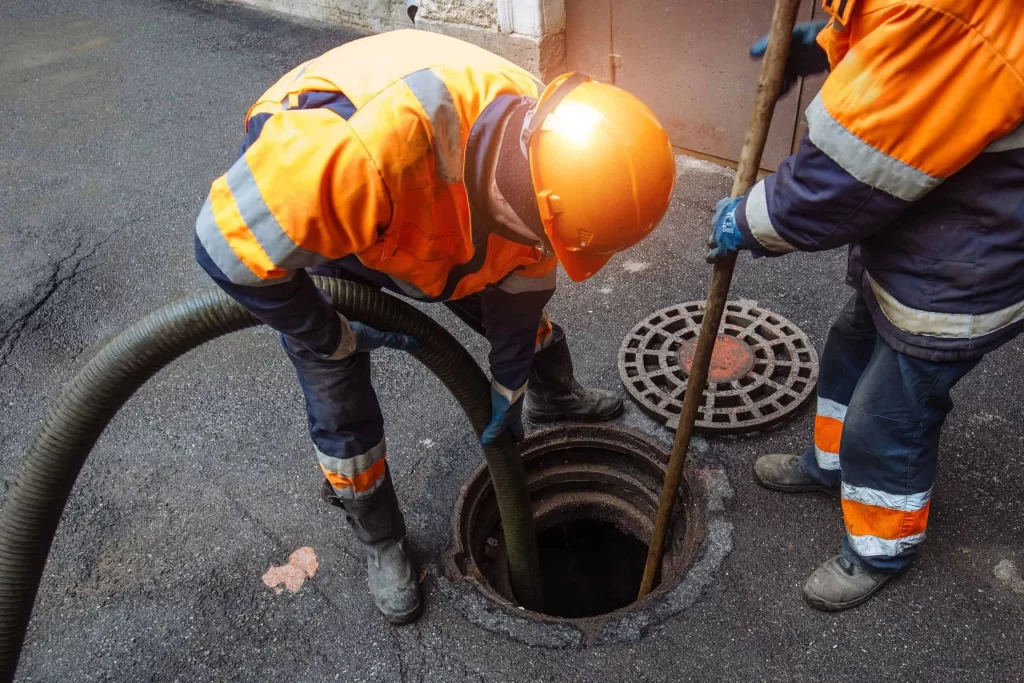
A proper service call includes locating and uncovering the cesspool access cover, pumping out the tank contents, and inspecting the inlet and outlet baffles for damage. We tell you what we found — the current sludge depth, whether the baffles are intact, any signs of root intrusion or structural cracking. That’s the conversation you want to have. If a company pumps and leaves without telling you anything, that’s a red flag.
Something worth knowing: cesspool additives — the enzyme treatments sold at hardware stores — do not replace pumping. They don’t break down solid waste the way the marketing suggests, and relying on them instead of mechanical pumping is one of the most common and expensive mistakes Long Island homeowners make. By the time slow drains or sewage odors show up, the damage is often already done. Preventive pumping is always cheaper than emergency pumping, and emergency pumping is always cheaper than a system failure.
One more thing on the maintenance side: if your system hasn’t been pumped in more than five years, don’t assume it’s fine just because nothing has backed up. Suffolk County’s high water table means systems can appear functional while quietly filling past safe capacity. A camera inspection — which gives a real-time view of what’s happening inside the system — can tell you a lot more than a visual check from the surface ever will.
How Often Should You Pump a Cesspool in Suffolk County?
The honest answer depends on your household size, the age of your system, and where in Suffolk County you live. A two-person household in Southold with a newer system on sandy soil has a different maintenance schedule than a family of five in Brentwood with a 1960s-era cesspool sitting in clay-heavy ground near a high water table zone.
That said, the general guidance for Suffolk County is every two to three years for most residential systems. That’s more frequent than the national average, and for good reason. The county’s geology, combined with the sheer age of most of the residential cesspool stock — the majority were installed during the post-World War II suburban build-out of the 1950s through 1970s — means you’re dealing with systems that are 50 to 70 years old. They weren’t designed for the usage loads of a modern household, and they don’t have much margin for error.
If you’re on the East End — the Hamptons, the North Fork, Riverhead, Southold — and your property sits vacant for part of the year, that actually creates its own set of complications. Seasonal disuse doesn’t protect a cesspool from structural aging, and systems that go uninspected for long stretches between seasons are often the ones that fail right before a busy summer. Getting a pumping and inspection done in early spring, before the seasonal population arrives, is a smart move that a lot of East End homeowners overlook.
The cost of skipping routine maintenance is real and documented. A routine pump-out that runs $300 can prevent a leaching field failure that costs $8,000 or more to address. That math is pretty straightforward.
Septic System Removal Cost and the Suffolk County Phase-Out
The cesspool phase-out is the bigger financial conversation, and it’s one that more than 360,000 Suffolk County homeowners are going to have to have eventually. Since July 1, 2019, it’s been illegal in Suffolk County to install a new cesspool or to replace a failing one with another cesspool. If your system fails, you’re required to install a modern, nitrogen-reducing Innovative and Alternative Onsite Wastewater Treatment System — what the county calls an I/A OWTS.
That’s a significant shift. Before 2019, a failed cesspool meant a relatively straightforward like-for-like replacement. Today, it means a more complex installation with a higher price tag — but also with grant funding that can dramatically offset the cost if you know how to access it.
How Much Does It Cost to Replace a Septic System in Suffolk County?
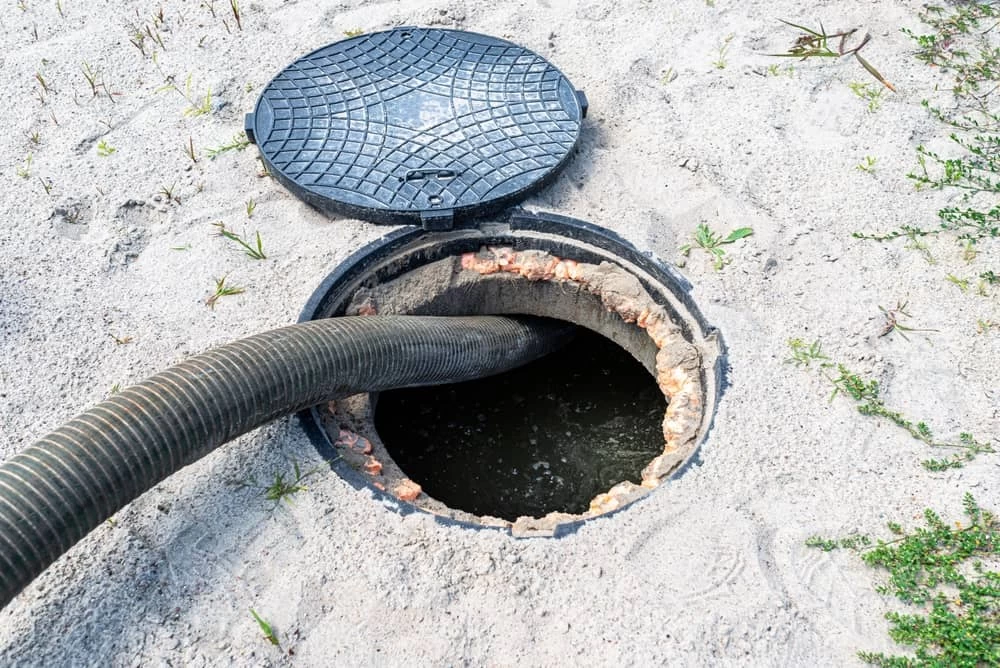
A complete septic system replacement in Suffolk County typically runs between $20,000 and $40,000, depending on the type of system required, site conditions, and whether any additional work — like sewer line repair or water line inspection — is needed as part of the project. Conventional systems sit at the lower end of that range. I/A OWTS systems, which are now required for most new installations and major replacements under Suffolk County’s regulations, average around $25,000 before any grant assistance, plus engineering and design fees.
Those numbers are real, and they’re not small. But here’s what a lot of homeowners don’t know: Suffolk County’s Septic Improvement Program — the SIP — offers grants of up to $30,000 to offset the cost of I/A OWTS installations. For many households, that grant covers most or all of the replacement cost. The application process requires documentation and coordination, but working with us, you’ll have someone who understands the program and can make it manageable. It’s not something to dismiss because it sounds complicated.
The important thing to understand about the phase-out is what actually triggers the requirement. If your existing cesspool is functioning, you are not currently required to replace it on any specific timeline. The mandate kicks in when your system fails, when you sell your home, or when you undertake certain types of renovation. That means the homeowners who are most exposed right now are the ones with aging systems who are planning to sell — and buyers are increasingly requiring cesspool inspections and compliance verification before closing. In the current Long Island real estate market, an undisclosed cesspool issue can kill a deal or dramatically reduce your negotiating position.
What Does Septic System Removal Actually Involve?
When a cesspool or septic system needs to be decommissioned and replaced, the process involves more than just pulling out the old tank. The existing system has to be properly abandoned — pumped out, crushed or filled with clean material, and documented for the Suffolk County Department of Health Services, which oversees all wastewater system work in the county. Permits are required. The SCDHS has to approve the replacement system design before installation begins. This isn’t a weekend project, and it’s not something you can do without a licensed contractor who knows the county’s process.
The installation of a new I/A OWTS system involves excavation, system placement, electrical connections (most nitrogen-reducing systems have active mechanical components), and final inspection by the SCDHS before the system can be placed into service. The entire process from permit application to final sign-off can take several weeks, depending on the county’s current review timeline and site-specific conditions.
One of the most common concerns we hear from homeowners is about property disruption — the fear of having a crew tear up a landscaped yard or a paved driveway. For the cesspool work itself, some excavation is typically required. But for any associated sewer line or water line work that’s part of the project, we use trenchless methods — pipe bursting, pipe lining, directional drilling — to handle a significant portion of the work without digging up your property. We’re one of the only providers offering trenchless sewer and water line services across both Nassau and Suffolk County, and it’s a real difference for homeowners who’ve invested in their landscaping or hardscaping.
The bottom line on septic system removal cost is this: the price depends heavily on your site, your system type, and the scope of work involved. A real number requires a real inspection. Anyone quoting you a firm price over the phone without seeing your property is guessing.
Choosing the Right Cesspool Company in Suffolk County
Suffolk County’s cesspool regulations are only getting stricter, and the homeowners who handle this proactively — with a company that knows the county’s rules, does the work with their own licensed team, and can handle everything from routine pumping to full I/A OWTS installation — will be in a much better position than those who wait for a failure.
What you want in a cesspool company on Long Island is straightforward: licensing, insurance, no subcontractors, and someone who can explain what they found and what it means without making you feel pressured. Forty years of work across Nassau and Suffolk County has taught us that homeowners who feel informed make better decisions — and end up with better outcomes.
If you’re trying to figure out where your system stands, or what the phase-out actually means for your specific property, reach out to us. We’re available around the clock, including weekends and holidays, and we’ll give you a straight answer.