
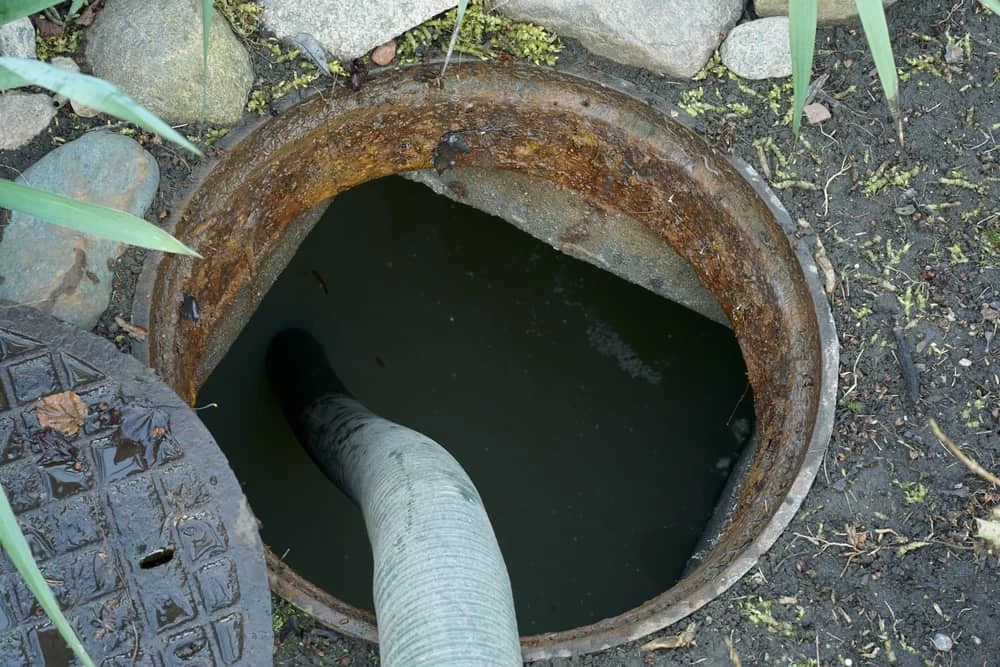
Summary:
You didn’t plan for this. Nobody does. One minute everything’s fine, and the next there’s sewage coming up through your basement floor drain, a smell you can’t ignore, and a sinking feeling that this is going to be expensive. If that’s where you are right now, keep reading — because the next 30 minutes matter more than anything else. This page will tell you what’s actually happening, what you should do immediately, what you absolutely should not do, and how our emergency sewer backup response works on Long Island.
Sewage Backup in Basement Floor Drain: What It's Actually Telling You
When sewage backs up through a basement floor drain, it’s almost never just a floor drain problem. That drain is the lowest point in your home’s plumbing system, which means it’s the first place sewage appears when something is wrong deeper in the line — usually in the main sewer lateral that runs from your house out to the street.
A single slow drain upstairs is a clog. Sewage coming up through the floor drain — especially while you’re running water elsewhere in the house — is a main line backup. That’s a different situation entirely, and it won’t clear itself.
What Causes a Main Line Sewer Backup on Long Island?
Long Island’s housing stock is older than most people realize. A huge portion of homes in Nassau County — Levittown, Merrick, Bellmore, Massapequa, Freeport, Garden City — were built in the post-WWII suburban boom of the late 1940s through the 1960s. That means the sewer lateral pipes running beneath those properties are often 60 to 80 years old. Many were made from clay tile or Orangeburg, materials that were never designed to last this long.
Over time, those pipes crack. Tree roots — and Long Island’s mature suburban tree canopy is full of them — find those cracks and grow inside the pipe. Grease builds up along the interior walls over years of normal household use. Eventually, the pipe can no longer handle the flow, and sewage has nowhere to go but back up into your home.
Heavy rain makes it worse. When Long Island gets hit with a significant storm — a nor’easter, a tropical system, or even a prolonged spring rain — the municipal sewer system can become overwhelmed. When that happens, excess water and sewage gets pushed backward into residential lateral lines. If your pipe is already compromised, that’s often the event that finally triggers a full backup.
It’s worth knowing that you — not the city — are responsible for the lateral line from your house to the city’s main sewer line in the street. If the blockage is on your property or in your lateral, the repair falls to you. A camera inspection is the only way to know for certain where the problem is and what’s causing it.
Sewage in Basement: How Dangerous Is It, Really?
Raw sewage is classified as Category 3 water — the most contaminated category in the restoration industry. It contains bacteria, viruses, protozoa, and fungi capable of causing serious illness. The EPA has documented diseases linked to sewage exposure including E. coli infection, Salmonellosis, Hepatitis A, and Gastroenteritis, among others.
A University of Maryland study looked at 77 homes that had experienced recent sewage backups. Sixty-four of those homes had bacteria indicating fecal contamination. Twenty-eight had antibiotic-resistant bacteria — and in some cases, those bacteria were still detectable more than six months after the backup occurred. In homes that had already been “cleaned up.”
That’s important context for why this isn’t a mop-and-bleach situation. Household cleaners cannot neutralize the pathogens that saturate porous materials like drywall, wood framing, carpet, and insulation. Once those materials are contaminated, they typically need to come out. The longer sewage sits, the deeper it penetrates — and mold growth can begin within 24 to 48 hours of exposure.
On Long Island, where finished basements are the norm rather than the exception, the stakes are even higher. A finished basement isn’t just a utility space — it’s living space, storage, home office, kids’ playroom. Every hour of delay is another hour of sewage soaking into materials that may already be past saving.
Sewage Cleanup in Basement: Why This Is Never a DIY Job
It’s tempting to grab a wet vac, some rubber gloves, and a bottle of bleach and try to handle it yourself. Understandable — but not a good idea. Raw sewage cleanup requires professional-grade antimicrobials, specialized drying equipment, and the ability to safely remove and dispose of contaminated materials. Bleach on the surface doesn’t reach what’s already absorbed into the subfloor or wall framing behind the drywall.
Beyond the cleanup itself, there’s the underlying plumbing problem to address. A retail drain snake from the hardware store isn’t going to clear a main line blockage — and using it incorrectly can push the obstruction deeper or damage an already-fragile pipe.
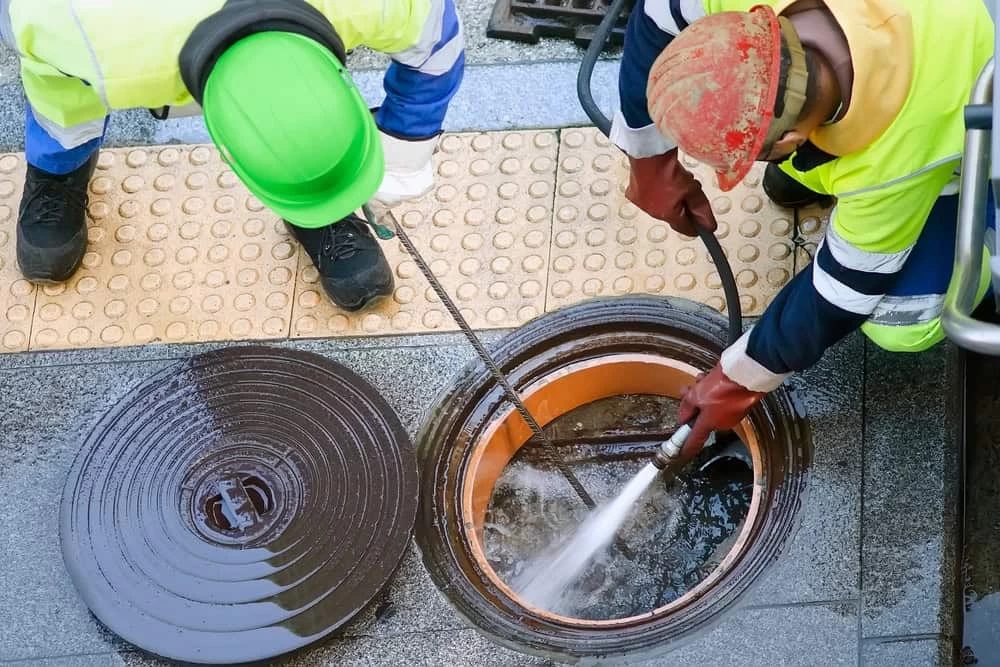
What to Do in the First 30 Minutes of a Sewer Backup
The first thing to do is stop adding water to the system. Don’t flush toilets, run the dishwasher, do laundry, or use any drain in the house. Every gallon of water you send into the system has nowhere to go and will make the backup worse.
Next, if it’s safe to do so without stepping in sewage, shut off the water supply to the house at the main shutoff valve. This limits the amount of water entering the system while you wait for help.
Stay out of the affected area as much as possible. Don’t let kids or pets into the basement. If the sewage is near any electrical outlets, panels, or appliances, don’t enter the space at all — call an electrician before going back in, or let the emergency crew assess it first.
Then call us — a licensed sewer contractor with the equipment to diagnose the actual cause of the backup and give you a real assessment rather than a worst-case quote designed to maximize the job size. We dispatch our own trained crew, not a subcontractor or whoever happens to be available.
One thing that catches a lot of Long Island homeowners off guard: your standard homeowners insurance policy almost certainly does not cover sewer backup damage unless you specifically added a water backup endorsement to your policy. Many people find this out for the first time when they’re standing in a flooded basement. It’s worth a quick call to your insurance agent — but don’t let the insurance question delay you from calling us. Every hour costs more.
Basement Flooded with Sewage: What Happens When It Goes Beyond the Drain
If you’re past the “a little water near the drain” stage and you’re looking at sewage spread across the basement floor — or worse, standing water — the scope of the situation has escalated significantly. At that point, you’re dealing with both an active plumbing emergency and a contamination event that requires professional remediation.
The plumbing side needs to be addressed first. Until the blockage is cleared and the sewer line is flowing properly, no cleanup effort will hold. Our crew will use a sewer camera to locate the blockage, identify what’s causing it — roots, grease buildup, a collapsed section of pipe — and then determine the fastest way to restore flow.
Once the line is clear, the remediation work begins: extracting standing sewage, removing contaminated materials, treating surfaces with professional-grade antimicrobials, and drying the space thoroughly to prevent mold from taking hold. This is not a one-hour job. Depending on how long the sewage has been sitting and how far it spread, the process can take a day or more.
For homeowners across Nassau and Suffolk County, there’s an additional layer to consider: what happens to the pipe after the emergency is resolved. Clearing a blockage doesn’t fix a cracked pipe or one that’s been infiltrated by roots. If the underlying pipe isn’t addressed, the backup will happen again — possibly worse the next time. A camera inspection after the blockage is cleared will show you exactly what you’re dealing with and whether the pipe needs repair or replacement.
The good news is that in most cases on Long Island, sewer line repair doesn’t require tearing up your entire yard. Trenchless methods — pipe lining and pipe bursting — can rehabilitate or replace a damaged lateral without excavating driveways, patios, or landscaping. For homeowners in communities like Bellmore, Wantagh, or Huntington who’ve spent years on their property, that matters a great deal.
Who to Call for Emergency Sewer Backup on Long Island
When sewage is backing up into your basement, you need someone who answers the phone, dispatches their own crew, and actually knows Long Island’s aging sewer infrastructure — not a national call center that patches you through to whoever’s available.
We’ve been doing this work across Nassau and Suffolk County for nearly 40 years. We’re family-owned, fully licensed and insured in New York, and we don’t subcontract. When you call us, the crew that shows up is ours. We carry the equipment to diagnose the problem with a camera inspection, clear the blockage, and tell you honestly what the pipe looks like and what — if anything — needs to happen next.
If you’re dealing with a sewer backup right now, don’t wait. Reach out to Long Island Water and Sewer Main – Allied All City. We’re available 24 hours a day, including weekends and holidays, because sewage doesn’t wait for business hours — and neither do we.