
Summary:
Most Long Island homeowners schedule a pump, assume the job is done, and don’t think about it again for a few years. Then the drains start slowing down. There’s a smell near the yard. Something’s not right — even though you just had it serviced.
Here’s what often goes wrong: pumping and cleaning are not the same service. And on Long Island, where most homes don’t even have a traditional septic tank to begin with, the standard advice you’ll find online may not apply to your property at all. Understanding the difference between these two services — and knowing which one your system actually needs — can save you thousands of dollars and a lot of headaches down the road.
What Is Septic Tank Cleaning — and How Is It Different from Pumping?
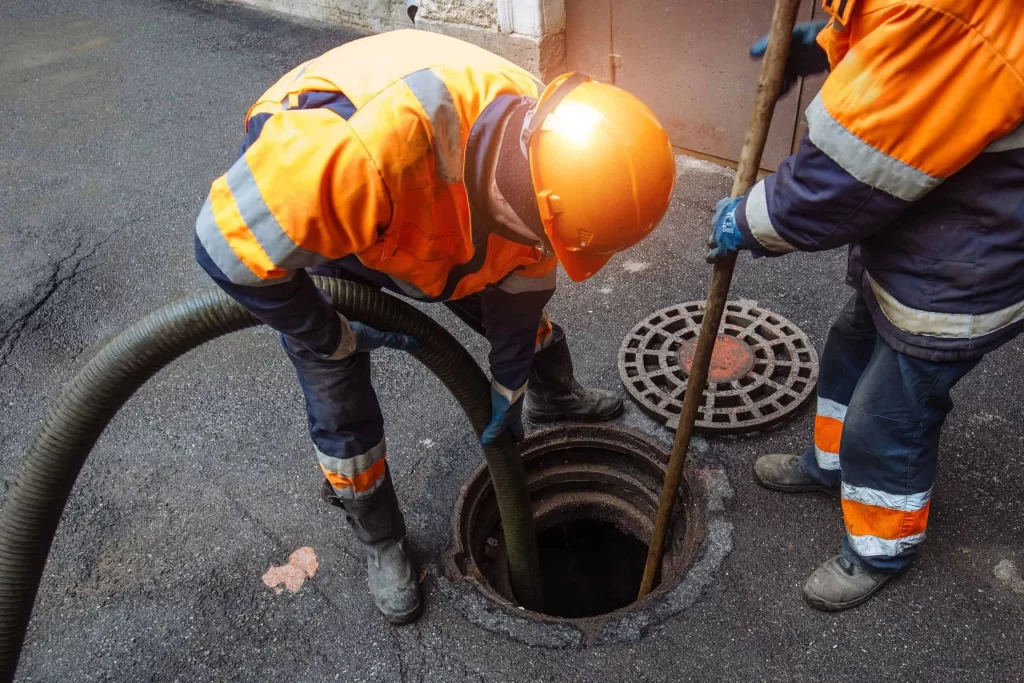
Pumping is exactly what it sounds like. A vacuum truck pulls the liquid waste and loose floating solids out of your tank. It’s fast, it’s routine, and for a well-maintained system on a regular schedule, it’s often all you need. Think of it like emptying a full glass — it clears the volume, but it doesn’t scrub the inside.
Cleaning goes further. A full septic tank cleaning removes everything — the liquid, the floating scum layer, and the compacted sludge that settles and hardens at the bottom of the tank over time. That bottom layer doesn’t get touched during a standard pump. Left alone long enough, it builds up, reduces your tank’s working capacity, and eventually causes the kind of backup that turns a routine service call into an emergency.
The confusion happens because many providers — and most homeowners — use “pumping” and “cleaning” interchangeably. They’re not the same, and knowing the difference helps you ask the right questions before any work begins.
What Actually Happens During a Full Septic Tank Cleaning?
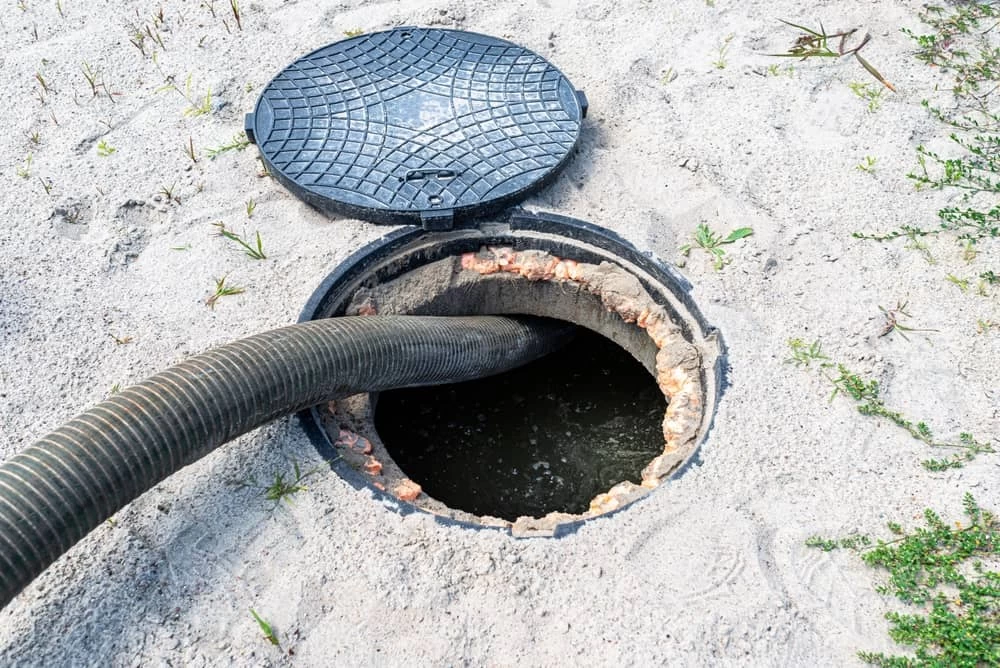
During a standard pump, the technician opens the access lid, drops in the vacuum hose, and removes the liquid and whatever loose material comes with it. The whole process can take under an hour. That’s appropriate for a tank that’s been serviced regularly and doesn’t have significant sludge accumulation.
A full cleaning is a more involved process. The technician removes all liquid first, then uses high-pressure water jets, mechanical agitation, or both to break up the compacted sludge that’s bonded to the floor and walls of the tank. That loosened material is then vacuumed out completely. In some cases, the technician will also inspect the baffles — the internal components that direct the flow of waste — and check for cracks or damage while the tank is empty and accessible.
This matters for a few reasons. First, a tank that’s never been fully cleaned may have years of compacted sludge that a pump simply won’t remove. Second, that sludge layer is where a lot of odor problems originate — even after a recent pump, if the bottom hasn’t been cleared, the smell comes back. Third, a thorough cleaning gives you a real picture of your tank’s condition, including whether the baffles are intact, whether there are any cracks forming, and whether the system is draining properly into the leaching field.
For homeowners who’ve been on a regular maintenance schedule with a reputable provider, a full cleaning may only be needed occasionally — not every service cycle. But if your system has been neglected, if you recently bought an older home and don’t know the service history, or if you’re experiencing recurring problems after pumping, a full cleaning is almost certainly the right call. The cost difference between a pump and a full cleaning is real, but it’s a fraction of what a system failure or full replacement runs.
Do Most Long Island Homes Even Have a Septic Tank?
This is where things get genuinely Long Island-specific — and where a lot of homeowners get tripped up.
The majority of homes in Suffolk County, and a significant portion in Nassau County, don’t have a true septic system at all. They have a cesspool. These are not the same thing, and the difference matters when you’re trying to figure out what service you need.
A true septic system has two distinct stages: a tank where solids settle and separate from liquid, and then a distribution box and leaching field where the clarified liquid disperses into the soil. A cesspool is a single perforated concrete structure that collects all waste — solids and liquids together — and relies entirely on the surrounding soil to absorb the liquid. There’s no separation stage. No treatment. Just a concrete pit leaching directly into the ground.
Because cesspools don’t have that separation stage, solids accumulate faster and the surrounding soil can lose its ability to absorb liquid over time. That’s why Long Island cesspools typically need service every one to two years — not the three to five years you’ll read about in national guides written for true septic systems. And when a cesspool starts failing, the fix isn’t a standard pump or cleaning — it’s hydro-jetting to restore drainage capacity, or in more serious cases, a full system upgrade to an I/A OWTS (Innovative/Alternative Onsite Wastewater Treatment System).
If you moved to Long Island from another state, or if you bought an older home without a thorough inspection, there’s a real chance you don’t know which type of system you have. That’s not unusual. Many homeowners find out for the first time when a technician arrives and explains it. The important thing is getting that clarity before you assume the standard national advice applies to your property — because on Long Island, it often doesn’t.
Septic Pumping on Long Island: What the Schedule Actually Looks Like
The EPA recommends pumping a septic tank every three to five years. That’s a reasonable guideline for a properly functioning true septic system with average household use. On Long Island, it’s only part of the picture.
Suffolk County law requires a septic system inspection every three years, with results reported to the county’s Department of Health Services. Nassau County requires one every five years. These aren’t suggestions — they’re legal obligations. If you’re not on that schedule, you’re out of compliance, and that can become a real problem when you go to sell your home or if the county follows up.
Beyond the legal side, Long Island’s geography adds another layer of urgency. The island sits on a sandy, permeable aquifer — the sole source of drinking water for all 2.8 million residents. Failing cesspools and septic systems don’t just cause backups in your yard; they release nitrogen and contaminants directly into the groundwater and into Long Island Sound, Great South Bay, and the surrounding waterways. It’s a community issue, not just a property issue.
How Often Should You Pump or Clean Your System in Nassau and Suffolk County?
The honest answer is: it depends on what you have, how many people live in your home, and how well the system has been maintained historically.
For a true septic system in good condition, three to five years between pumpings is a reasonable baseline — but you should still be getting that required inspection on Nassau County’s five-year cycle or Suffolk County’s three-year cycle regardless. Those inspections aren’t just about pumping. They’re about verifying the system is functioning, the components are intact, and the leaching field isn’t failing.
For a cesspool — which again, is what most Long Island homes have — the service interval is shorter. One to two years is the standard recommendation, and that’s not a conservative estimate. It reflects the reality that cesspools accumulate solids faster and have less tolerance for neglect than a true septic tank. Going three or four years between service visits on a cesspool is how you end up with a hydro-jetting call instead of a routine pump, or worse, a full system replacement.
Household size matters too. A two-person household puts less strain on a system than a family of five. If you have a larger family, run a home-based business, or frequently host guests — think summer on Long Island, where weekend house counts go up significantly — you’ll want to be on the shorter end of whatever service interval applies to your system type.
The other factor that doesn’t get talked about enough is the age of the system. A significant portion of Long Island’s housing stock was built in the post-World War II era — the 1940s, 50s, and 60s. Those homes have systems that are fifty, sixty, sometimes seventy years old. A cesspool that age has had a long time to accumulate sludge, lose soil absorption capacity, and develop structural cracks. Regular service doesn’t just maintain function — it’s the only way to catch deterioration before it becomes a failure.
What Are the Warning Signs That Your Septic System Needs Attention Now?
Some signs are obvious. Sewage backing up into your drains or toilets is a hard-to-miss signal that something is wrong. But most systems give you earlier, subtler warnings before things get that bad — and catching them early is the difference between a service call and a major repair.
Slow drains throughout the house — not just one fixture — often point to a system that’s approaching capacity or has a blockage between the house and the tank. A gurgling sound in your pipes when you flush or run water is another early indicator. If you’re noticing a persistent odor near the tank location in your yard, that’s your system telling you it’s overdue for service. Wet, unusually green, or spongy patches of grass over the leaching area are a sign that liquid waste is surfacing rather than absorbing properly underground.
Inside the house, watch for any situation where multiple drains are slow at the same time — that pattern usually rules out a simple clog and points toward the system itself. If you’ve recently had guests for an extended period, or if there’s been heavy rain that saturated the soil around your leaching field, those are situations that can push a borderline system into failure faster than normal.
One thing worth knowing: if you’ve had your system pumped recently and you’re still experiencing these symptoms, pumping may not have been the right service for your situation. A cesspool that’s lost its drainage capacity won’t be fixed by pumping alone — it needs hydro-jetting to clear the perforations and restore absorption. A tank with significant bottom sludge won’t smell better after a standard pump because the sludge wasn’t removed. These are situations where the distinction between pumping and cleaning — or between cesspool service and septic service — becomes very practical and very relevant to what you’re experiencing.
If any of this sounds familiar, the right move is to have someone come out and actually look at the system, not just pump it and leave. A proper inspection tells you what you’re working with and what the system actually needs — and that’s the only way to make sure the service you’re paying for actually solves the problem.
How to Find a Licensed Septic Tank Cleaning Company on Long Island
In New York, companies performing cesspool and septic work on Long Island are legally required to be licensed and insured. That’s not a suggestion — it’s the law. Before anyone opens an access lid on your property, ask to see proof of licensing. A reputable company won’t hesitate. One that hedges or changes the subject is a red flag.
Beyond licensing, look for a company that uses its own crews rather than subcontracting the work, provides written documentation of what was found and what was done, and takes the time to explain the difference between what you called about and what your system actually needs. That last part matters more than most people realize — especially on Long Island, where the cesspool vs. septic distinction shapes everything about the right service approach.
If you’re in Nassau or Suffolk County and you’re not sure when your system was last serviced, or whether you’re current on your required inspection cycle, we’re here to help. We’ve been serving Long Island homeowners across both counties for nearly 40 years, and we’re available around the clock if something can’t wait. We can walk you through what your system actually needs and make sure you’re getting the right service the first time.