
Summary:
If someone asked you right now whether your home has a cesspool or a septic tank, could you answer with confidence? Most Long Island homeowners can’t — and that’s not a knock on anyone. These terms get used interchangeably in real estate listings, by neighbors, even by some contractors. But they describe two very different systems, and mixing them up can mean the wrong maintenance schedule, the wrong service call, or a compliance issue you didn’t see coming. Here’s what you actually need to know — explained plainly, without the technical runaround.
Septic Tank Service on Long Island: Understanding What You Actually Have
A septic tank is a two-stage system. Wastewater from your home flows into a buried tank, where solids settle to the bottom and lighter material floats to the top. The liquid in the middle — called effluent — flows out to a drain field, where it slowly filters into the soil. The solids stay in the tank and need to be pumped out every three to five years.
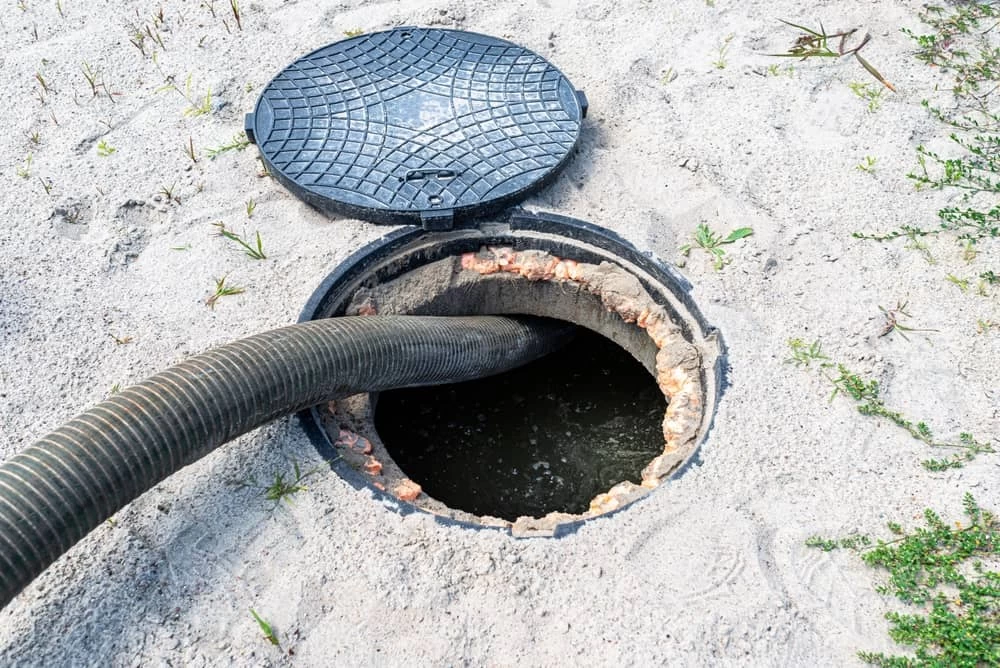
A cesspool is simpler and older. It’s essentially a buried pit — usually made of precast concrete rings — that receives all of your household wastewater at once, with no separation stage. Liquid seeps out through the walls and bottom directly into the surrounding soil. There’s no drain field, no treatment layer, just a pit that fills up and relies on the ground to absorb what it can.
That’s the core difference. One separates waste before it reaches the soil. The other doesn’t.
Why So Many Long Island Homes Still Have Cesspools
To understand why this confusion is so common across Long Island, you have to go back to the post-World War II housing boom. Communities across Nassau County — Levittown, Bellmore, Bethpage, and dozens of others — were built fast, starting in the late 1940s. Cesspools were the standard wastewater solution at the time. They were cheap, quick to install, and the technology for something better wasn’t widely required.
Suffolk County didn’t ban cesspools in new construction until 1973. That means any home built before that year — and there are a lot of them on Long Island — likely has a cesspool, not a septic tank. Homes built after 1973 typically have septic systems, though that’s not a guarantee depending on the township and what was permitted at the time.
Here’s where the confusion compounds: many older Long Island properties have a primary cesspool connected to one or more overflow leaching pools — sometimes called “rings.” When a homeowner walks their property and sees multiple concrete access points in the yard, they often assume they have a multi-chamber septic system with a drain field. They don’t. What they have is a cesspool with overflow capacity, which is a fundamentally different setup. This multi-ring configuration is specific to Long Island’s older housing stock and is one of the most common sources of misidentification we see.
The bottom line is that if your home was built before the mid-1970s and you’ve never had a contractor formally identify your system, there’s a reasonable chance you’re not entirely sure what you have — and that’s worth sorting out before the next time something goes wrong.
How Cesspool and Septic Tank Maintenance Differ — and Why It Matters
The maintenance gap between these two systems is significant, and it’s one of the most practical reasons the distinction matters to you as a homeowner.
Septic tanks, because they separate solids from liquids before anything reaches the soil, accumulate sludge more slowly. The EPA recommends pumping every three to five years, with an inspection every one to three years. That’s a manageable schedule for most households.
Cesspools don’t have that separation stage. Everything goes in together, which means solids build up faster and the surrounding soil can become saturated more quickly. On Long Island, most cesspools need to be pumped every one to two years to stay functional. If you’ve been maintaining your system on a septic schedule but you actually have a cesspool, you’re already behind — and that gap tends to show up as slow drains, odors near the tank area, or wet patches in the yard before you even realize there’s a problem.
There’s also a regulatory dimension that’s become increasingly hard to ignore in Suffolk County. Conventional cesspools have been classified by the New York State DEC as failing systems for nitrogen removal purposes. Long Island’s groundwater is the only source of drinking water for the entire island. There are no rivers, no reservoirs — just the sole-source aquifer beneath your feet. Cesspools release an average of 40 pounds of nitrogen per household per year into that aquifer, which is why Suffolk County banned new cesspool installations entirely in 2019 and now requires advanced nitrogen-reducing systems (called I/A OWTS) for new construction and major renovations.
If you’re planning a significant home project, or if you’re in the process of buying or selling a property, understanding which system you have isn’t just useful — it can directly affect your timeline, your budget, and what the county requires of you.
Septic System Service in Nassau and Suffolk County: What Homeowners Are Actually Asking
We hear a lot of the same questions from homeowners across Long Island, and most of them come down to one core concern: “I’m not sure what I have, and I don’t want to make an expensive mistake.” That’s a reasonable place to be. Here are the questions that come up most often — answered directly.
The short version: if you’re not sure what system you have, you don’t have to figure it out on your own before calling. We can identify your system when we come out to service it.

How Do I Know If I Have a Cesspool or a Septic Tank?
The most reliable way is to have a professional inspect the system — but there are a few clues you can look for on your own in the meantime.
Check your property records. If your home was built before 1973 in Suffolk County, or before similar restrictions took effect in Nassau County, there’s a strong chance you have a cesspool. Your county health department may also have records of what was permitted when the home was originally built.
Look at what’s in your yard. A single concrete access point (or a lid) near the house usually indicates a cesspool. Two or more access points spaced farther apart — one near the house and one or more farther out — could suggest a septic tank with a distribution box and drain field, though it could also be a cesspool with leaching pools. The physical layout alone isn’t definitive.
Pay attention to your maintenance history. If your system has needed pumping every year or two, that’s more consistent with a cesspool. Septic tanks on a proper maintenance schedule typically go three to five years between pump-outs.
For Nassau County homeowners specifically, many of the older communities — particularly those built during the postwar expansion in the late 1940s and 1950s — are almost entirely cesspool territory. If you’re in one of those neighborhoods and you’ve never had a formal system assessment, the odds favor a cesspool. The only way to know for certain is a direct inspection, which is something we handle as part of routine service calls.
Do I Have to Replace My Cesspool Under Suffolk County's New Rules?
This is one of the most common questions we get, and the anxiety around it is understandable — the regulations have been changing, and the information circulating online isn’t always clear.
Here’s the straightforward version: you are not automatically required to replace your cesspool just because it exists. Suffolk County’s current rules mandate I/A OWTS (Innovative/Alternative Onsite Wastewater Treatment Systems) for new construction and for projects classified as “major reconstruction” — meaning the renovation costs equal 50% or more of the structure’s assessed value. If you’re simply living in your home and maintaining your existing system, you are not currently required to replace it on a fixed timeline.
That said, there are strong financial reasons to explore an upgrade voluntarily. As of mid-2025, combined state and county grants of up to $45,000 are available to qualifying Long Island homeowners who replace a conventional cesspool with an I/A OWTS system. These are grants, not loans. The typical cost of an I/A OWTS installation runs between $19,000 and $25,000 before incentives — meaning many homeowners can make the switch at little to no out-of-pocket cost, depending on their eligibility.
Suffolk County’s Septic Improvement Program (SIP) administers the county portion of that funding, and Nassau County has its own parallel program. If you’ve been putting off looking into this because you assumed you couldn’t afford it, the current grant landscape is worth a second look. The programs won’t be funded at this level indefinitely, and the regulatory direction — more requirements over time, not fewer — isn’t going to reverse.
The other scenario where replacement becomes non-negotiable is a home sale. Buyers on Long Island are increasingly requesting cesspool inspections before closing, and a system that’s failing or significantly out of compliance can become a serious negotiating issue. Getting ahead of that before you list is almost always the less expensive path.
Septic Service on Long Island: What to Do If You're Still Not Sure
The takeaway here isn’t complicated. Cesspools and septic tanks are different systems with different maintenance needs, different regulatory implications, and different long-term costs. Confusing the two — or just not knowing which one you have — is one of the most common reasons homeowners on Long Island end up dealing with a preventable problem.
If you know what you have, make sure your maintenance schedule actually matches the system. If you don’t know, that’s a straightforward thing to resolve — it doesn’t require guesswork or an expensive diagnostic process.
We’ve been doing this work across Nassau and Suffolk counties for nearly 40 years. We can identify your system, assess its condition, and give you a straight answer about what it needs — whether that’s a routine pump-out, a repair, or a conversation about what an upgrade would actually look like for your property. Give us a call and we’ll take it from there.