
Summary:
You got the estimate. Maybe it seemed reasonable at first. Then you started asking questions—about permits, about your driveway, about whether we’re putting your lawn back the way it was—and suddenly the number climbed.
That’s the thing about sewer line replacement cost: the sticker price rarely tells the whole story. In Nassau County, homeowners pay anywhere from $1,200 to $15,000 or more depending on the method, the damage, and what’s actually included in the quote. But the real expense? It’s in what doesn’t show up on page one.
This breakdown walks you through the actual costs—materials, labor, permits, restoration, and the trenchless options that can cut your total spend by eliminating the most expensive part: putting your property back together.
What Affects Sewer Line Replacement Cost in Nassau County
The final number on your sewer line replacement depends on a handful of factors that vary from property to property. Length matters—most residential lines run about 40 feet from your home to the street, but longer runs mean more material and labor. Depth plays a role too. Lines buried four feet down are easier to access than those sitting at six or eight feet, where specialized equipment and more digging time drive up costs.
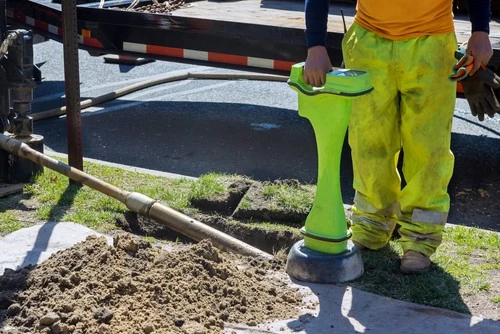
Then there’s the method. Traditional excavation involves tearing up your yard, driveway, or sidewalk to reach the damaged pipe. Trenchless methods like pipe bursting or pipe lining work from small access points, leaving most of your property untouched. The upfront cost per foot might look higher with trenchless, but when you skip the restoration bill, the total often comes out lower.
Location-specific factors add another layer. Nassau County soil shifts more than you’d expect, especially after heavy rain or freeze-thaw cycles. Tree roots from those oak-lined streets in Garden City or Westbury grow 20 to 30 feet looking for water, and your sewer line is exactly what they’re searching for. About 60% of sewer line problems on Long Island trace back to root intrusion. That means the “why” behind your replacement can shape how much work is actually required.
How Much Does Traditional Sewer Line Replacement Cost
Traditional excavation—the dig-it-all-up approach—typically runs $50 to $200 per linear foot in Nassau County. For a standard 40-foot residential line, that puts you somewhere between $2,000 and $8,000 just for the pipe work itself. But that’s only part of the equation.
Once the trench is dug and the old pipe is pulled, you’re left with a torn-up yard, a broken driveway, or a cracked sidewalk. Landscape restoration alone can add $2,000 to $5,000 to your bill. Driveway or concrete repair? Tack on another $1,000 to $3,000. Traditional excavation can add $3,000 to $8,000 in hidden restoration costs beyond the base repair pricing.
Then there’s labor. Excavation takes time—usually multiple days depending on access and obstacles. If your sewer line runs under a patio, beneath mature landscaping, or through an area with other utilities, expect the crew to work slower and charge more. Extended labor for site cleanup, trenching around obstacles, and coordinating with local utility companies all add to the final cost.
Permits are another line item that catches homeowners off guard. Nassau County requires permits for most sewer work, and fees vary by municipality. Some towns charge a few hundred dollars; others push closer to $500 or more depending on the scope. We handle the permitting process, but make sure that cost is spelled out in the estimate before work begins.
Don’t forget about the hidden costs that show up after the fact. Foundation issues from soil erosion near the trench can cost around $4,500 to repair. Drywall damage inside your home—if the crew had to access pipes through your basement or crawl space—can run $350 for minor fixes or $2,000+ for major work. Flooring replacement, depending on what was torn up, adds even more.
The bottom line with traditional excavation: the method itself might be cheaper per foot, but the total project cost—once you account for restoration, permits, and unexpected repairs—often exceeds what you’d pay for a trenchless approach that leaves your property intact.
Sewage Line Replacement Cost Breakdown by Material Type
The pipe material you choose affects both the upfront cost and how long your new sewer line will last. PVC is the most budget-friendly option, typically costing $120 to $320 for materials on a 40-foot run. It’s lightweight, resistant to corrosion, and lasts 50 to 100 years in most conditions. For Nassau County homeowners looking to keep material costs down without sacrificing longevity, PVC is a solid choice.
Cast iron pipes sit on the higher end, running $800 to $3,000 for materials alone on a 40-foot line. In some parts of New York City, cast iron is actually required for sewer lines running from your home to the street. Cast iron is durable and handles heavy loads well, but it’s prone to corrosion over time—especially in areas with salt air or shifting soil. If your property is near the coast, that corrosion happens faster.
ABS (acrylonitrile butadiene styrene) falls in the mid-range. It’s similar to PVC but slightly more impact-resistant, making it a good fit for areas where ground movement is a concern. Copper is the most expensive material, but it’s rarely used for full sewer line replacements anymore due to cost and the availability of more affordable, equally durable options.
Clay pipes were common in older Long Island homes—especially those built in the 1950s and 1960s. They’re economical and can last 50 to 60 years on average, but they’re more susceptible to root intrusion and cracking from soil shifts. If you’re replacing an old clay line, upgrading to PVC or ABS is usually the smarter long-term investment.
Material choice also affects labor costs. Heavier materials like cast iron require more time and effort to install, which means higher hourly rates and longer project timelines. Lighter materials like PVC install faster, reducing labor expenses and getting your system back online sooner.
When you’re comparing quotes, make sure the estimate breaks out material costs separately from labor. That way, you can see exactly what you’re paying for and whether we’re recommending a material that fits your property’s specific needs—or just the one that’s easiest to install.
Trenchless Sewer Repair Cost vs. Traditional Methods
Trenchless sewer repair flips the traditional approach. Instead of digging a trench the entire length of your sewer line, trenchless methods work from small access points—usually one at each end of the damaged section. The cost per linear foot runs higher, typically $60 to $250, but the total project cost often comes out lower because you’re not paying thousands to restore your property afterward.
There are two main trenchless methods: pipe lining and pipe bursting. Pipe lining involves inserting a resin-coated liner into the existing pipe, then inflating and curing it to create a new pipe inside the old one. It’s ideal when the existing pipe still has structural integrity but has cracks, leaks, or minor root intrusion. Pipe bursting, on the other hand, uses a bursting head to fracture the old pipe outward while simultaneously pulling a new pipe through the same route. This works well when the old pipe has collapsed or is too damaged to line.
Trenchless repairs are typically 30% to 40% less expensive than traditional excavation when you factor in restoration costs. A full trenchless replacement for a 40-foot line might run $6,000 to $12,000, while traditional excavation for the same length—including restoration—can easily hit $10,000 to $15,000 or more. The savings come from eliminating landscaping repair, driveway restoration, and the extended labor required for digging, backfilling, and cleanup.
Speed is another advantage. Most trenchless projects wrap up in one to two days, compared to several days or even a week for traditional excavation. That means less disruption to your daily routine and fewer days without full use of your plumbing system.
Trenchless Sewer Repair Cost Factors You Need to Know
Even within trenchless methods, costs vary based on a few key factors. Pipe depth is one of them. Accessing a sewer line at five feet is straightforward; reaching one buried at 12 feet requires more specialized equipment and labor, which drives up the price. If your line runs deep, expect your estimate to reflect that added complexity.
Pipe diameter also plays a role. Residential sewer lines are typically four to six inches in diameter, but commercial properties or older homes might have larger pipes. More material means higher costs, both for the liner or replacement pipe and for the equipment needed to install it.
The condition of your existing pipe determines whether lining or bursting is the better option. If the pipe has collapsed completely or has severe offsets, pipe bursting is usually the only viable trenchless solution. Lining works best when the pipe is still structurally sound but has cracks, leaks, or minor root damage. We run a camera inspection before recommending a method—that way, you’re not paying for a solution that won’t actually fix the problem.
Location and access matter too. If your sewer line runs under a patio, driveway, or other hard-to-reach area, expect the cost to climb. Even though trenchless methods minimize disruption, we still need clear access to the entry and exit points. If we have to navigate around obstacles, remove landscaping features, or work in tight spaces, labor costs will increase.
Permits and inspections add to the total as well. Most municipalities in Nassau County require permits for trenchless work, just like they do for traditional excavation. The fees vary by town, but they’re usually in the $200 to $500 range. We include permit costs in our estimate, but make sure you know what’s covered before signing anything.
Finally, there’s the warranty. Trenchless repairs often come with longer warranties than traditional excavation—sometimes up to 50 years for pipe liners. That’s a selling point, but it also reflects the durability of the method. A longer warranty means fewer future repairs and lower long-term costs, which is worth considering when you’re comparing upfront prices.
No Dig Sewer Line Replacement Cost Benefits
No dig sewer line replacement—another term for trenchless methods—delivers cost benefits that go beyond the initial estimate. The biggest savings come from avoiding restoration work. When you don’t tear up your yard, driveway, or sidewalk, you don’t have to pay to put it back. That alone can save you $3,000 to $8,000 depending on the extent of the damage.
Property value is another consideration. A freshly excavated yard with patched landscaping and a repaved driveway section doesn’t look great, especially if you’re planning to sell in the near future. No dig methods leave your property looking exactly as it did before the repair, which means no visual reminders of the work and no impact on curb appeal.
Speed translates to savings too. The faster the project wraps up, the less you’re paying in labor costs. Traditional excavation can take several days or even a week, especially if the crew runs into obstacles like other utilities or difficult soil conditions. Trenchless repairs typically finish in one to two days, which means lower labor bills and less time dealing with disruptions to your daily routine.
There’s also the long-term cost benefit of durability. Pipe liners, for example, are rated to last up to 50 years. That’s longer than many traditional pipe materials, especially in areas with shifting soil or aggressive tree roots. Fewer future repairs mean lower lifetime costs, even if the upfront price is slightly higher.
Environmental impact matters to some homeowners, and no dig methods are less disruptive to the surrounding ecosystem. You’re not disturbing large sections of soil, which means less erosion, less runoff, and less risk of damaging nearby trees or plantings. For properties with mature landscaping or environmentally sensitive areas, that’s a real advantage.
Finally, there’s the stress factor. Watching a crew tear up your yard, driveway, and sidewalk is stressful. Wondering whether we’ll put it all back correctly adds to that. No dig methods eliminate most of that anxiety because the work happens underground with minimal surface disruption. You’re not left wondering whether your lawn will ever look the same or whether that driveway patch will hold up through the next winter.
Making Sense of Sewer Line Replacement Costs in Nassau County
Sewer line replacement cost isn’t just about the pipe. It’s about the method, the materials, the permits, the restoration, and the long-term value of the solution you choose. In Nassau County, homeowners who go the traditional excavation route might pay less per foot, but they often end up spending more overall once restoration, labor, and hidden fees are factored in.
Trenchless methods flip that equation. The upfront cost per foot is higher, but the total project cost stays lower because you’re not rebuilding your property afterward. You’re also getting a faster timeline, less disruption, and a solution that’s built to last decades.
The key is knowing what’s included in your estimate and what’s not. Ask about permits, restoration, material costs, and labor before you commit. Get a camera inspection so you’re working with accurate information about the condition of your line. And if you’re weighing traditional excavation against trenchless, make sure you’re comparing total project costs—not just the per-foot price.
We bring nearly 40 years of local experience, trenchless technology, and transparent pricing to every project. If you’re ready to get a clear picture of what your sewer line replacement will actually cost, reach out and start with an honest assessment.