

Summary:
You hear water running when everything’s off. Your bill jumped $200 last month. There’s a damp spot on the ceiling that wasn’t there yesterday.
These aren’t minor annoyances—they’re warnings that water is escaping somewhere it shouldn’t, and the clock is ticking on how much damage it’ll cause. Finding the leak is the hard part. It could be behind a wall, under your foundation, or three feet underground in Nassau County, NY. Guessing wrong means tearing into the wrong spot, wasting money, and letting the real problem get worse.
That’s where a leak specialist makes the difference. We use technology that pinpoints the exact location before anyone picks up a shovel or cuts into drywall. Let’s walk through how professional leak detection actually works and why it matters for your property.
How a Leak Specialist Finds Hidden Water Line Problems
Most homeowners only discover leaks after the damage is visible—water stains, mold smell, a section of yard that stays soggy. By that point, water’s been running for weeks, maybe months, soaking into materials that weren’t meant to stay wet.
A leak specialist flips that timeline. Instead of waiting for symptoms to appear, we confirm whether water is escaping and locate the exact spot before visible damage occurs. The process starts with ruling out the obvious: running toilets, dripping faucets, leaking hose connections. If those check out fine but your water meter shows continuous flow when everything’s shut off, you’ve got a hidden leak somewhere in the system.
That’s when specialized equipment takes over. We’re not guessing based on where water happens to show up. We’re tracking it back to the source using tools that detect pressure changes, temperature differences, and even the sound of water moving through pipes where it shouldn’t be.
Advanced Equipment That Pinpoints Foundation Leak Detection Without Excavation
The difference between old-school leak detection and what’s possible now comes down to technology that sees what you can’t. Ultrasonic leak detection picks up high-frequency sounds that water makes when it escapes through cracks or holes in pipes. These sounds travel through concrete, drywall, and soil, which means we can locate leaks inside walls, under slabs, and underground without cutting or digging to find them.
Infrared cameras add another layer. Water changes temperature as it moves through different materials, and thermal imaging captures those temperature variations. A cold spot on a wall might indicate a water line leak behind it. A warm area on your floor could mean a hot water line is leaking under your slab. These aren’t guesses—they’re measurable temperature differences that point us to the problem area within inches.
For underground leaks in Nassau County, NY, acoustic listening equipment amplifies the sound of water escaping from buried pipes. The equipment is sensitive enough to detect leaks even when they’re several feet below ground or running under driveways and landscaping. This matters where many homes have water lines buried 3-4 feet deep. Traditional methods would require digging exploratory trenches until you stumble onto the problem. Modern detection equipment eliminates that guesswork entirely.
CCTV camera inspection takes the process even further for sewer and drain lines. We send a small camera through your pipes to visually inspect the interior condition. This shows us cracks, root intrusion, corrosion, and blockages in real time. You see exactly what we’re seeing on a monitor, which removes any mystery about what’s wrong and what needs to happen to fix it.
The equipment investment is significant, but it translates directly into cost savings for property owners. When we can pinpoint a leak to a specific two-foot section of pipe, repair work becomes surgical instead of exploratory. You’re not paying to open up entire walls or dig up your whole yard hoping to find the problem. We go straight to the source, fix it, and minimize disruption to your property.
Why Slab Leaks Under Your Foundation Demand Immediate Leak Specialist Attention
Slab leaks are particularly destructive because they happen underneath your home’s concrete foundation. Many Nassau County, NY homes built in the 1960s and 70s have copper pipes running through the concrete slab. These pipes were installed during construction, encased in concrete, and expected to last indefinitely. But “indefinitely” turns out to be about 40-50 years when you factor in soil movement, water chemistry, and normal wear.
When these pipes develop leaks, water escapes directly into the ground beneath your foundation. You might notice warm spots on your floor if it’s a hot water line. Your water bill might climb without explanation. Sometimes you’ll hear water running when nothing’s turned on. In worst-case scenarios, you’ll see cracks forming in your foundation as the ground beneath it becomes saturated and unstable.
The challenge with foundation leak detection is that the leak is literally encased in concrete. You can’t see it, and water damage might not show up inside your home until significant deterioration has occurred underground. This is where specialized slab leak detection equipment becomes essential. We use acoustic sensors that detect the sound of water escaping through concrete. The sensors are placed at multiple points around your foundation, and the equipment triangulates the sound to pinpoint the leak’s location.
Thermal imaging adds confirmation. Temperature differences show up clearly on infrared cameras, even through concrete. Combined with acoustic detection, this gives us a precise location before any concrete gets broken up.
Time matters with slab leaks more than almost any other plumbing problem. Water pooling under your foundation doesn’t just waste water—it undermines the structural support your home sits on. Soil becomes saturated and loses its load-bearing capacity. Your foundation can shift, crack, or settle unevenly. What starts as a small pipe leak turns into a foundation repair project that costs tens of thousands if left unaddressed.
Long Island’s soil conditions make this even more critical. The combination of clay soil and high water tables means water doesn’t drain away quickly once it starts accumulating under your foundation. It sits there, creating ongoing moisture problems that affect not just the foundation but also basement walls, floor joists, and anything else in contact with that saturated ground.
Professional foundation leak detection stops this progression before it reaches the catastrophic stage. We locate the leak, assess the extent of any existing damage, and provide options for repair that minimize disruption to your home. In many cases, trenchless repair methods allow us to fix the problem without breaking up large sections of your foundation. We access the damaged pipe through small entry points, repair or replace the affected section, and restore everything without turning your home into a construction zone.
Emergency Leak Repair When Water Line Failures Happen at 2 AM
Water emergencies don’t wait for business hours. A pipe bursts at 2 AM. You discover a major leak on Sunday evening. Your water heater fails on a holiday weekend. In every scenario, water damage gets worse with each passing hour, and you need a leak specialist who can respond immediately, not schedule you for next week.
That’s the reality of emergency leak repair—it has to happen now, not later. Every minute water runs where it shouldn’t, it’s soaking into drywall, insulation, flooring, and structural materials. Within 24-48 hours, mold begins growing in wet materials. Within days, wood starts to rot. The longer you wait, the more expensive the cleanup and restoration become.
Our 24/7 emergency response means fully stocked trucks ready to roll any time, day or night across Nassau County, NY. We’re not talking about an answering service that takes a message and calls you back Monday morning. We’re talking about technicians who arrive at your property within 45 minutes to an hour, assess the situation, stop the water flow, and begin repairs the same night if possible.
Water Line Leak Repair Using Trenchless Technology to Protect Your Property
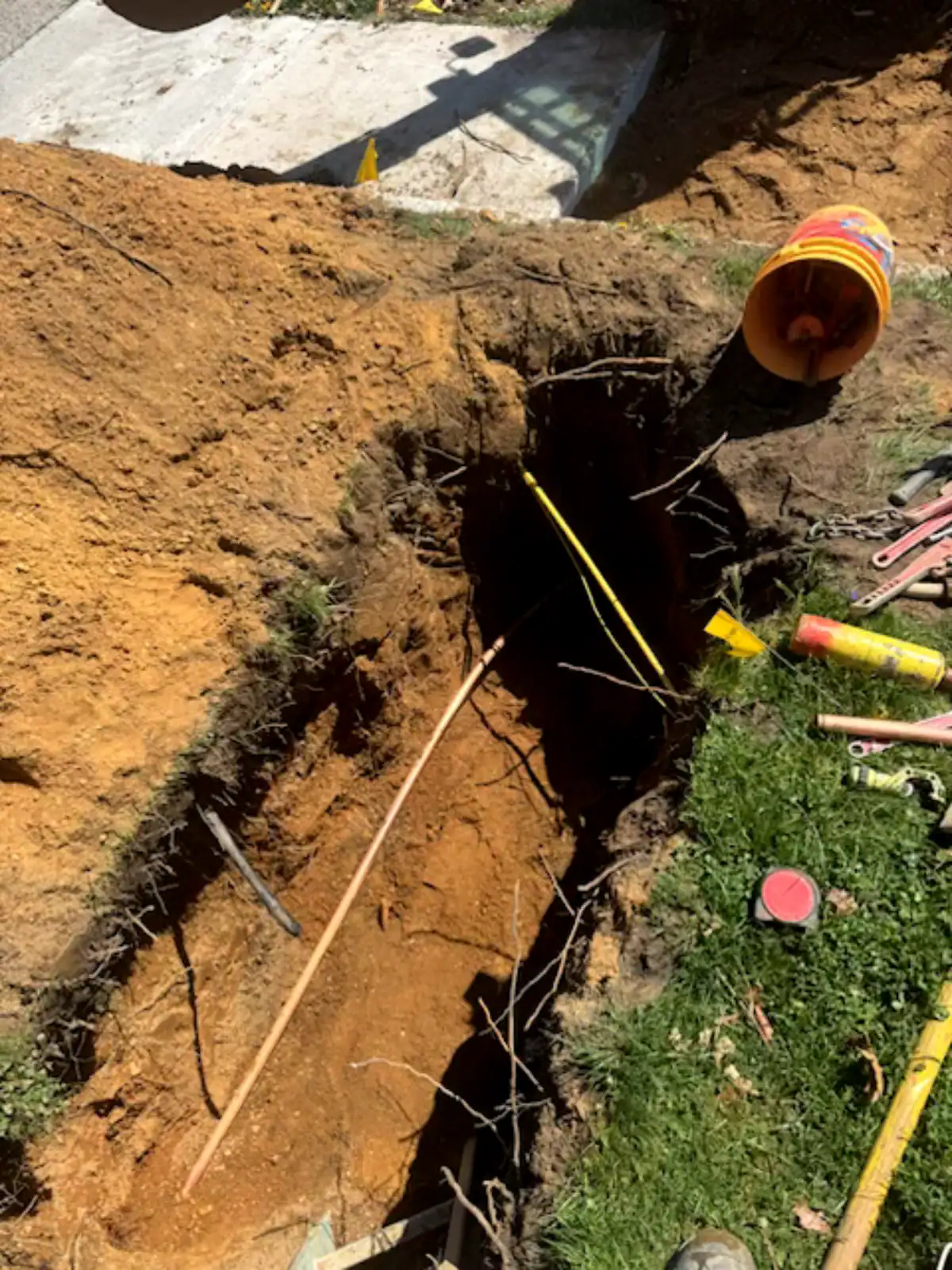
Traditional water line leak repair means digging a trench from your house to the street, exposing the damaged pipe, replacing the section, and then restoring everything that got torn up in the process. Your landscaping gets destroyed. If the line runs under your driveway, that gets jackhammered and repaved. Sidewalks, patios, gardens—everything in the path of that trench gets excavated and needs restoration afterward.
Trenchless water line repair eliminates most of that disruption. Instead of digging a continuous trench, we create two small access points—one at each end of the damaged section. Then we use specialized equipment to repair or replace the pipe underground without excavating the entire length.
Pipe lining works when your existing pipe has structural integrity but suffers from cracks, leaks, or minor damage. We insert a flexible liner coated with epoxy resin into the existing pipe. The liner is positioned to cover the damaged area, then inflated to press against the pipe walls. The epoxy cures in place, creating a new pipe within your old one. The result is a seamless, jointless pipe that’s actually stronger than the original and lasts 50-100 years.
Pipe bursting is the solution when the existing pipe is too damaged to line. We pull a new pipe through the old one while simultaneously breaking up the old pipe and pushing it out of the way. The new pipe takes the exact path of the old one, but you end up with a brand new water line without digging up your entire yard.
Both methods complete in a fraction of the time traditional excavation requires. Where traditional repair might take 3-5 days, trenchless methods typically finish in 3-5 hours. You’re without water for hours instead of days, and your property looks the same when we’re done as it did when we started.
The cost savings add up quickly when you avoid restoration expenses. You’re not paying to replace landscaping, repave driveways, or repair hardscaping. Labor costs drop because the job takes hours instead of days. And you avoid the hidden costs of living through a major excavation project—the noise, the mess, the disruption to your daily routine.
For Nassau County, NY homeowners with property values averaging over $600,000, protecting your landscaping and hardscaping investments matters. Trenchless technology lets you fix the plumbing problem without sacrificing the property improvements you’ve invested in over the years.
Hard Water Damage and Salt Air: Why Long Island Pipes Fail Faster
Long Island’s water chemistry creates specific challenges that accelerate pipe deterioration. Hard water—water with high mineral content, particularly calcium and magnesium—is common throughout Nassau and Suffolk Counties. While hard water isn’t a health hazard, it’s extremely hard on plumbing systems.
As hard water flows through pipes, minerals gradually deposit on the interior walls. Over time, these deposits build up, narrowing the pipe’s opening and restricting water flow. You’ll notice this as gradually declining water pressure throughout your home. Showers that used to have good pressure feel weaker. Faucets don’t flow as strongly. The washing machine takes longer to fill.
But restricted flow is just the visible symptom. The real problem is what’s happening to the pipe material itself. Mineral buildup creates rough interior surfaces that promote further corrosion. The deposits trap moisture against the pipe walls, accelerating oxidation. In areas where deposits are thickest, the pipe wall beneath can corrode through completely, creating pinhole leaks or larger failures.
Galvanized steel pipes, common in homes built before 1980, are particularly vulnerable to hard water damage. The zinc coating that protects the steel gradually wears away, especially in the presence of hard water. Once the zinc is gone, the steel underneath corrodes rapidly. This is why you see so many water line failures in Nassau County, NY homes from the 1960s and 70s—the pipes are reaching the end of their useful life, accelerated by decades of hard water exposure.
Copper pipes aren’t immune either. While copper resists corrosion better than steel, hard water still takes its toll. Pitting corrosion—small holes that form on the pipe surface—becomes more common in hard water conditions. These pinholes leak slowly at first, often going undetected until water damage appears elsewhere.
Salt air adds another layer of deterioration for Long Island properties. Even if you’re not directly on the coast, ocean winds carry microscopic salt particles inland. These particles settle on exposed pipes, pipe connections, and plumbing fixtures. Salt is hygroscopic—it attracts and holds moisture from the air. This creates a micro-environment where metal pipes stay damp longer than they would in non-coastal settings.
The combination of salt and moisture accelerates corrosion dramatically. Chloride ions in salt break down the protective oxide layers that normally form on metal surfaces. Once those protective layers are compromised, corrosion spreads quickly. Copper pipes develop the greenish-blue patina you see on older plumbing. Galvanized pipes rust through faster. Even stainless steel components can suffer from chloride-induced stress corrosion cracking under consistently humid and salty conditions.
For property owners, this means pipes don’t last as long on Long Island as they might in other regions. A copper pipe system that might last 70-80 years inland could fail in 40-50 years in coastal conditions. Galvanized pipes that might survive 60 years elsewhere often need replacement after 40 years here.
Water softeners help by removing the minerals that cause hard water problems. Regular inspections catch corrosion before it leads to failures. And when replacement becomes necessary, choosing materials that resist both hard water and salt air corrosion—like PEX or CPVC—extends the life of your plumbing system significantly.
The key is recognizing that Long Island’s water chemistry and coastal environment create a more aggressive corrosion environment than many other areas. What looks like normal aging in your plumbing system might actually be accelerated deterioration that needs a leak specialist’s attention before it leads to emergency failures.
Getting a Leak Specialist Before Water Damage Becomes Catastrophic
Hidden leaks don’t get better on their own. That damp spot gets bigger. The water bill keeps climbing. The damage spreads into materials that cost thousands to replace. The difference between a manageable repair and a catastrophic problem often comes down to how quickly you act once you notice something’s wrong.
A professional leak specialist gives you answers before you commit to tearing into walls or digging up your yard. You know exactly where the problem is, what’s causing it, and what it’ll take to fix it properly. No guesswork. No exploratory demolition. Just targeted repair that solves the problem and minimizes disruption to your property.
For Nassau County, NY homeowners dealing with aging pipes, hard water damage, or the effects of salt air corrosion, having a leak specialist who understands Long Island’s specific challenges matters. We’ve been handling these exact problems for nearly 40 years across both Nassau and Suffolk Counties. If you’re seeing warning signs or want to confirm whether that high water bill means you’ve got a hidden leak, we provide the detection technology and repair expertise to handle it right the first time.
Need this done on Long Island? Long Island Sewer and Water Main handles water line repair across Nassau and Suffolk County. Call 631-407-2873 in Suffolk or 516-604-2651 in Nassau.