
Summary:
Something’s off. Maybe the drains are slow. Maybe you’ve heard a gurgling sound coming from the toilet after you run the washing machine. Maybe the basement smells faintly like it shouldn’t. You’ve had it snaked once — maybe twice — and it keeps coming back. At some point, you stop wondering if there’s a problem and start wondering what the problem actually is. That’s exactly what a sewer camera inspection is designed to answer. Not a guess. Not an estimate based on the age of your house. A real look at what’s going on inside the pipe, in real time, before we recommend a single dollar of repair work.
How a Sewer Inspection Camera Works
The camera itself is mounted on the end of a flexible rod that feeds into your sewer line through an access point — typically your sewer cleanout. It’s equipped with high-resolution optics and LED lighting, so even deep inside a dark underground pipe, the footage is clear. Everything the camera sees is transmitted live to a monitor above ground, where you can watch alongside our technician as it moves through the line.
This isn’t a rough estimate of what might be wrong. It’s a direct view of the interior of your pipe — every joint, every section, every inch of it. If there’s root intrusion 60 feet down, you see it. If there’s a crack where the ground shifted, you see it. If the pipe has sagged and waste is pooling instead of flowing, that shows up too. The camera also carries an electronic transmitter that records the exact underground location and depth of any problem, so if a repair is needed, we know precisely where to go — no digging around to find it.
What Is a Sewer Cleanout and Why Does It Matter?
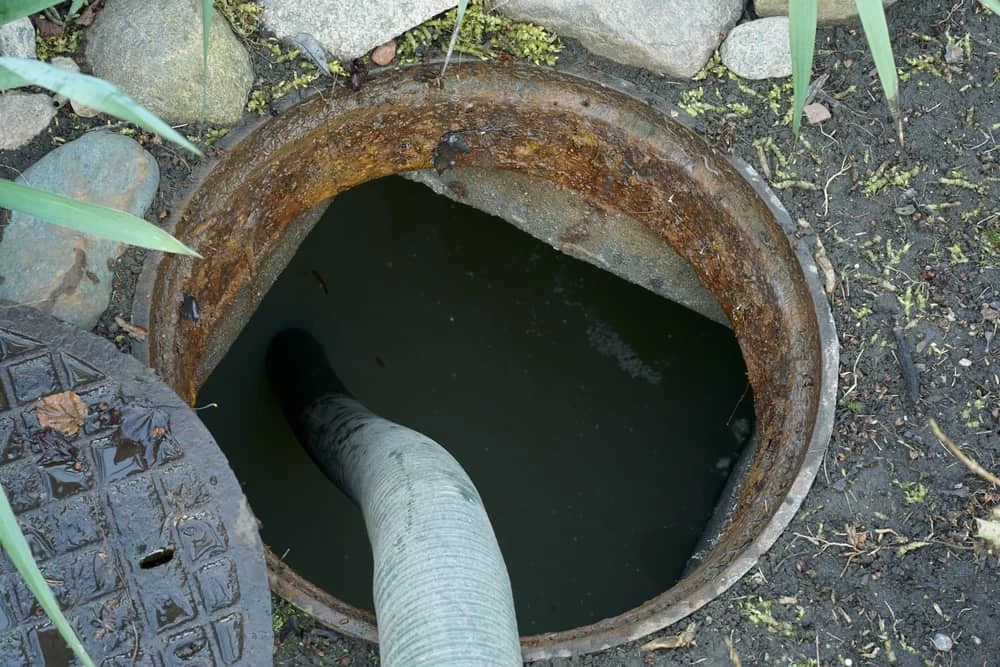
Before the camera goes anywhere, we need a way in. That entry point is called a sewer cleanout — a capped pipe stub that provides direct access to your main sewer line without having to remove a toilet or open a wall. In most Long Island homes, it’s located in the basement, crawl space, or just outside the foundation. Older homes sometimes have them buried in the yard or hidden under decades of finished flooring.
If your home has an accessible cleanout, the inspection is straightforward. The cap comes off, the camera goes in, and within minutes you’re watching live footage of your pipe’s interior. If the cleanout is buried, damaged, or missing entirely — which happens more often than you’d expect in homes built in the 1950s and 60s across Nassau County — we can usually access the line through a roof vent stack or by carefully removing a toilet. It adds a small amount of time, but it doesn’t prevent the inspection from happening.
The reason the cleanout matters so much is access angle and reach. A properly located cleanout lets the camera travel the full length of your main sewer line — up to 300 feet in a single pass — without obstruction. That means a complete picture of the line from your home all the way to the municipal connection at the street, or in Suffolk County communities that rely on cesspools, all the way to the tank. Nothing gets skipped. Nothing gets assumed.
One thing worth knowing: if your cleanout is hard to find or you’re not sure where it is, that’s not unusual. We locate them regularly for homeowners who’ve lived in their house for 20 years and never had reason to look. It’s part of the process, not a complication.
What We Commonly Find Inside Long Island Sewer Lines
The findings vary by home, but after 40 years of doing this work across Nassau and Suffolk counties, certain problems show up again and again — and they’re almost always tied to the age of the pipe and the conditions specific to Long Island.
Tree root intrusion is the most common finding, and it’s especially prevalent in established neighborhoods like Merrick, Bellmore, Huntington, Smithtown, and Rockville Centre, where mature oaks and maples have had decades to grow their root systems toward the moisture in aging sewer lines. Roots enter through tiny cracks or loose joints, then expand inside the pipe over time, catching debris and eventually causing full blockages. The camera shows exactly how far they’ve penetrated and how much of the line is affected.
Cracked or fractured pipe is the next most common finding. Long Island’s post-WWII housing stock — the Levittown-era homes built across Nassau County and western Suffolk County between the late 1940s and 1960s — was largely built with clay tile sewer pipe. That material is now 60 to 80 years old. Clay cracks from ground movement, freeze-thaw cycles, and simple age. Cast iron, the other dominant material from that era, corrodes from the inside out. Neither failure is visible from the surface. Neither produces obvious symptoms until the damage is advanced.
A pipe belly — sometimes called a sag — is a finding that surprises most homeowners because it produces no dramatic symptoms until it’s serious. It’s a low spot in the pipe where the surrounding soil has settled, pulling a section of the line downward. Waste pools in that low spot instead of flowing toward the street. Over time, solids accumulate, the flow slows, and eventually the line backs up. Snaking clears the accumulation temporarily, but the belly remains. The camera is the only way to identify it.
Other findings include offset or misaligned pipe joints, grease buildup along the pipe walls, collapsed sections, and — in South Shore communities like Freeport, Oceanside, and Baldwin — damage from repeated flooding events where high tide and heavy rainfall push water back through the system and stress already-aging infrastructure.
What a Sewer Line Inspection Means for Your Repair Options
The inspection isn’t the end of the conversation — it’s the beginning of an informed one. What the camera finds determines what kind of repair actually makes sense. That connection matters, because different problems have different solutions, and not every solution requires tearing up your yard.
When the findings are specific and documented, the repair recommendation follows logically. There’s no guesswork involved, and there’s no reason to recommend a full line replacement when a targeted repair will do the job. The footage tells the story, and you’ve watched it yourself.
No Dig Sewer Repair: Can Your Pipe Be Fixed Without Excavation?
This is the question most Long Island homeowners want answered before they agree to anything. The short answer is: in most cases, yes — and the camera inspection is what confirms it.
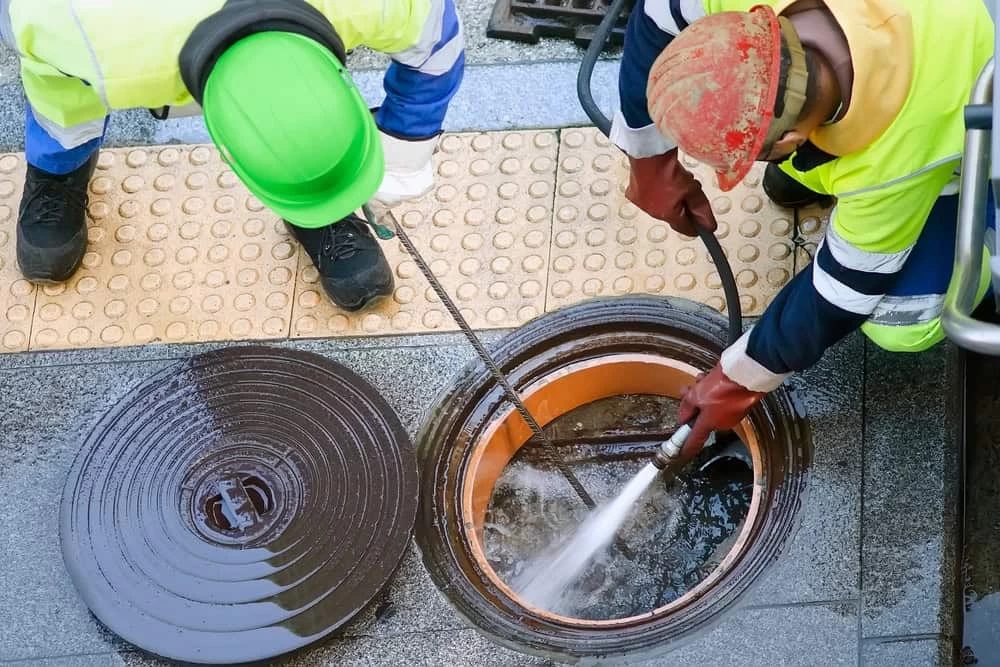
Trenchless sewer repair covers two primary methods. The first is pipe lining, also called CIPP (cured-in-place pipe). A flexible liner coated in resin is fed into the existing pipe and inflated against the interior walls, then cured in place. The result is essentially a new pipe inside the old one — seamless, corrosion-resistant, and rated for a 50-year service life. It’s effective for cracks, root intrusion, corrosion, and minor joint displacement. Access is through two small entry points. Your lawn, driveway, and landscaping stay exactly where they are.
The second method is pipe bursting, used when the existing pipe is too deteriorated to line. A bursting head is pulled through the old pipe, fracturing it outward into the surrounding soil while simultaneously pulling a new pipe into place behind it. The old pipe is destroyed and replaced in a single pass, again from two access points, again without open excavation.
These aren’t niche technologies or last-resort options. We use them regularly across Long Island — in Massapequa, Babylon, Port Jefferson, Amityville, and throughout Nassau and Suffolk counties — because they’re the right tool for the conditions here. Mature trees with aggressive root systems, aging clay and cast iron pipe, and homeowners who have invested heavily in their properties make trenchless repair the practical choice in the vast majority of cases.
What the camera inspection tells us is whether your pipe is a candidate. A pipe belly, for example, typically requires excavation because the soil beneath the pipe needs to be corrected — no liner changes the grade. A collapsed section may or may not be accessible for trenchless work depending on how extensive the damage is. But cracks, root intrusion, corrosion, and joint displacement — the most common findings on Long Island — are almost always candidates for trenchless repair. The inspection gives you a clear answer before any commitment is made.
Frequently Asked Questions About Sewer Camera Inspections on Long Island
**How much does a sewer camera inspection cost?** For a standard residential inspection in Nassau or Suffolk County, expect to pay somewhere in the range of $200 to $400. To put that in context: sewer line repairs on Long Island typically start around $3,000 and can exceed $10,000 for full replacements. The inspection cost is a small fraction of what you’d spend reacting to an emergency you didn’t see coming.
**How long does the inspection take?** For most residential properties, the camera inspection itself takes roughly 45 minutes to an hour. If the cleanout is difficult to access or the line runs long, it may take a bit more time. You’ll watch the footage as it’s recorded, and our technician will walk you through what you’re seeing in plain language before leaving.
**Do I need an inspection if my drains seem fine?** The most serious sewer problems — pipe bellies, early-stage root intrusion, hairline cracks in clay pipe — often produce no noticeable symptoms until they cause a backup or collapse. Many Long Island homeowners in homes built before 1970 have sewer lines that have never been inspected. In older Nassau County neighborhoods like Levittown, Bethpage, or Valley Stream, where clay pipe is common and the trees are fully mature, waiting for a symptom is a gamble. Industry guidance is to have the line scoped every three to five years, or every two years if large trees are growing near the pipe.
**What about pre-purchase inspections?** This is one of the most practical uses of a sewer camera inspection and one of the most overlooked steps in a Long Island home purchase. The seller isn’t required to disclose a sewer problem they may not know about. A pre-purchase scope takes about an hour and gives you a clear picture of what you’re buying — or negotiating leverage if there’s a problem. In a market where homes in Nassau and Suffolk counties routinely sell above asking price, knowing the condition of the underground infrastructure before you close is worth every dollar.
**What if I’ve already been told I need a full replacement?** Get the camera footage first. More than once, Long Island homeowners have come to us after being told by another contractor that they needed a full sewer replacement, only for the camera to show a localized problem — a cracked section, a root intrusion at one joint — that could be addressed with a targeted repair or a pipe lining at a fraction of the cost. You should see what’s in your pipe before you agree to anything.
What to Do Next If You Suspect a Sewer Problem on Long Island
If your drains are slow, you’re dealing with recurring backups, you’re buying a home in Nassau or Suffolk County, or you simply haven’t had your sewer line looked at in years — a camera inspection is the right first step. Not a repair quote. Not a guess based on the age of your house. A real look at what’s actually there.
The inspection tells you whether there’s a problem, where it is, how serious it is, and whether it can be addressed without excavation. That’s the information you need to make a smart decision. Everything else follows from that.
Long Island Water and Sewer Main – Allied All City has been doing this work on Long Island since 1983. We’re available 24 hours a day, seven days a week — including weekends and holidays — and we’ll show you exactly what we find.
Need this done on Long Island? Long Island Sewer and Water Main handles sewer line repair across Nassau and Suffolk County. Call 631-407-2873 in Suffolk or 516-604-2651 in Nassau.