
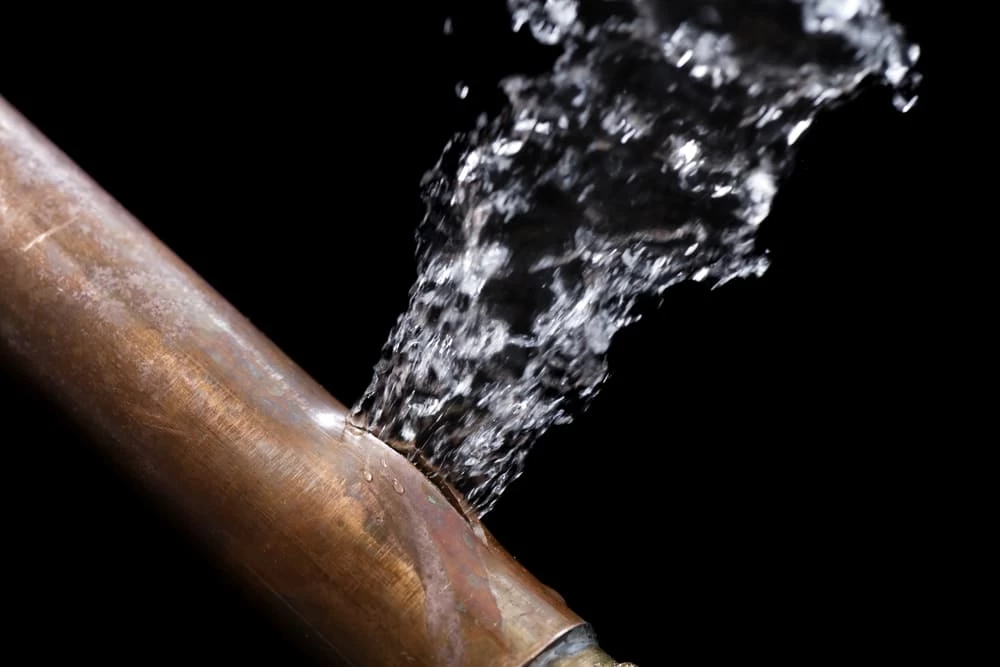
Summary:
Your sewer line is failing. You know that much. What you don’t know is whether you need pipe bursting, pipe lining, or something else entirely. The plumber who quoted pipe bursting says your old pipe is too far gone. The one who recommended lining says it’ll save you thousands. And you’re stuck in the middle, trying to figure out which one is actually telling you the truth.
Here’s what matters: both are legitimate trenchless repair methods, but they’re not interchangeable. One replaces your pipe completely. The other rehabilitates what’s already there. The right choice depends on what’s actually happening underground, not which contractor showed up first. Let’s break down how these methods work, when each one makes sense, and what you should actually be asking before anyone starts the job.
How Trenchless Repair Methods Work
Trenchless repair methods fix or replace your sewer line without tearing up your entire yard. Instead of digging a six-foot-deep trench from your house to the street, these techniques use small access points and specialized equipment to get the job done from below ground.
Both pipe bursting and pipe lining fall under the trenchless umbrella, but they tackle the problem in completely different ways. Pipe bursting physically destroys your old pipe and replaces it with a new one in a single operation. Pipe lining leaves your old pipe in place and creates a new interior surface inside it. The method that works for your situation depends entirely on what condition your pipe is in right now.
What Is Pipe Bursting and When Does It Work
Pipe bursting is a replacement method, not a repair. A bursting head gets pulled through your existing sewer line using hydraulic force. As it moves forward, it fractures the old pipe and pushes the fragments outward into the surrounding soil. Attached behind the bursting head is a new high-density polyethylene pipe that gets pulled into place at the same time.
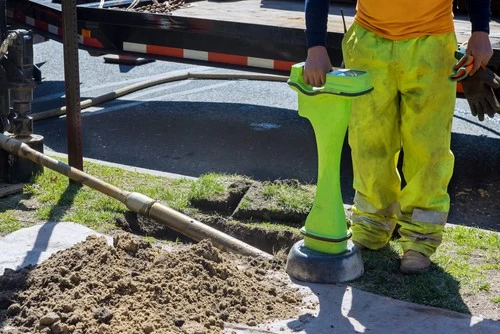
The process requires two small access pits—one where the bursting head enters and one where it exits. These pits are typically two to four feet across, which is a far cry from the continuous trench traditional replacement would require. The new HDPE pipe that replaces your old line is fused together above ground before installation, creating a seamless, joint-free pipe that won’t leak at connections.
Pipe bursting works best when your existing pipe is beyond rehabilitation. If you’ve got a collapsed section, severely corroded cast iron, or old Orangeburg pipe that’s deteriorating, bursting removes the problem entirely and gives you a completely new line. It’s also the only trenchless method that lets you upsize your pipe. If your current four-inch line is undersized for your property’s needs, you can burst it and pull through a six-inch pipe instead.
The method has limitations. You need a clear pathway through the existing pipe for the bursting head to travel. If sections are completely missing or the pipe has separated at joints with significant gaps, bursting may not be feasible. Soil conditions matter too. Rocky soil or areas with other utilities running close to your sewer line can complicate the job. And while bursting avoids a continuous trench, those two access pits still need to go somewhere. If one needs to be under your pool deck or through your foundation, the approach might not work.
Cost typically runs between $100 and $300 per linear foot for pipe bursting in 2026, depending on depth, soil conditions, and the diameter of pipe being installed. For a standard 50-foot residential sewer line, you’re looking at $5,000 to $15,000 for the pipe work itself. That’s higher than some traditional methods on a per-foot basis, but it eliminates the thousands you’d spend restoring landscaping, driveways, and hardscaping after a full excavation.
What Is Pipe Lining and When It Makes Sense
Pipe lining—often called cured-in-place pipe or CIPP—rehabilitates your existing sewer line from the inside. A flexible liner saturated with epoxy resin gets inserted into your damaged pipe through an access point, usually an existing cleanout or a small entry pit. Once the liner is positioned to cover the damaged section, it’s inflated with air or water to press against the interior walls of your old pipe. Heat, steam, or UV light then cures the resin, hardening it into a smooth, structural pipe within your existing pipe.
The process requires minimal excavation. In many cases, the entire job is done through cleanouts with no digging at all. When access pits are needed, they’re small—just large enough to insert and retrieve equipment. Your old pipe stays in the ground and acts as a host for the new liner. What you end up with is a seamless, jointless interior surface that seals cracks, stops leaks, and prevents root intrusion.
Pipe lining works when your existing pipe is structurally sound enough to support the liner. If you’ve got cracks from shifting soil, minor root intrusion, small leaks, or corrosion that hasn’t caused collapse, lining addresses those issues without replacement. The existing pipe needs to maintain its basic round shape. Lining can handle minor offsets and some deformation, but it can’t fix a pipe that’s completely collapsed or crushed flat.
One consideration with lining is the slight reduction in interior diameter. The liner typically takes up about a quarter inch of space around the entire circumference. For most residential sewer lines, this doesn’t affect flow—the smooth epoxy surface actually improves flow rates compared to corroded or root-damaged pipes. But if your line is already undersized or running at capacity, that reduction might matter.
Lining also can’t correct structural problems like bellies or improper slope. If your pipe has sagged and created a low spot that collects debris, lining will follow that same path. The new liner will be smooth and leak-free, but the underlying grade issue remains. In those situations, you’re better off with replacement.
Cost for pipe lining typically ranges from $80 to $250 per linear foot. The wide range reflects differences in pipe diameter, access difficulty, and the extent of preparation needed before lining. A 50-foot section might cost $4,000 to $12,500. While the per-foot cost can overlap with pipe bursting, lining often comes in lower overall because it requires less excavation and can frequently be completed through existing access points.
Pipe Bursting vs Pipe Lining Method Comparison
The fundamental difference comes down to this: pipe bursting gives you a completely new pipe, while pipe lining rehabilitates the pipe you already have. Bursting is replacement. Lining is restoration. That distinction drives everything else—which situations each method handles, how long the job takes, and what you’ll pay when the project is done.
Both methods avoid the mess and expense of traditional excavation, but they’re not solving the same problems. Choosing between them starts with understanding what’s actually wrong with your pipe and what outcome you need.
Pipe Lining vs Replacement Cost Analysis
Looking at per-foot pricing alone doesn’t tell the full story. Pipe bursting typically costs $100 to $300 per foot. Pipe lining runs $80 to $250 per foot. Those ranges overlap, and in some cases, bursting and lining come in at similar per-foot rates for the same job. But the total project cost depends on more than just the pipe work.
Lining often requires less site preparation and fewer access points. If your property has good cleanout access and your pipe is in suitable condition, lining might be completed with zero excavation. That eliminates restoration costs entirely. Bursting always requires two access pits, which means some level of excavation and restoration. If those pits need to go through concrete, landscaping, or other features, restoration adds to the total.
Traditional excavation—the alternative to both trenchless methods—might quote lower per-foot rates for the actual pipe work, sometimes $50 to $250 per foot. But that estimate rarely includes the full picture. You’re paying for excavation, hauling away tons of dirt, and then restoring everything that was torn up. Landscaping restoration can run $300 to $10,000 depending on what was in the way. Driveway replacement adds $2,000 to $5,000. Concrete patios or walkways cost $665 to $3,000 to replace. When you factor in those restoration costs, trenchless methods—whether bursting or lining—often end up 20% to 40% cheaper than traditional dig-and-replace.
Timeline matters too. Pipe lining is typically completed in one to two days. Pipe bursting takes one to three days depending on length and site conditions. Traditional excavation can stretch to three to five days or more, plus additional time for restoration work. Every extra day means more disruption to your property and your routine.
Both trenchless methods deliver long-term durability. HDPE pipes installed through bursting are rated for 50 to 100 years. CIPP liners carry warranties of 50 years or more. Compare that to the lifespan of the pipe that just failed, and you’re looking at a solution that outlasts what was there originally.
Best Trenchless Method for Your Property
The best trenchless method isn’t the one your neighbor used or the one the first contractor recommended. It’s the one that matches your pipe’s actual condition, your property layout, and what you need the repair to accomplish.
Start with pipe condition. If your sewer line has collapsed sections, severe corrosion that’s caused structural failure, or missing segments, pipe bursting is likely your only trenchless option. Lining requires a host pipe that’s intact enough to support the liner. A completely collapsed pipe provides no structure for the liner to adhere to. Bursting breaks through the damaged section and replaces it entirely, which solves the problem even when the old pipe has failed completely.
If your pipe has cracks, minor offsets, root intrusion, or corrosion that hasn’t caused collapse, lining becomes a viable option. The existing pipe is still structurally sound—it’s just leaking or allowing roots to enter. Lining seals those issues and creates a smooth interior surface that prevents future problems. In these situations, lining often makes more sense because it costs less and requires minimal excavation.
Consider whether you need to upsize your pipe. If your current line is undersized for your property’s demands or you’re planning additions that will increase wastewater flow, bursting lets you install a larger diameter pipe. Lining maintains the same diameter—actually slightly reduces it—so it doesn’t address capacity issues. If flow capacity is part of your problem, bursting is the answer.
Property layout influences the decision. If your sewer line runs under expensive landscaping, mature trees, a pool deck, or other features you want to preserve, lining’s minimal excavation becomes a major advantage. Many lining jobs are completed through existing cleanouts with no digging at all. Bursting requires two access pits, which means some level of excavation even if it’s far less than traditional methods. If those pits would need to go through structures or features that are costly to restore, lining might be worth considering even if bursting would otherwise be the better technical solution.
Soil conditions and depth play a role. Pipe bursting works well in most soil types, but rocky soil or areas with high water tables can complicate the process. The bursting head needs to fracture the old pipe and displace it into the surrounding soil. If the soil can’t accommodate that displacement, bursting becomes more difficult. Lining doesn’t disturb the soil, so ground conditions matter less. Deep pipes are accessible to both methods, but the deeper the line, the more excavation costs factor into bursting’s access pits.
In Nassau County specifically, you’re dealing with pipes that were often installed decades ago. Homes built before 1980 frequently have galvanized steel or lead pipes that are corroding from the inside out. If you’re in that situation, a camera inspection reveals whether the pipe still has enough structural integrity for lining or whether it’s deteriorated to the point where replacement through bursting makes more sense. The soil conditions across Nassau County vary, and local experience with those conditions matters when determining which method will work best for your specific location.
Choosing the Right Trenchless Repair Method
Pipe bursting and pipe lining are both proven trenchless repair methods, but they’re not interchangeable. Bursting replaces your pipe completely and works even when the old line has failed structurally. Lining rehabilitates your existing pipe from the inside and requires that pipe to still have enough integrity to serve as a host. The right choice depends on what’s happening underground, not which method sounds better in theory.
Start with a camera inspection to see what condition your pipe is actually in. That footage shows whether you’re dealing with cracks that lining can seal or collapse that requires replacement. From there, factor in your property layout, whether you need to upsize, and what the total project cost looks like including any restoration work. The method that makes sense for your situation becomes clear once you know what you’re actually dealing with.
If you’re facing sewer line issues in Nassau County and need help determining which trenchless approach fits your situation, we have nearly 40 years of experience with both pipe bursting and pipe lining across Long Island. Our team can assess your specific pipe condition and property layout to recommend the method that solves your problem without tearing up your yard.
Need this done on Long Island? Long Island Sewer and Water Main handles pipe bursting across Nassau and Suffolk County. Call 631-407-2873 in Suffolk or 516-604-2651 in Nassau.