
Summary:
Most Long Island homeowners don’t think about their sewer line until something goes wrong. And something going wrong in January — with frozen ground, a house full of family, and a backup working its way toward your basement floor — is about as bad as it gets.
Fall is your window. The ground is still accessible, contractors are available, and problems that cost a few hundred dollars to fix now can turn into multi-thousand-dollar emergencies by February. This checklist covers what to look for, what to do about it, and what’s actually worth your attention before the cold sets in.
What Is Sewer Line Maintenance and Why Does Fall Timing Matter?
Sewer line maintenance is exactly what it sounds like — keeping the pipe that runs from your house to the municipal main (or cesspool) clear, functional, and structurally sound. It’s not glamorous, and it’s easy to ignore when everything seems to be draining fine.
The problem is that “seems fine” and “is fine” are two very different things underground. Cracks, root intrusions, and grease buildup develop slowly and silently. By the time you notice a symptom — slow drains, gurgling sounds, a faint smell near floor drains — the problem has usually been growing for months. For properties where grease buildup is a concern, proper grease trap installations can help manage grease before it creates larger drainage and sewer problems.
Fall matters because it’s the last point in the year when you can act proactively. Once the ground freezes to its typical Long Island depth of around 20 inches, any repair work becomes significantly more complicated. And if a problem goes unaddressed through winter, you’re not just dealing with the original issue — you’re dealing with what freezing temperatures did to it.
How to Locate and Check Your Sewer Cleanout Before Winter
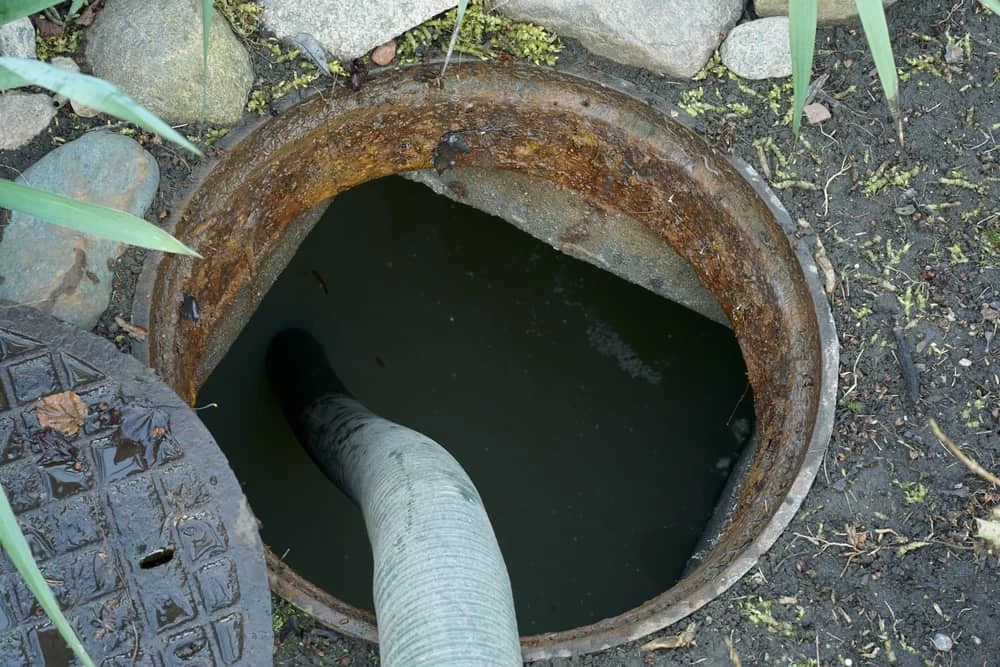
Your sewer cleanout is a capped pipe — usually white or black PVC, sometimes cast iron — that provides direct access to your main sewer line. It’s typically located in the yard near the foundation, sometimes inside the basement, and occasionally near the street. If you’ve never looked for it, fall is the right time to find it.
The cleanout cap should be secure, sealed, and free of cracks. A missing or broken cap is more than a cosmetic issue. It’s an open invitation for groundwater, debris, and even small animals to enter your sewer line directly. During a heavy fall rain or a winter thaw, that opening can allow enough water intrusion to overwhelm the line and cause a backup inside the house.
Once you’ve located it, check whether the area around it has settled or shifted. A sunken patch of ground near your cleanout can indicate a void beneath the surface — sometimes caused by a break in the pipe below. You’re not expected to diagnose this yourself, but noticing it and flagging it for inspection is exactly the kind of early catch that saves money.
Here’s something most homeowners don’t know: your cleanout is also the access point a technician uses to run a camera into your line. If it’s buried under overgrown grass, landscaping, or a season’s worth of leaves, find it now and clear the area. When a technician arrives for an inspection, an accessible cleanout means less time spent digging and more time actually diagnosing your pipe.
In older Long Island homes — particularly those built during the postwar suburban boom in communities like Levittown, Massapequa, and Babylon — the cleanout may be original to the house and made of cast iron. Cast iron cleanout caps can seize over decades of rust and mineral buildup. If yours hasn’t been opened in years, a professional should handle it. Forcing a seized cap is a reliable way to crack the fitting beneath it, which turns a simple inspection into a repair job.
Roots in Sewer Lines: Why Fall Is the Highest-Risk Season on Long Island
If your property has mature trees — and on Long Island, most properties do — root intrusion is not a hypothetical risk. It’s a seasonal one, and fall is when it’s most aggressive.
As oaks, maples, and elms prepare for dormancy, their root systems make a final push to absorb moisture and nutrients before winter. Your sewer line, carrying warm water and organic material, is the most reliable moisture source in the yard. Fine root tendrils enter through hairline cracks in clay, cast iron, or older PVC joints, then grow. What starts as a thread becomes a mass. What starts as a slow drain becomes a blocked one.
The neighborhoods most affected are the ones with the most established tree canopy — Huntington, Garden City, Rockville Centre, Smithtown, and similar communities where 60- and 70-year-old trees line the streets and share the same soil as 60- and 70-year-old sewer laterals. That combination is not a coincidence. The pipes and the trees grew up together, and the roots have had decades to find the weak points.
The symptoms of root intrusion are easy to miss until they aren’t. Drains that are consistently slower than they used to be. Gurgling sounds from toilets or floor drains after water runs elsewhere in the house. The occasional smell near basement drains. None of these individually scream “roots in the sewer line,” but together they’re a pattern worth taking seriously before the ground freezes.
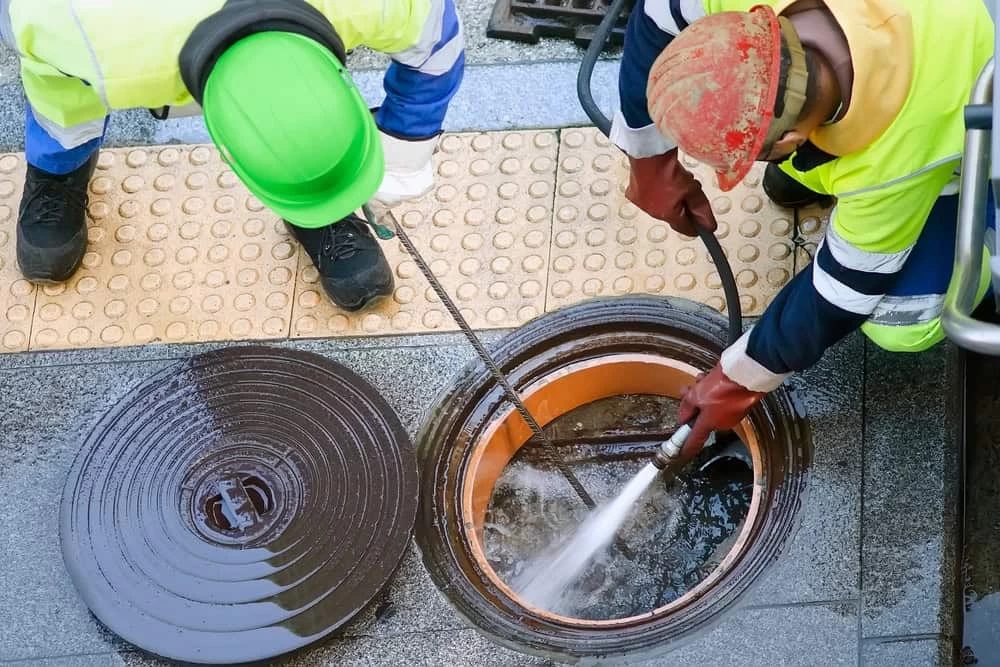
Hydro-jetting — high-pressure water cleaning of the pipe interior — is the professional standard for clearing root intrusions. Mechanical snaking punches a hole through the obstruction, but it doesn’t remove the root mass from the pipe wall. Hydro-jetting clears the full pipe interior, which buys you time and gives a camera inspection a clean view of what’s actually going on structurally. If the roots have caused cracking, that’s something you want to know before February, not during it.
One practical note: if you’ve had roots cleared before and they came back within a season or two, that’s a sign the underlying pipe condition needs to be addressed, not just the symptom. A cracked or deteriorating lateral won’t stop attracting roots no matter how many times it’s cleaned. That’s a conversation worth having with a professional before winter closes the window on your options.
Sewer Scope Inspection: What It Is and When to Schedule One
A sewer scope inspection — also called a camera inspection or TV inspection — is the only way to actually see what’s happening inside your pipe. A technician feeds a small camera through your cleanout or a drain access point and watches the live feed as it travels the length of your lateral.
You should be watching too. Any reputable provider will show you the footage in real time, not hand you a written summary days later. What you see on that screen — cracks, root intrusions, grease buildup, pipe sag, or collapsed sections — is the basis for every decision that follows. No guesswork, no “trust me,” just the actual condition of your pipe on a screen in front of you.
Fall is the right time to schedule one if your home is more than 20 years old, if you’ve had any slow drains or gurgling sounds this year, or if you simply don’t know the last time your sewer line was inspected. That last category covers more Long Island homeowners than most would admit.
What a Sewer Camera Inspection Actually Shows You
The camera doesn’t lie, and that’s the point. What a sewer scope inspection reveals depends entirely on your pipe’s age, material, and history — but here’s what we commonly find in Long Island homes, particularly those built before 1980.
Clay pipes, which were standard in postwar construction across Nassau and Suffolk, are brittle. They crack under root pressure, ground movement, and the simple weight of soil above them. A camera inspection can show hairline fractures, open joints where pipe sections have separated, and sections that have shifted or dropped — what’s called “pipe sag” — where water and debris pool instead of flowing freely.
Cast iron pipes corrode from the inside out. Decades of mineral deposits, hydrogen sulfide exposure, and the natural oxidation process leave the interior of older cast iron laterals rough, narrowed, and structurally compromised. A camera inspection shows this as visible pitting, scale buildup, and in advanced cases, sections where the pipe wall has thinned enough to be a collapse risk.
Bituminized fiber pipe — sometimes called “Orangeburg” after the New York town where it was manufactured — was used extensively in postwar Long Island construction as a cheaper alternative to clay or cast iron. It was never meant to last more than 50 years. Many of those pipes are now 70 years old, and they’ve been deteriorating for decades. Orangeburg absorbs moisture, softens, and eventually collapses into an oval or irregular shape that blocks flow. A camera inspection will show this deformation clearly.
Beyond pipe material, a scope inspection also reveals grease accumulation (common in homes with heavy kitchen use), foreign object blockages, and the exact location of any root intrusion. That location data matters because it determines whether a spot repair is sufficient or whether a longer section of pipe needs to be addressed. Knowing that before winter — when you still have time and access — is the entire point of scheduling this in fall rather than waiting for a backup to force the issue.
One thing worth knowing: a fall sewer scope inspection also produces documented camera footage that can be used to support a homeowner insurance claim if your line needs replacement. Some Long Island homeowners have successfully used this documentation to offset replacement costs. It’s not guaranteed, and every policy is different, but it’s a practical benefit that most people don’t think about until after the fact.
Nassau County vs. Suffolk County: Why Your Fall Checklist Might Look Different
Long Island is not one homogeneous market when it comes to sewer infrastructure, and a fall maintenance checklist that ignores that distinction isn’t fully useful to you.
Nassau County is largely connected to municipal sewer systems. If you’re in Hempstead, Mineola, Garden City, or Oceanside, your home’s sewer lateral connects to a public main. Your fall maintenance focus is on the lateral itself — the section of pipe that runs from your house to the municipal connection. That pipe is your responsibility, and its condition is entirely up to you to maintain.
Suffolk County is a different story. A significant portion of Suffolk homes — particularly in areas like Smithtown, Islip, Brookhaven, and Riverhead — are still on cesspool or septic systems rather than municipal sewer connections. If that’s your situation, fall maintenance means something additional: your cesspool needs to be pumped and inspected before the ground freezes.
A cesspool that hasn’t been pumped heading into winter is a specific kind of risk. Cold temperatures slow the biological processes that help cesspools function, and a system that’s running near capacity in October can fail under the additional stress of winter use patterns. A backup from a cesspool system doesn’t just mean a slow drain — it can mean sewage surfacing in your yard or backing up into the house.
The other consideration specific to Long Island’s coastal communities — Freeport, Long Beach, Babylon, Bay Shore, and similar areas along the South Shore — is salt air corrosion. Cast iron pipes in coastal neighborhoods corrode faster than their inland counterparts. If your home is within a mile or two of the water and has original cast iron sewer infrastructure, the timeline for pipe degradation is shorter than the national averages suggest. A camera inspection is particularly valuable in these communities because visual evidence of interior corrosion is the only reliable way to assess what you’re actually working with.
Whether you’re in Nassau or Suffolk, on municipal sewer or cesspool, the principle is the same: fall is when you find out what you’re dealing with. Winter is when you find out what you ignored.
When to Call a Professional for Fall Sewer Maintenance on Long Island
If your home is more than 20 years old, you have mature trees in the yard, you’ve noticed any slow drains or gurgling this year, or you simply don’t know the last time your sewer line was inspected — that’s your answer. Fall is the time, and the window closes when the ground does.
The steps that make the biggest difference are straightforward: locate and check your sewer cleanout, schedule a camera inspection to see the actual condition of your pipe, and address any root intrusion or buildup before freezing temperatures lock everything in place. None of this requires you to guess or assume. A camera inspection gives you real information, and real information lets you make a real decision.
We’ve been doing this work across Nassau and Suffolk counties since 1983. If you want to know what’s actually going on inside your sewer line before winter, give us a call. We’ll show you exactly what we find.
Need this done on Long Island? Long Island Sewer and Water Main handles water line repair across Nassau and Suffolk County. Call 631-407-2873 in Suffolk or 516-604-2651 in Nassau.