
Summary:
It’s 11 PM on a Saturday. Your basement floor drain is overflowing with sewage. The smell is unbearable, and you’ve got standing water spreading across the floor. You need help now—not Monday morning.
Emergency drain situations create panic for good reason. Sewage exposure poses serious health risks. Water damage compounds every hour you wait. And most drain problems that reach emergency status won’t respond to a plunger or bottle of drain cleaner.
Here’s what actually happens when you call for emergency drain cleaning, how we diagnose and solve the problem, and what separates a real solution from a temporary fix that fails again in two weeks.
What Qualifies as an Emergency Drain Service
Not every slow drain needs emergency attention. But certain situations cross the line from “annoying” to “call someone right now.”
Multiple drains backing up at once signals a main sewer line problem, not just a single fixture clog. When your toilet gurgles as the washing machine drains, or sewage comes up through the shower when you flush, the blockage sits deep in your system. These situations worsen fast and require professional equipment to resolve.
Sewage backing up into your living space creates immediate health hazards. Raw sewage contains bacteria, viruses, and pathogens that contaminate everything they touch. The longer sewage sits in your home, the more expensive cleanup becomes and the greater the health risk to your family.
Emergency Drain Cleaning Service Response and Pricing
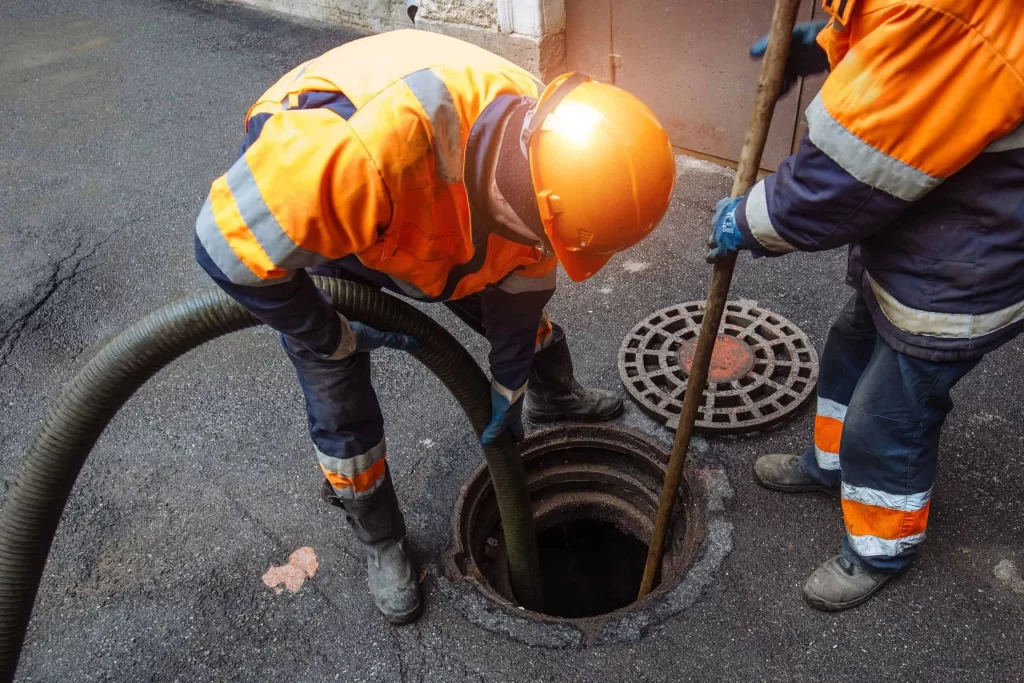
When you’re standing in sewage water at midnight, “we’ll be there first thing Monday” doesn’t cut it. Real emergency drain cleaning service means our technicians dispatch immediately—nights, weekends, holidays included.
We respond within one to two hours across Nassau County, NY. Often we arrive within an hour depending on your location and current call volume. Our technicians show up with fully equipped service vehicles carrying hydro jetting equipment, camera inspection tools, and drain snakes to handle whatever we find.
Response time matters because drain emergencies escalate. A backed-up main line doesn’t improve on its own. Every minute sewage sits in your home increases contamination risk and property damage. Every flush, every load of laundry, every sink that drains adds more volume to the backup.
Emergency pricing typically runs 25 to 100 percent higher than standard rates. You might pay 1.5 to 2 times the normal service cost for after-hours calls. Some companies charge a flat emergency fee on top of regular pricing. But when you’re facing thousands in water damage or a basement full of sewage, that premium buys you immediate relief and prevents far costlier problems.
The alternative—waiting until Monday morning for standard rates—often costs more in the long run. Water damage spreads. Sewage contamination requires professional remediation. Mold growth begins within 24 to 48 hours of water exposure. A $400 emergency call tonight beats a $5,000 restoration bill next week.
How a Clogged Drain Plumber Diagnoses the Problem
We don’t just show up and start snaking blindly. Our diagnostic process determines what’s actually causing the backup and which method will solve it completely.
Camera inspection often comes first for emergency main line situations. We feed a waterproof camera through your cleanout or drain opening to see exactly what’s blocking the pipe. Tree roots growing through joints look different than a grease clog or collapsed pipe section. The camera shows the blockage location, type, and severity—eliminating guesswork.
This inspection takes minutes but saves hours of trial and error. It also prevents using the wrong tool for the job. Hydro jetting a severely cracked pipe could worsen the damage. Snaking a massive tree root intrusion just pokes a temporary hole that clogs again immediately. The camera tells us which approach will actually work.
Assessment also includes checking multiple fixtures. If your toilet backs up but your kitchen sink drains fine, the clog likely sits in the toilet’s branch line. If every drain in your house runs slow or backs up, the problem’s in your main sewer line. Understanding the scope prevents treating symptoms while missing the actual problem.
Nassau County, NY aging infrastructure creates specific challenges that we recognize immediately. Many homes still have original cast iron or clay pipes from the 1950s through 1980s. These materials corrode, crack, and attract tree root intrusion. Coastal vegetation and mature landscaping mean roots frequently invade sewer lines seeking water. Freeze-thaw cycles shift soil and crack pipe joints. We factor these regional issues into every diagnosis.
How Emergency Drain Service Actually Works
Once we identify the problem, the solution depends on what’s causing the blockage and how severe it is. Emergency situations typically require more aggressive methods than routine maintenance clogs.
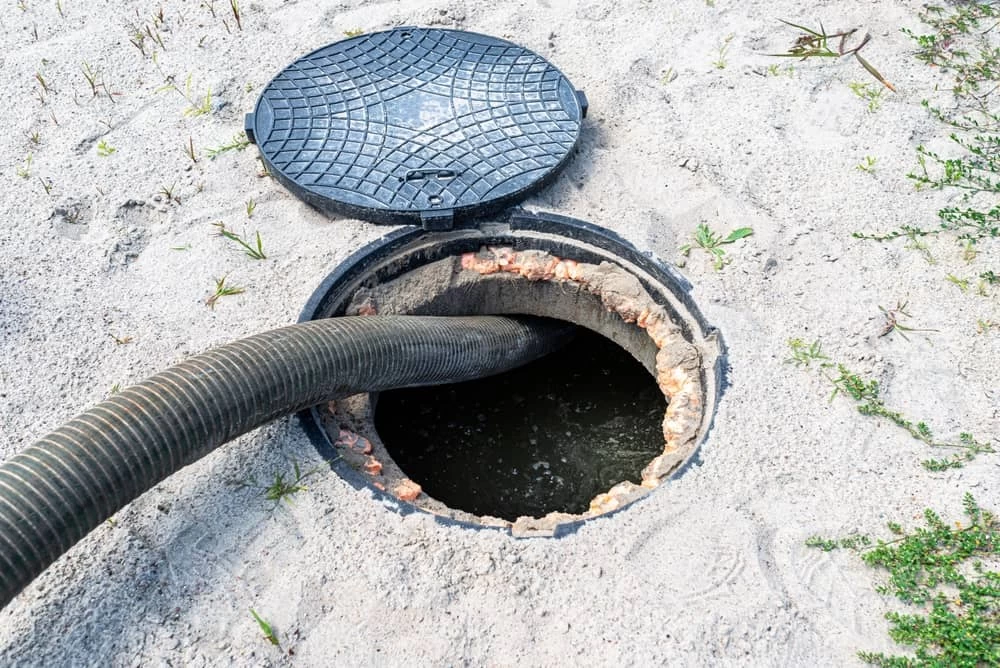
For severe blockages, hydro jetting often provides the most thorough solution. This method uses high-pressure water—typically 1,500 to 4,000 PSI or higher—to blast away debris, grease, tree roots, and mineral buildup from pipe walls. Unlike snaking, which just pokes a hole through the center of the clog, hydro jetting scours the entire interior surface clean.
The process starts at your cleanout access point. We insert a specialized hose with a multi-directional nozzle that sprays water forward and backward simultaneously. As water pressure blasts through the pipe, it pushes debris downstream while cleaning behind itself. The result is a pipe restored to near-original capacity—not just temporarily unblocked.
Hydro Jetting vs Traditional Snaking for Emergencies
Understanding the difference between hydro jetting and traditional snaking helps you evaluate whether your emergency was truly solved or just postponed.
Snaking uses a flexible metal cable with a cutting head to physically break through clogs. It’s effective for simple blockages close to the drain opening—hair clogs, paper buildup, small obstructions. The snake creates a path for water to flow again. Problem is, it often leaves residue coating the pipe walls. That grease, soap scum, or mineral deposit layer remains, providing a surface for new clogs to form quickly.
Think of snaking as poking a hole through a clog versus removing the clog entirely. Water flows again immediately, which solves the emergency. But recurring clogs often follow within weeks or months because the underlying buildup wasn’t addressed. For a true emergency where you just need water flowing again tonight, snaking gets you functional. For preventing this emergency from happening again next month, it falls short.
Hydro jetting removes virtually everything. The high-pressure water cuts through grease that snakes can’t touch. It blasts away mineral deposits that have built up over years. It even cuts through tree roots, though severely root-damaged pipes may need lining or replacement after cleaning. The pipe interior ends up essentially clean, which means clogs take much longer to form again.
The trade-off is cost and appropriateness. Hydro jetting typically costs $300 to $900 for residential applications, compared to $100 to $275 for basic snaking. Emergency hydro jetting can reach $600 to $1,400 for severe situations. But it often lasts three to four times longer than snaking before you need service again. For recurring emergency situations or severe main line blockages, hydro jetting often saves money long-term by preventing repeat emergency calls.
Pipe condition also matters. Older, fragile pipes—particularly clay or severely corroded cast iron—might not handle hydro jetting pressure safely. This is why camera inspection comes first. We won’t hydro jet a pipe that’s on the verge of collapse. For those situations, gentler cleaning followed by pipe lining or replacement provides the real solution.
Common Emergency Drain Situations in Nassau County
Nassau County, NY properties face specific drainage challenges that frequently turn into emergencies. Understanding these common scenarios helps you recognize warning signs before a full crisis develops.
Storm-related backups spike during heavy rain events. Long Island’s drainage systems, particularly in older neighborhoods, can become overwhelmed when stormwater infiltrates sewer lines through cracks or faulty connections. If you notice backups specifically during or after heavy rain, your sewer line likely has infiltration points letting groundwater in. This situation worsens over time and eventually causes backups even without storms.
Tree root intrusion ranks among the most common emergency causes. Mature trees send roots seeking water, and sewer lines provide exactly that. Roots enter through pipe joints or small cracks, then grow into massive tangles that catch debris and create total blockages. Coastal vegetation common to Nassau County grows aggressively, and properties with large trees often face recurring root problems until the pipe is lined or replaced.
Freeze-thaw damage creates winter emergencies. When temperatures drop, water in pipes can freeze and expand. This doesn’t just risk burst pipes—it can crack sewer lines or shift pipe sections out of alignment. Properties in Nassau County experience enough freeze-thaw cycles that older pipes develop cracks and separations over time. These damaged sections catch debris and eventually clog completely.
Grease accumulation builds gradually then fails catastrophically. Kitchen drains seem fine for months or years while grease slowly coats the pipe interior. The diameter shrinks incrementally until one day it clogs completely—often during a holiday meal when the kitchen sees heavy use. What feels like a sudden emergency actually resulted from years of buildup finally reaching critical mass.
Aging infrastructure means many Nassau County homes have pipes that were never designed for modern usage patterns. A house built in 1960 with a family of four now houses a family of six with multiple bathrooms, dishwashers, and high-efficiency washing machines that drain large volumes quickly. The old pipes can’t handle the increased load, especially if they’re partially clogged with decades of buildup.
Choosing Emergency Drain Cleaning That Solves the Problem
When you’re facing a drain emergency, the company you call determines whether you get a real solution or a temporary fix that fails again in two weeks. Look for services that offer true 24/7 response with equipped technicians, not answering services that schedule you for tomorrow.
Camera inspection capability matters. Companies that diagnose visually rather than guessing provide solutions matched to actual problems. Hydro jetting equipment indicates they can handle severe blockages thoroughly, not just poke holes through them.
Experience with Nassau County, NY specific challenges—aging infrastructure, root intrusion, coastal conditions—means faster, more accurate diagnosis and appropriate solutions. A company that’s been solving local drainage problems for decades understands what works in this region.
For nearly 40 years, we’ve responded to emergency drain situations across Nassau and Suffolk Counties. We arrive equipped with advanced diagnostic and cleaning equipment, ready to solve the problem completely—whether that requires hydro jetting, camera-guided cleaning, or trenchless repair methods. When your drain emergency can’t wait, our 24/7 response brings experienced help when you need it most.