
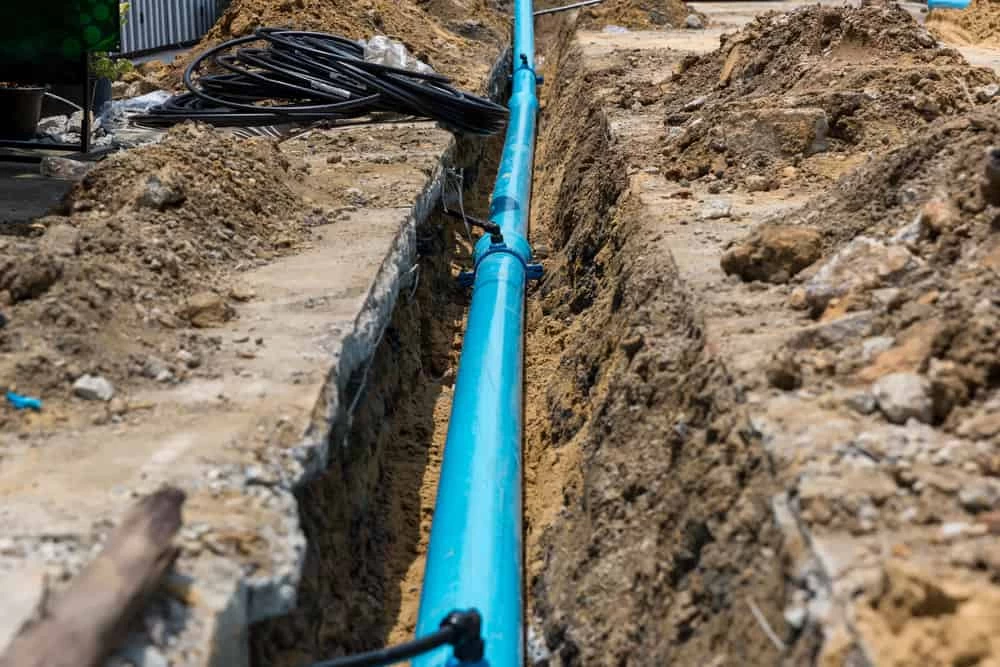
Summary:
Your water bill jumped $200 last month with no explanation. There’s a warm spot on your living room floor that wasn’t there before. You hear water running through pipes when every faucet in the house is turned off.
These aren’t random annoyances. They’re warnings that water is escaping from pipes buried beneath your concrete foundation. Every day the leak continues, more water saturates the ground under your home, eroding soil, weakening your foundation, and creating perfect conditions for mold.
Modern leak detection locates the exact problem spot without tearing up your floors. Here’s what you’re actually dealing with, how it happens in Nassau County, and what stops it for good.
What Causes Slab Leaks in Nassau County Foundations
A slab leak happens when water pipes running underneath or through your concrete foundation develop cracks, pinholes, or complete breaks. Most Long Island homes built between the 1960s and 1980s have copper pipes embedded in the slab. Those pipes were built to last decades, not forever.
Nassau County’s environment accelerates the problem. Sandy soil near the coast shifts when saturated. Clay deposits inland swell when wet, then contract when dry. This endless cycle stresses rigid pipes that can’t flex with the movement.
The high water table across Long Island, seasonal freeze-thaw cycles, and chemical reactions between soil minerals and copper all speed up deterioration. Your foundation’s weight pressing down on those pipes doesn’t help either.
Long Island Soil Conditions That Damage Foundation Plumbing
If your home sits near Long Beach or Massapequa, you’re on predominantly sandy soil. It drains fast—which sounds beneficial until you realize that speed also erodes the ground supporting your pipes. The loose texture means your foundation can settle unevenly, creating stress points where pipes crack.
Move inland toward Syosset or central Nassau County, and you encounter clay deposits. Clay holds moisture like a sponge, creating constant pressure against your foundation. When wet seasons transition to dry periods, that clay shrinks dramatically and pulls away from your foundation, creating gaps and movement that bend pipes beyond their tolerance.
Much of Long Island sits at or near sea level. Water tables fluctuate with seasons and storms. Nor’easters and hurricanes saturate the ground, causing foundation movement that pipes can’t accommodate. Your coastal location creates challenges that contractors from inland areas simply don’t encounter.
The ground beneath your home expands and contracts with moisture changes year-round. In areas with expansive soil, this cycle never stops. Whatever initially damaged your pipes—poor installation, natural corrosion, or decades of use—these soil conditions make everything worse faster.
Temperature swings matter too. When summer hits 95 degrees and winter drops below freezing, your pipes expand and contract repeatedly. Over 30 or 40 years, this constant stress breaks down even quality materials. Chemical reactions between salt-laden coastal soil and copper pipes speed up corrosion in ways that don’t happen inland.
Why Pipes in Older Nassau County Homes Fail
Homes built 40 to 60 years ago used copper as the standard for water lines. Copper lasts longer than many materials, but it’s not permanent. Minerals in your water supply create buildup inside pipes. Chemical reactions with surrounding soil cause external corrosion. The result? Pipes that thin out until water pressure punches through.
Installation practices from the 1960s and 70s didn’t always account for ground movement. Pipes were laid rigid, without protection or flexibility to handle the natural settling every house experiences. When your foundation shifts even an inch over decades, those inflexible pipes crack under stress they were never designed to handle.
Abrasion wears pipes down from the inside. Water flowing through causes pipes to expand and contract slightly with each use. When pipes rub against concrete or against each other, that friction removes microscopic amounts of material. You’ll never see it happening. But after 40 years, the pipe wall gets thin enough that normal water pressure creates a leak.
Pressure fluctuations in the municipal supply accelerate failure in weakened pipes. When the water company makes adjustments or when demand spikes during peak hours, your pipes experience pressure changes. A healthy pipe handles this fine. A pipe that’s already thinned from corrosion may not.
If your home is over 30 years old and still has original plumbing in the slab, your risk increases every year. It’s not about if a leak will develop—it’s about when. Most homeowners don’t think about pipes under their foundation until water damage forces the issue.
By then, water may have been escaping for months, saturating soil and weakening the structural support beneath your home. The longer it leaks, the more damage compounds—not just to the pipe, but to your foundation, your flooring, and the air quality inside your home as mold takes hold.
Plumbing Leak Detection Methods for Hidden Slab Leaks
Locating a leak buried under concrete sounds impossible without tearing up your floor. We use specialized technology that pinpoints exact locations without guesswork or unnecessary demolition.
The process starts with confirming a leak exists. All water fixtures get turned off. If your meter still moves, water is escaping somewhere in the system. Pressure testing follows—isolating sections of plumbing to identify which line is affected and narrow the search area.
Once we know which line is leaking, the real detective work begins with equipment designed specifically for finding water escaping beneath concrete slabs.
Acoustic and Electronic Leak Detection Technology
Pressurized water escaping through a crack creates sound. The problem? That sound is too faint for human ears to detect through layers of concrete and soil. Acoustic listening devices amplify those frequencies into something our technicians can hear and interpret.
Professional-grade sensors and specialized headphones pick up the characteristic sound patterns water makes when moving under pressure through a breach. Our technicians work systematically across the suspected area, listening for changes in frequency and intensity. Water escaping through pipe damage creates a distinctive acoustic signature that trained professionals recognize immediately.
Electronic leak detectors combine multiple technologies into one tool. They use electromagnetic fields to trace water movement, acoustic sensors to hear leaks, and moisture meters to detect dampness. Three different data points all confirming the same location means we know exactly where the problem is.
The technology has evolved significantly. Machine learning algorithms filter background noise—traffic, HVAC systems, appliances—and enhance the signals that actually matter. This means accurate detection even in challenging environments like multi-story buildings or homes near busy roads.
Precision is what makes these tools valuable. Instead of breaking through 20 feet of concrete hoping to find the leak, we mark a spot accurate within inches. That precision translates directly to lower costs because minimal demolition means minimal restoration afterward.
Acoustic detection works for both hot and cold water lines. It’s completely non-invasive—no test holes required just to locate the problem. For homeowners worried about additional property damage, this technology offers reassurance that finding the leak won’t create new problems.
Infrared Thermal Imaging for Slab Leak Detection
Thermal imaging cameras see what your eyes can’t—temperature differences caused by water leaking beneath your foundation. Hot water line leaks warm the concrete and flooring above them. Cold water leaks create cooler zones. Infrared technology detects these thermal variations even when they’re just fractions of a degree different from surrounding areas.
The camera creates a visual heat map of your floor surface. Hot spots appear in one color, cool areas in another. Where water actively leaks, you see a clear temperature pattern following the path of escaping water. This gives us visual confirmation of exactly where the problem exists.
Infrared cameras work through most flooring materials without requiring demolition. They scan tile, carpet, hardwood, or laminate and still detect thermal signatures underneath. This makes them particularly useful for confirming what acoustic devices hear.
The technology doesn’t directly visualize water. What it detects is the thermal impact water has on surrounding materials. As water evaporates or transfers heat, it changes the temperature of concrete and subflooring, creating the signature visible on thermal images.
For homes with radiant heating in the slab, thermal imaging can differentiate between normal heat patterns from your system and abnormal patterns from leaks. Our experienced technicians interpret these images accurately even in complex situations where multiple heat sources exist.
Combining thermal imaging with acoustic detection provides complete diagnostic certainty. When both methods point to the same location, you know that’s where the leak is. This multi-tool approach eliminates guesswork and ensures repairs target the actual problem.
Speed is another advantage. We can scan large areas in minutes, quickly identifying problem zones that need closer inspection. This efficiency keeps detection costs reasonable while providing thorough coverage of your entire foundation footprint.
Slab Leaks Repair Options and Methods
Once the leak is located, you have choices about how to fix it. The right method depends on the leak’s location, the extent of damage, and whether you’re dealing with a single problem spot or widespread deterioration.
Traditional repair involves breaking through the slab at the leak site, cutting out the damaged pipe section, and installing a new piece. This works for isolated leaks in accessible locations. The downside? You’re left with concrete to patch and flooring to replace.
Trenchless methods offer alternatives that minimize property disruption while delivering longer-lasting results.
Need this done on Long Island? Long Island Sewer and Water Main handles water line repair across Nassau and Suffolk County. Call 631-407-2873 in Suffolk or 516-604-2651 in Nassau.