
Summary:
You’re standing in your yard, looking at a quote that makes your stomach drop. The plumber says your sewer line needs replacing, and you’re trying to figure out whether trenchless repair is worth the extra cost—or if traditional excavation is the smarter move. The problem is, most quotes don’t tell the whole story. They show you the plumbing work but leave out what happens after the backhoe tears through your driveway, your landscaping, and that patio you just refinished. Let’s talk about what these methods actually cost, what you’re really paying for, and which one makes sense when you’re looking at the complete picture—not just the first number on the estimate.
Trenchless Sewer Repair vs Traditional Excavation Costs
The plumbing work itself runs about the same either way—$50 to $250 per linear foot depending on your pipe’s depth, length, and what’s sitting on top of it. That’s where the similarity ends.
Traditional excavation means digging a trench from your house to the street connection, usually 50 to 100 feet depending on your property layout. The crew removes the old pipe, lays new sections, backfills the dirt, and leaves. What they don’t do is put your property back together. That part’s on you.
Trenchless repair works from the inside. We make one or two small access points, then either line your existing pipe with a seamless epoxy sleeve or pull a new pipe through while breaking up the old one. Your driveway stays intact. Your landscaping doesn’t get touched. The job wraps up in a day or two instead of a week.
What It Really Costs to Dig Up and Replace a Sewer Line
Let’s say you’ve got a standard 60-foot sewer line running under your driveway. A traditional dig-and-replace might quote $6,000 to $9,000 for the plumbing work. Sounds reasonable until you realize that’s only half the bill.
Now you need to repour the section of driveway they tore up. That’s another $2,000 to $5,000 depending on whether it’s asphalt or concrete. Your flower beds got destroyed, so add $500 to $2,000 for landscaping restoration. If they had to cut through a sidewalk or patio, tack on another $1,500 to $4,000. Suddenly that $6,000 job is pushing $15,000 or more.
And here’s the part nobody mentions upfront—the timeline. Traditional excavation takes three to five days minimum, sometimes longer if weather delays the work or if permits take time to process. During that stretch, your property looks like a construction zone, and you’re dealing with limited water access.
In Nassau County specifically, winter makes everything worse. When the ground freezes, you’re looking at 200 to 300 percent higher costs because contractors need specialized equipment just to break through soil that’s turned rock-hard. The frost line here reaches three feet or deeper, which means even more digging, more equipment wear, and more labor hours. Some contractors won’t even take the job until spring.
The other hidden cost is what happens after they backfill. The soil they put back doesn’t settle the same way it sat for decades. You’ll often see dips and sinking over the next 6 to 12 months, which means another round of grading and possibly re-sodding. It’s not catastrophic, but it’s one more headache you didn’t budget for.
How Trenchless Methods Actually Save Money
Trenchless repair quotes can look higher at first glance—sometimes $8,000 to $12,000 for that same 60-foot line. But that number includes almost everything. There’s no driveway to replace, no landscaping to restore, no patio to rebuild. We dig two small pits, do the work underground, patch the access points, and you’re done.
When you add up the real costs, trenchless often comes in 30 to 50 percent cheaper than traditional excavation once restoration is factored in. And that’s before you consider the time savings. Most trenchless jobs finish in one to two days. You’re not living in a construction zone for a week. You’re not coordinating with multiple contractors to handle the plumbing, then the concrete, then the landscaping.
The other advantage is durability. Trenchless methods create seamless pipes with no joints—meaning tree roots can’t work their way in like they do with traditional sectional pipes. The materials we use, like cured-in-place epoxy liners or high-density polyethylene, resist corrosion and typically come with 50-year warranties. Compare that to traditional repairs, which might last 30 to 50 years depending on soil conditions and root activity.
There’s also the property value angle. If you’re planning to sell in the next few years, a trenchless repair leaves no trace. Your yard looks untouched, your driveway is intact, and you can show documentation of a modern, long-lasting sewer line. Traditional excavation, even when done well, often leaves visible patches and uneven settling that buyers notice.
One thing to watch for: not every pipe qualifies for trenchless repair. If your line has completely collapsed or has severe bellying—where a section sags and holds water—you might need traditional excavation to fix the slope and structural issues. A camera inspection, which runs $100 to $500, tells you which method will actually work for your situation. Any contractor who quotes you without running a camera is guessing, and that’s not a gamble you want to take with a five-figure repair bill.
Cost to Dig Up and Replace Sewer Line: Full Breakdown
Let’s walk through what you’re actually paying for when you go the traditional route. The line items break down into a few main categories: the plumbing work itself, excavation and trenching, permits and inspections, and restoration. Each one carries its own variables depending on your property and local requirements.
Plumbing work—removing the old pipe and installing new sections—runs $50 to $250 per linear foot. The range depends on depth, pipe material, and accessibility. A shallow line under open lawn costs less than a deep line under a driveway. Trenching alone adds another $4 to $12 per linear foot, and that’s just the digging. If your line runs under concrete, demolition costs another $3 to $8 per square foot before they even start on the pipe.
Permits in Nassau County typically run $200 to $1,000 depending on the scope of work. We handle this for you, but it’s worth understanding upfront so you’re not surprised. Some municipalities also require inspections at various stages, which can add another $100 to $500 to the total.
Labor, Equipment, and Hidden Costs
Labor rates for sewer work range from $45 to $200 per hour, with experienced contractors on the higher end. You’re not just paying for someone to dig—you’re paying for expertise in handling permits, locating underground utilities, and ensuring the new line meets code for slope and connections.
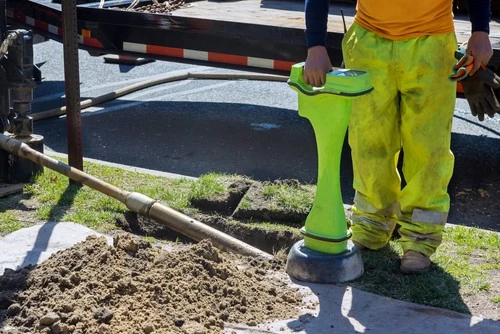
Equipment rental is another line item that catches people off guard. Excavators, backhoes, dump trucks for hauling dirt, traffic control if the work affects the street—it all adds up. On a typical residential job, equipment costs can run $1,000 to $3,000 depending on how long the work takes and what obstacles the crew encounters.
Then there’s disposal. All that dirt and broken pipe has to go somewhere, and disposal fees vary by location. Figure another $250 to $500 for a standard job. If we hit contaminated soil or encounter unexpected materials like old concrete or asbestos pipe, those costs can jump significantly.
One cost that’s easy to overlook is the impact on your daily routine. Traditional excavation often means limited water use for several days. You might be flushing toilets with buckets, showering at a friend’s house, or running to the gym. It’s not a dollar amount on the invoice, but it’s a real inconvenience that factors into the overall experience.
And if the job runs into complications—tree roots that are worse than expected, a connection point that doesn’t match the city records, soil that keeps collapsing and needs shoring—you’re looking at change orders that can add 20 to 50 percent to the original quote. We do a thorough assessment upfront to minimize surprises, but the nature of excavation work means you’re always dealing with some unknowns until the ground is open.
Restoration Costs That Quotes Leave Out
This is where the real financial pain hits. Once the plumbing work is done, you’re left with a three-to-six-foot-wide trench running across your property. Everything that was on top of it is gone, and putting it back isn’t cheap.
Concrete driveway replacement runs $8 to $18 per square foot. If they had to cut through 20 feet of driveway at five feet wide, that’s 100 square feet—call it $800 to $1,800 minimum. Asphalt is cheaper at $3 to $7 per square foot, but it still adds up fast. Sidewalks and patios fall in the $6 to $25 per square foot range depending on materials.
Landscaping restoration varies wildly based on what was there. New sod costs $0.35 to $0.85 per square foot, but that assumes you’re just replacing grass. If you had mature shrubs, perennials, or specimen plants, you’re looking at $50 to $500 each to replace them—and even then, you can’t replicate a 20-year-old plant overnight. Mature tree replacement, if a root system was damaged during excavation, can run $500 to $3,000 per tree.
Garden beds, mulch, edging, irrigation lines that got cut—it all needs rebuilding. A modest landscaping restoration project typically costs $500 to $2,500, but if you had extensive plantings or hardscaping, that number can easily double or triple. And here’s the kicker: most plumbing contractors don’t handle restoration. You’re coordinating with a separate concrete company, a separate landscaper, maybe a separate irrigation specialist. Each one has their own timeline and minimum charges.
The timeline for restoration can stretch weeks or even months. The concrete company might not be able to come out for two weeks. The landscaper can’t work until after the concrete cures. If it’s winter, you’re waiting until spring to do any planting. During all that time, you’re looking at a patched, unfinished yard that’s a constant reminder of the project.
Making the Right Choice for Your Nassau County Home
The decision between trenchless and traditional sewer repair isn’t just about the method—it’s about understanding what you’re actually buying. Traditional excavation gives you a lower initial quote but leaves you managing restoration projects for months. Trenchless repair costs more upfront but delivers a complete solution with minimal disruption and often a lower total cost.
For most Nassau County homeowners, especially those with established landscaping, driveways, or mature trees, trenchless makes the most sense. You protect your property investment, avoid the headache of coordinating multiple contractors, and end up with a more durable, longer-lasting repair. The key is working with a contractor who has real experience with both methods and can show you exactly what your pipe needs through a camera inspection.
If you’re dealing with a sewer line issue or want to get ahead of problems before they become emergencies, reach out to us at Long Island Water and Sewer Main – Allied All City. With nearly 40 years serving Nassau and Suffolk counties, we know the local challenges and have the trenchless expertise to handle your repair right the first time.